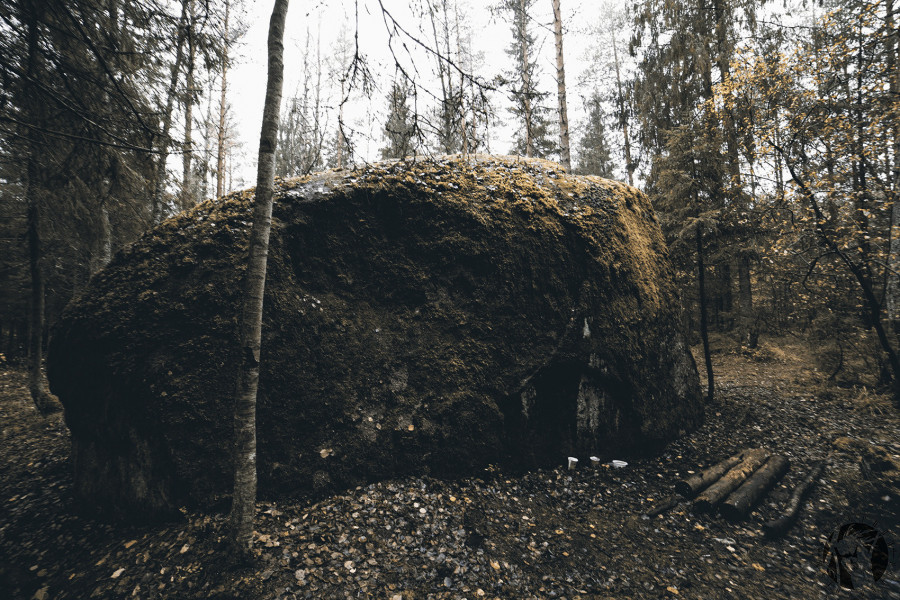
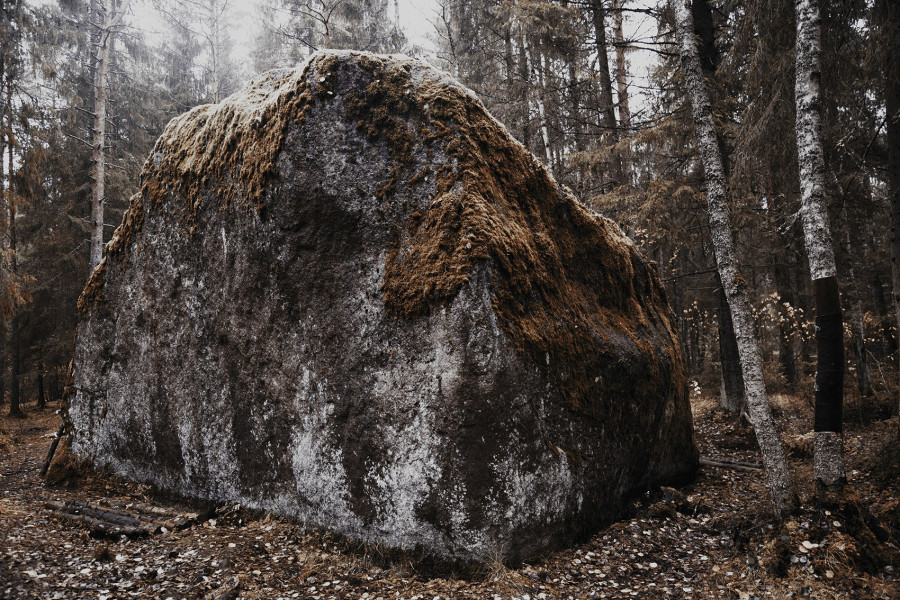
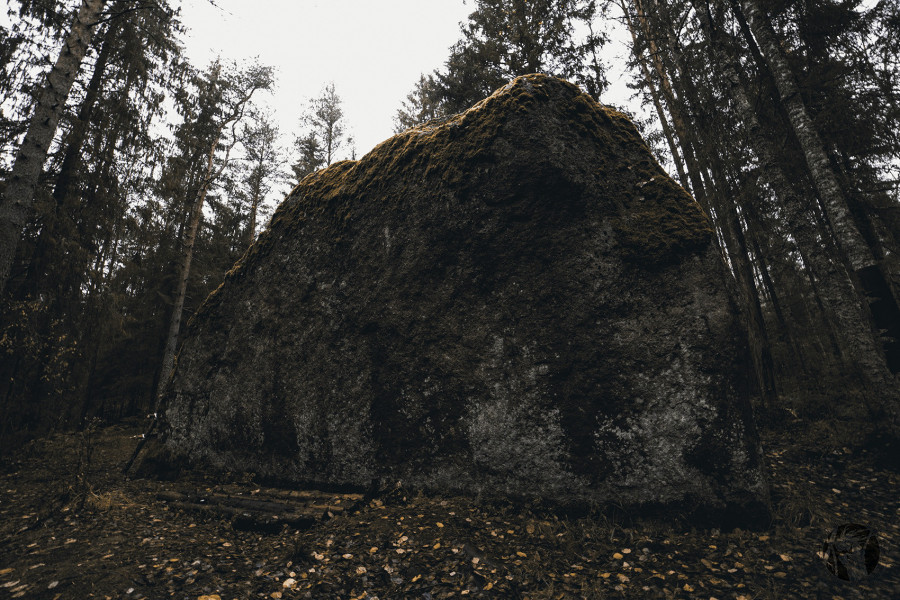
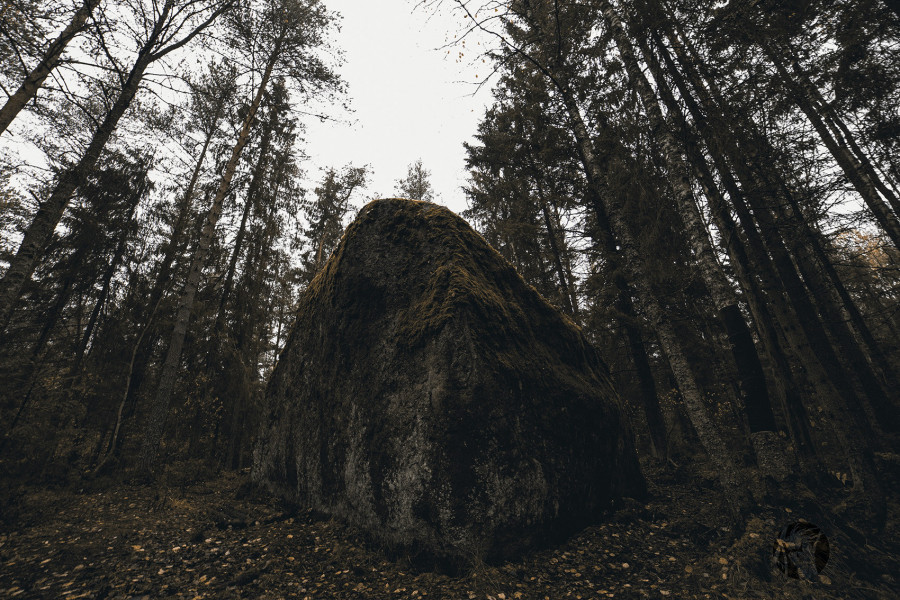
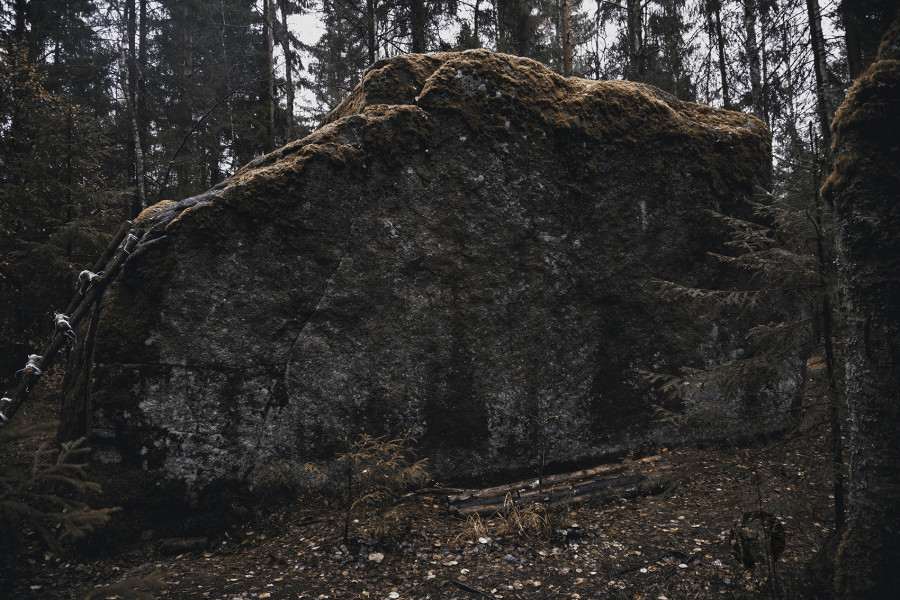
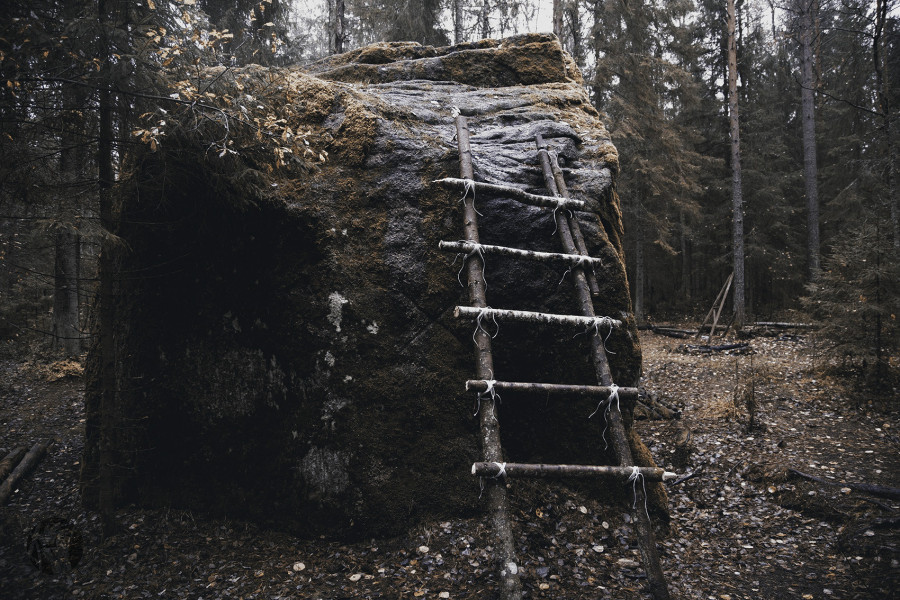
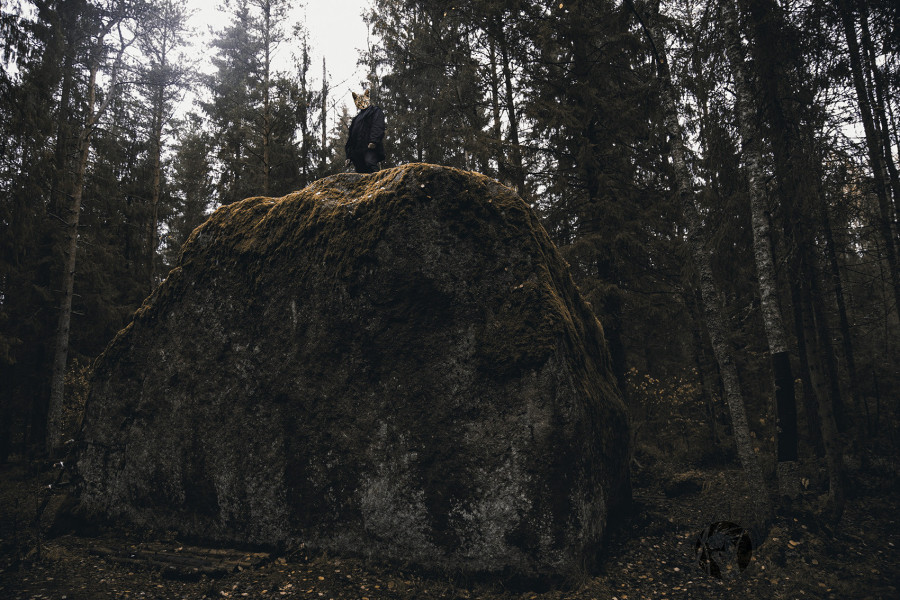
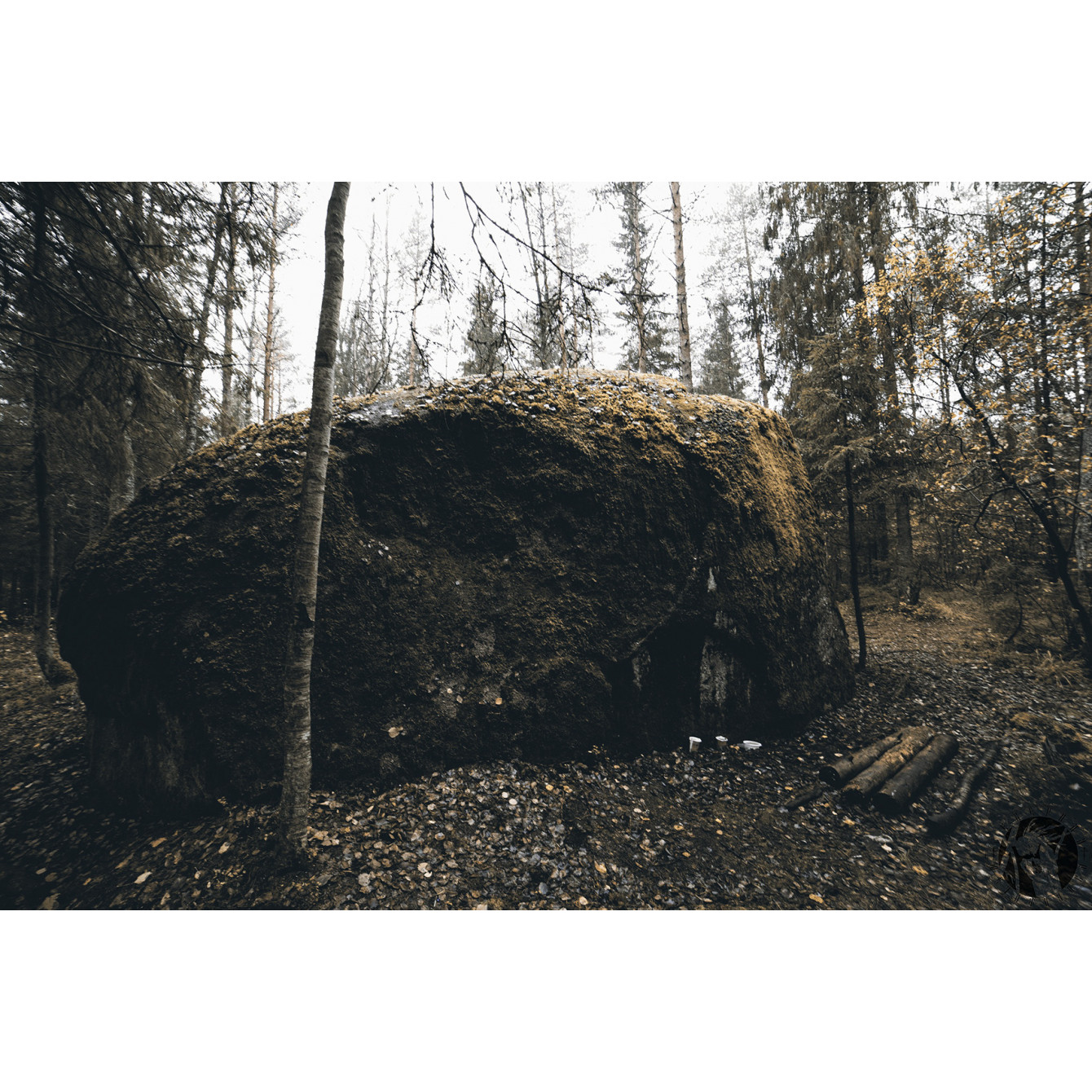
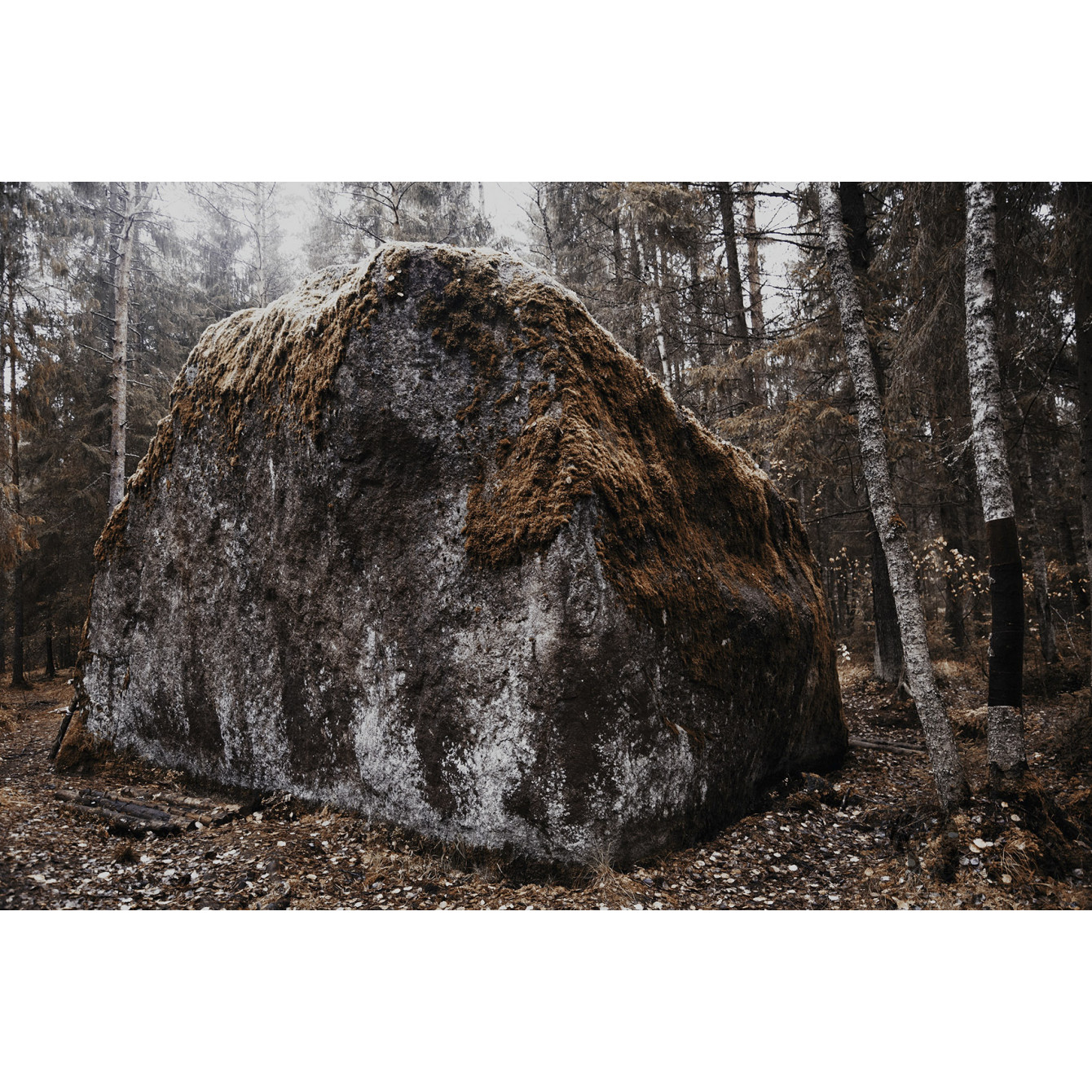
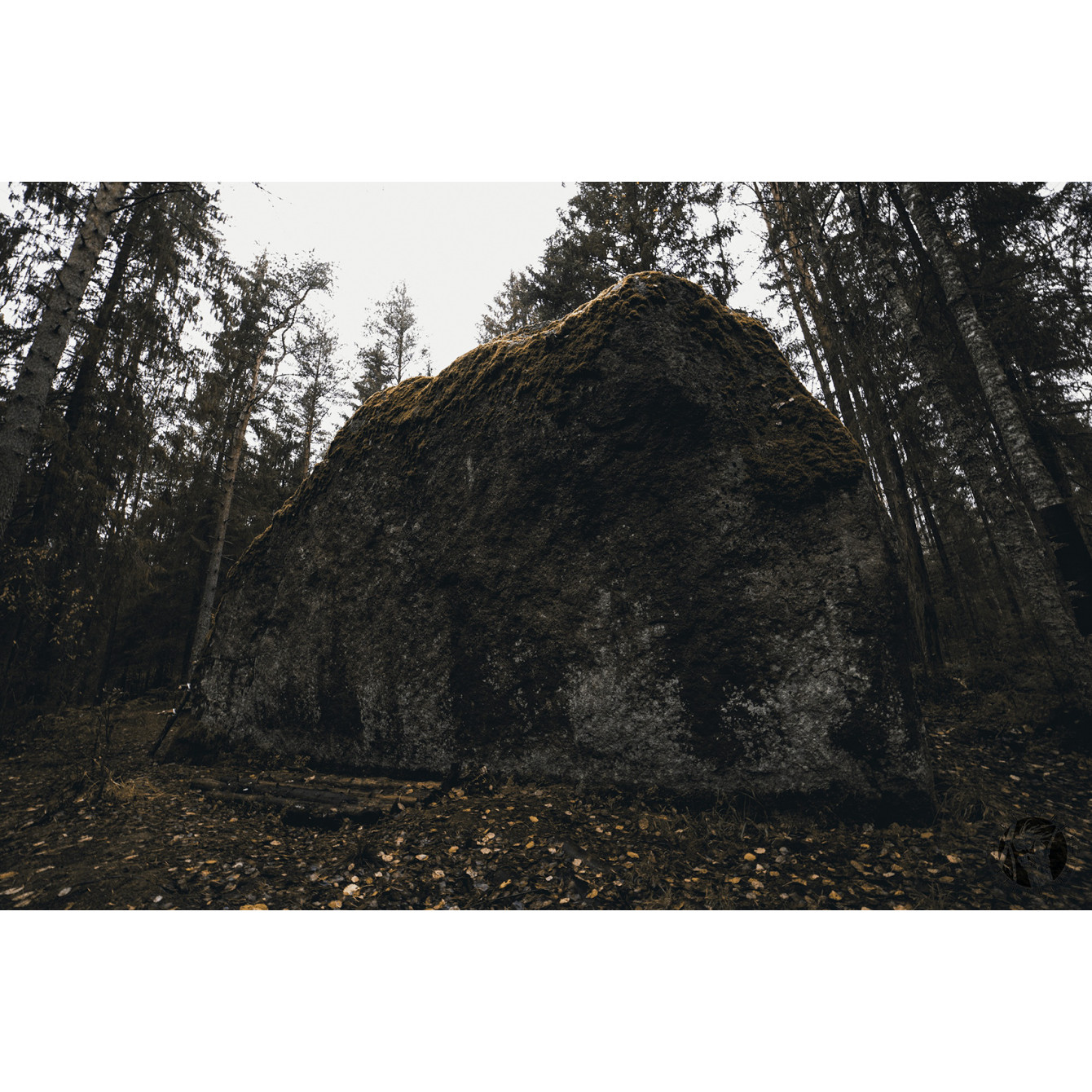
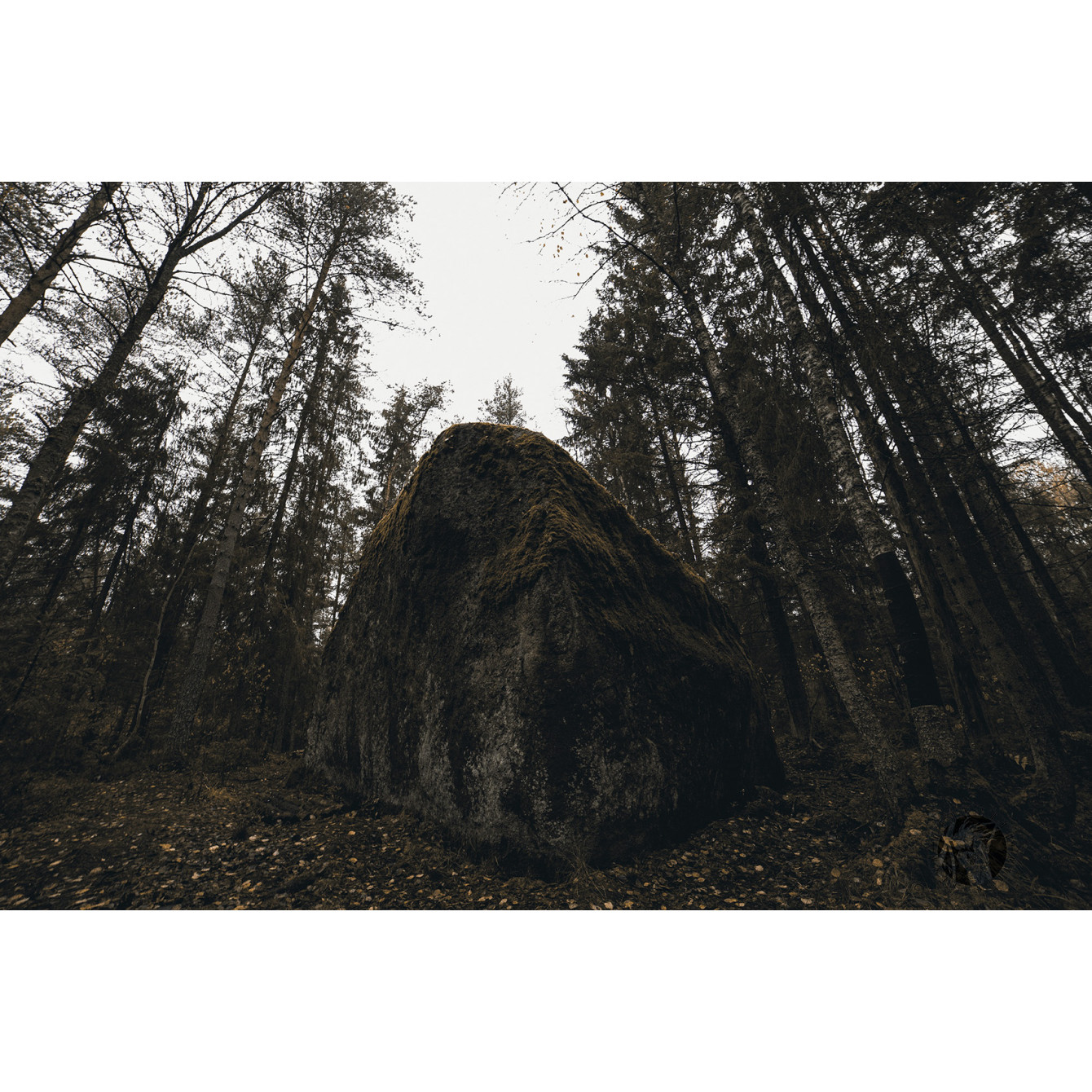
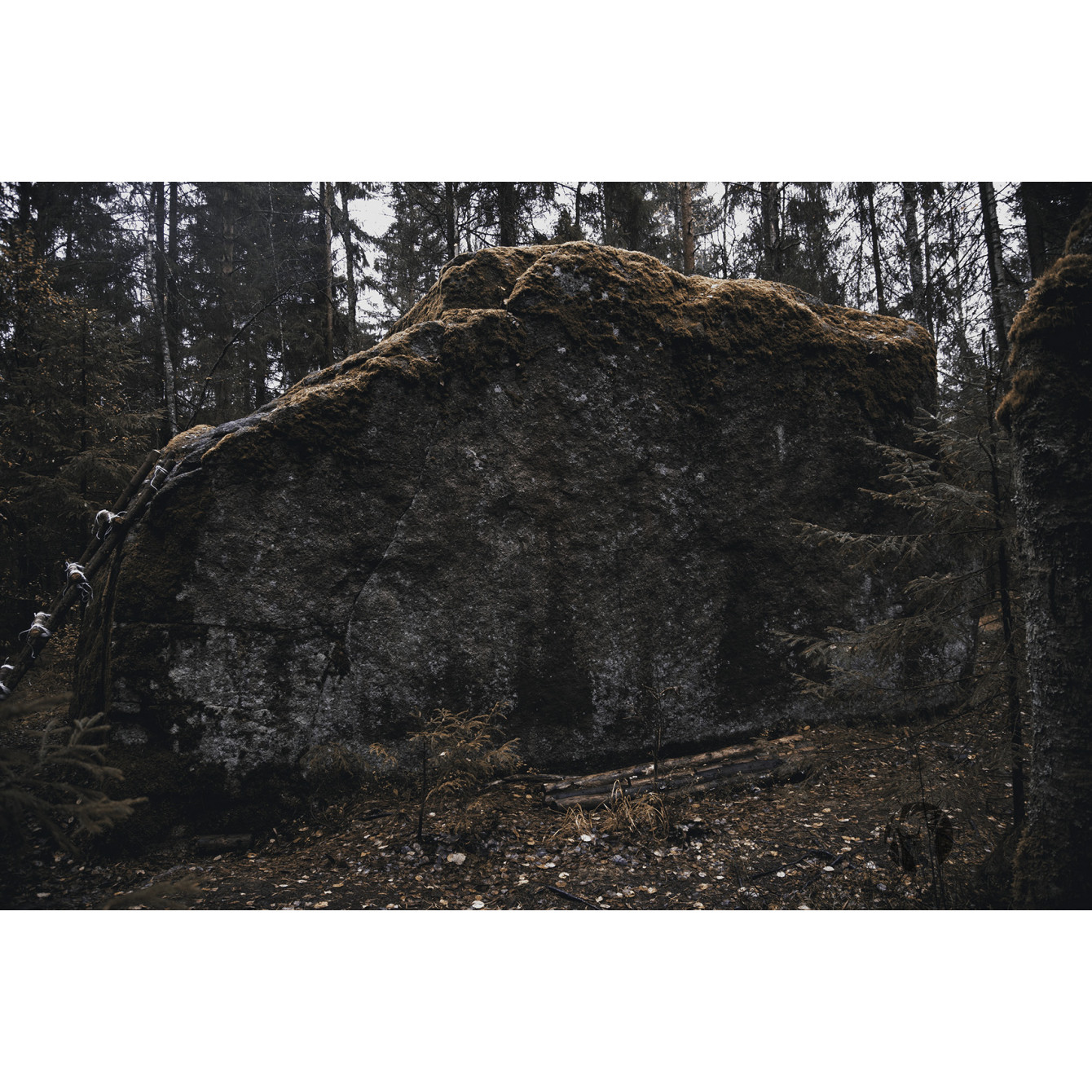
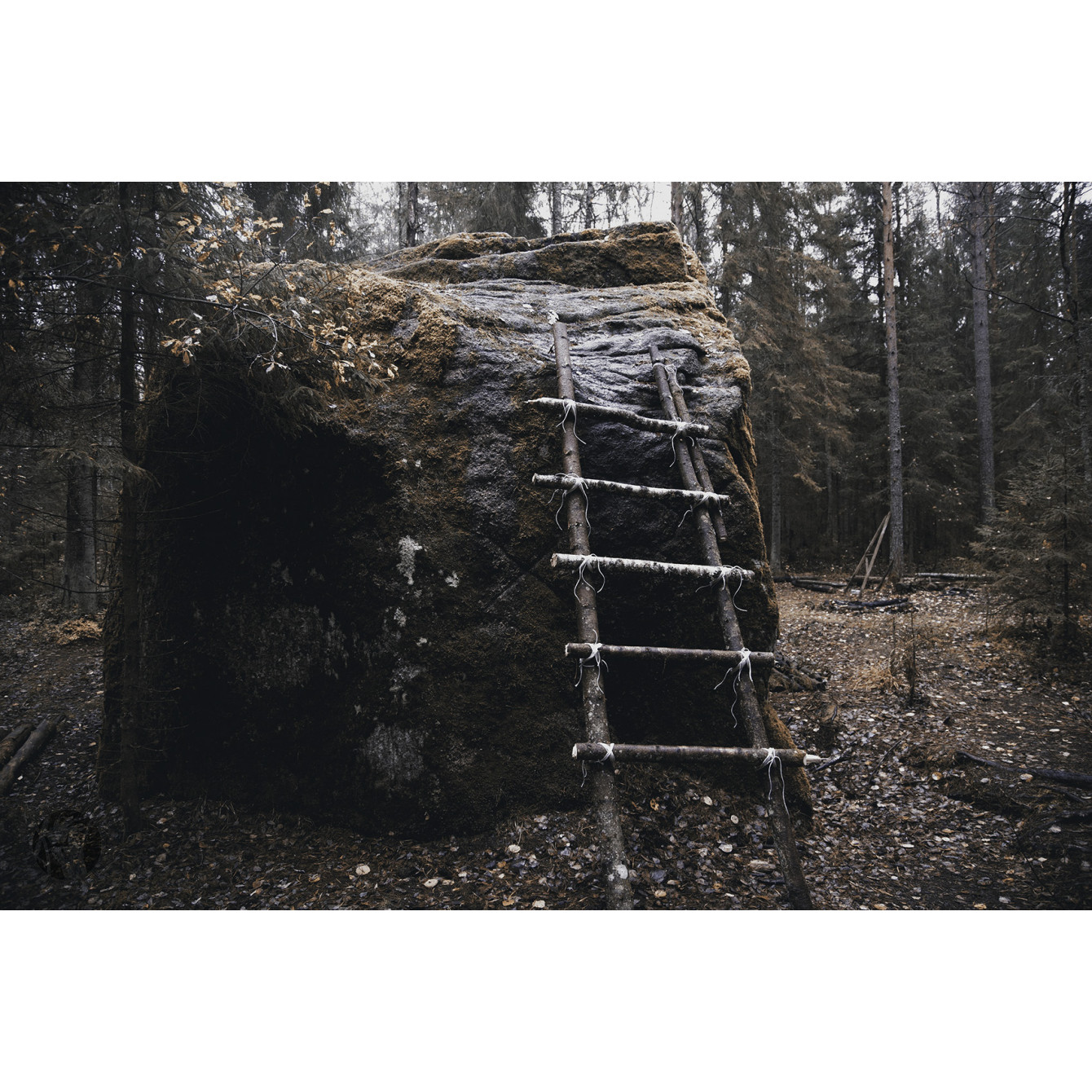
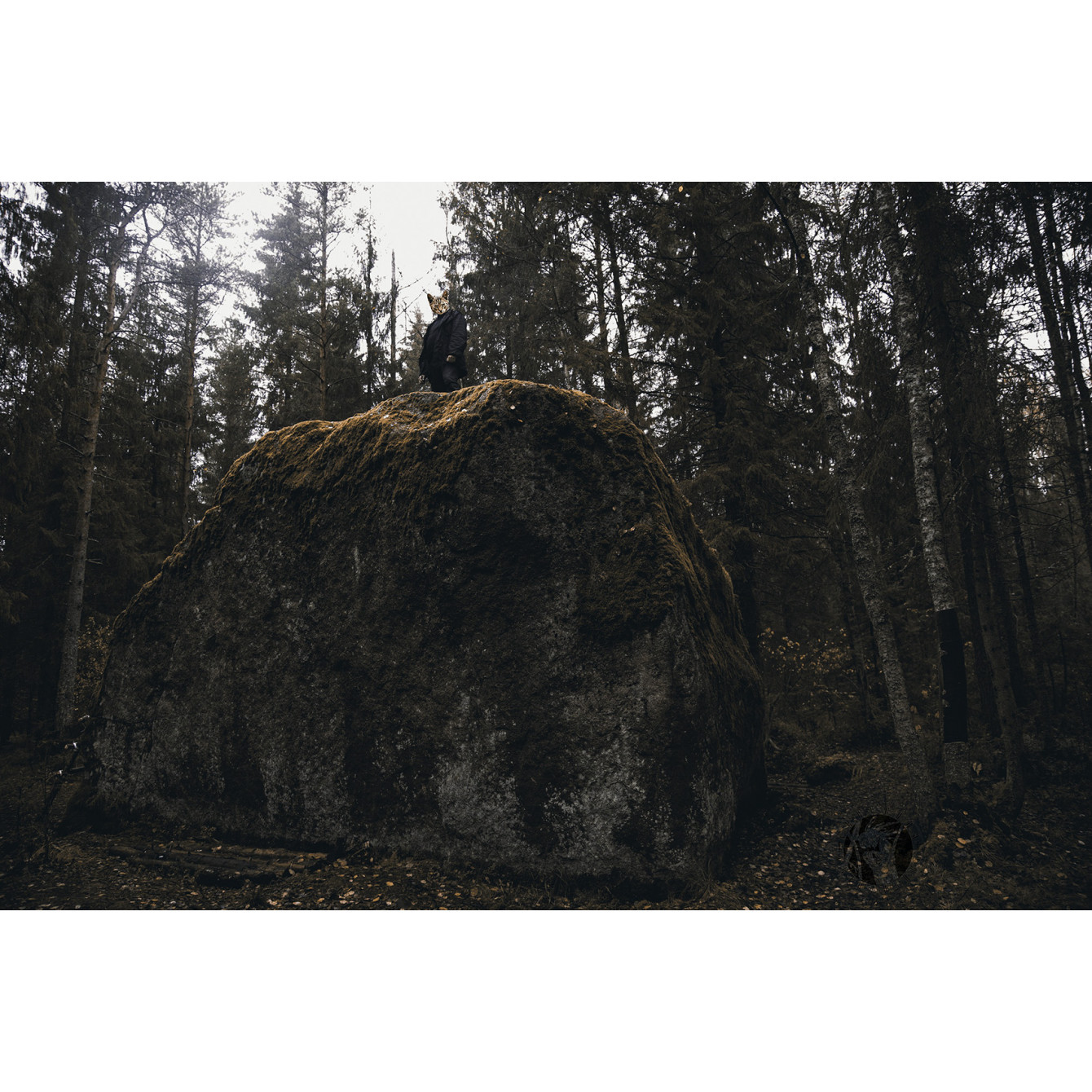
The photographs you see here were taken quite some time ago, back when the Church Stone — also known as the Demon Stone — stood deep within a patch of dense, swampy taiga. It’s no coincidence that locals call this a “bewitched place.” The first time we tried to find it, we returned empty-handed, unaware of the narrow path that led there, after wandering for hours through the northern jungle. But nothing lasts forever under the Moon: today, even the blind could find the Stone, as certain “wise men” from some corporation have laid a gas pipeline right beside it, destroying much of the ancient landscape that once surrounded the site.
The Church Stone is a massive glacial boulder, carried here thousands of years ago. Like many such megaliths, it became a place of spiritual significance for the local tribes. And it’s easy to see why — it rises about 3.5 meters high and stretches roughly eight meters along one side. Near its base, there’s a small arch or “entrance,” visible in the first photograph of this post.
On the surface of the giant one can still see a few crosses — marks left by Christian missionaries who tried to “baptize” the pagan stone and neutralize its dangerous powers. According to local stories, they even attempted to destroy it, surrounding the rock with fire while pouring water over it — a ritual once practiced in these lands, which indeed ruined some other stones.
Perhaps in pre-Christian times the boulder was not a “sinister” place at all. It might have been a sacred site of healing and protection for the semi-pagan Finno-Ingrian peoples who lived here. Yet with the coming of Christianization, its meaning inverted — from holy to accursed. Around that time, a haunting legend took shape: elders told that a real church once stood on this very spot. But its priest and congregation were blasphemers, steeped in sin. One day, as they gathered for another unholy service, God turned them and their church into solid stone. Since then, only the arch at the base of the boulder remains as a reminder of what once was — and, they say, on stormy nights or in the dead of darkness, a passerby might still hear laughter or distant church singing from within the rock.
Despite centuries of Christian faith and later Soviet atheism, the Church Stone has never been forgotten. To this day, modern urban “sorcerers” and mystics of all kinds continue to visit it, performing their rites upon and around the boulder. They leave behind the usual traces of magical activity — coins, candle stubs, ribbons, offerings — once again affirming its uneasy, timeless power.