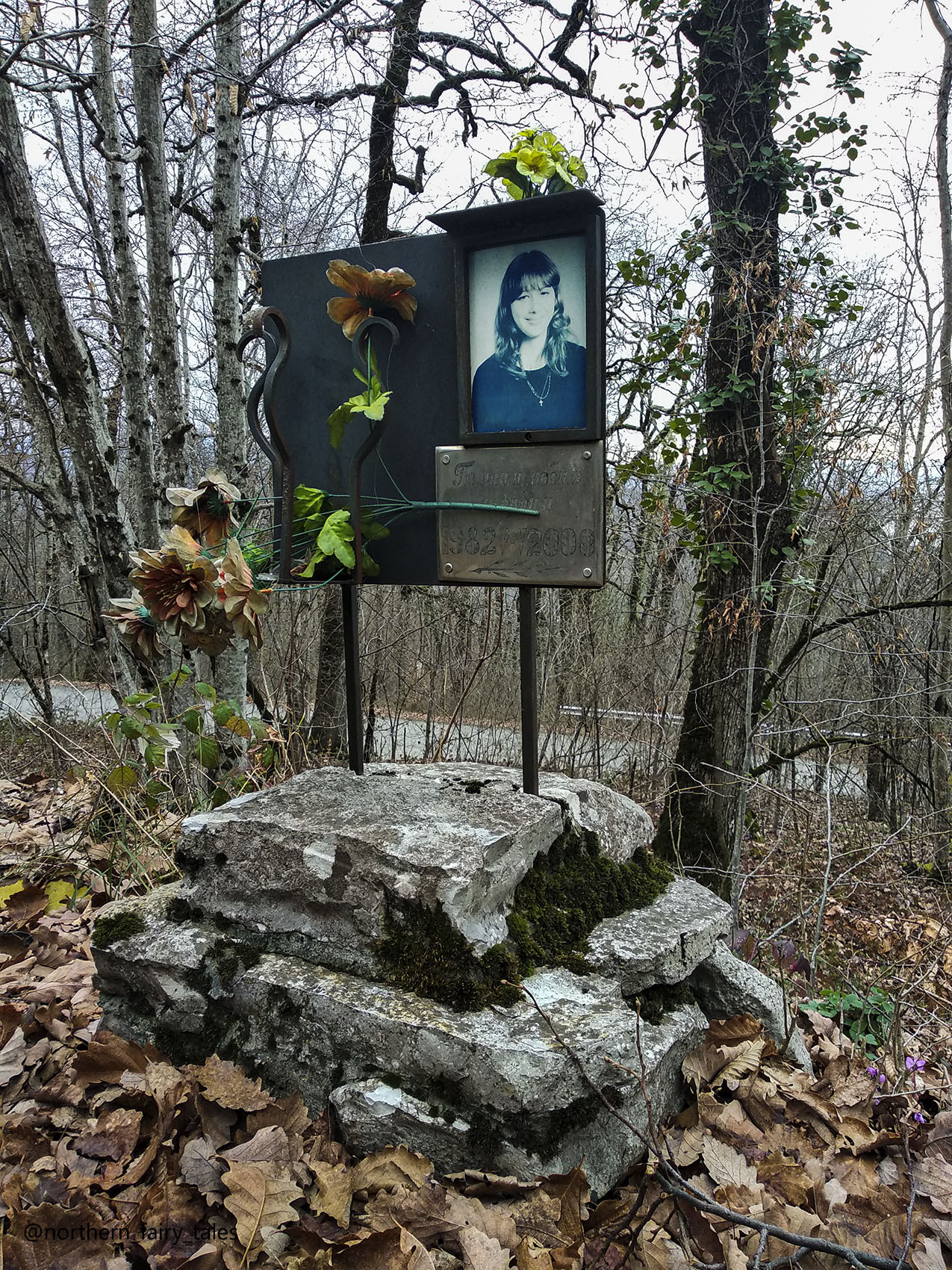

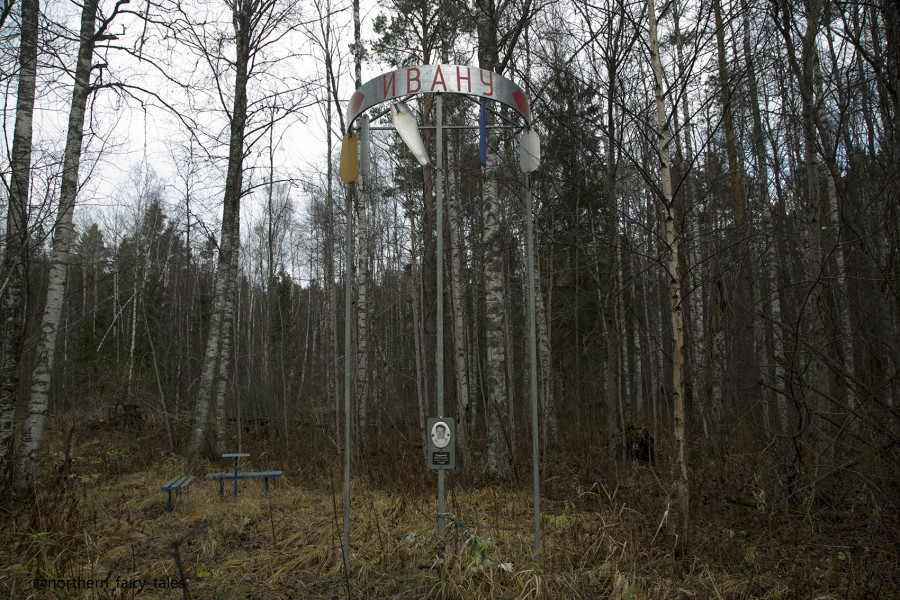

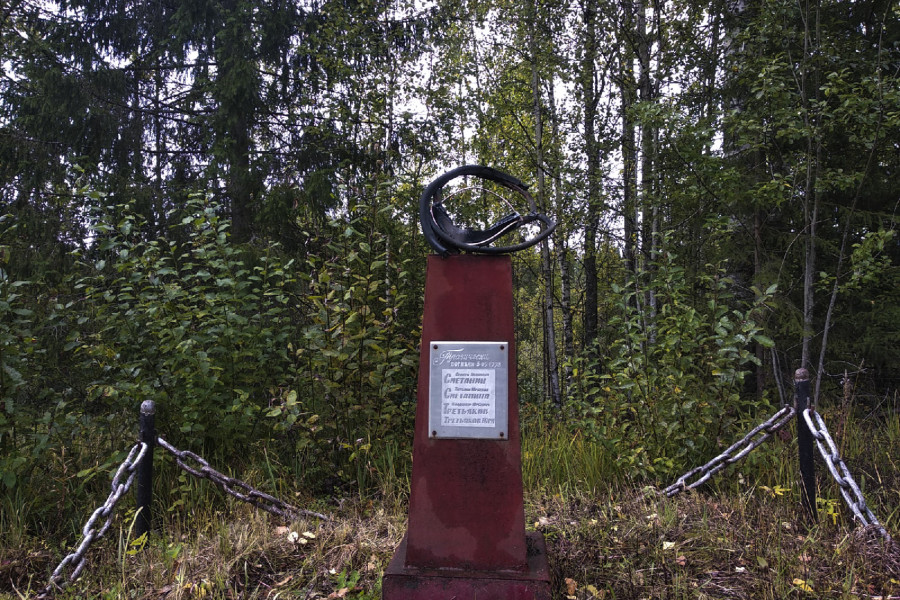
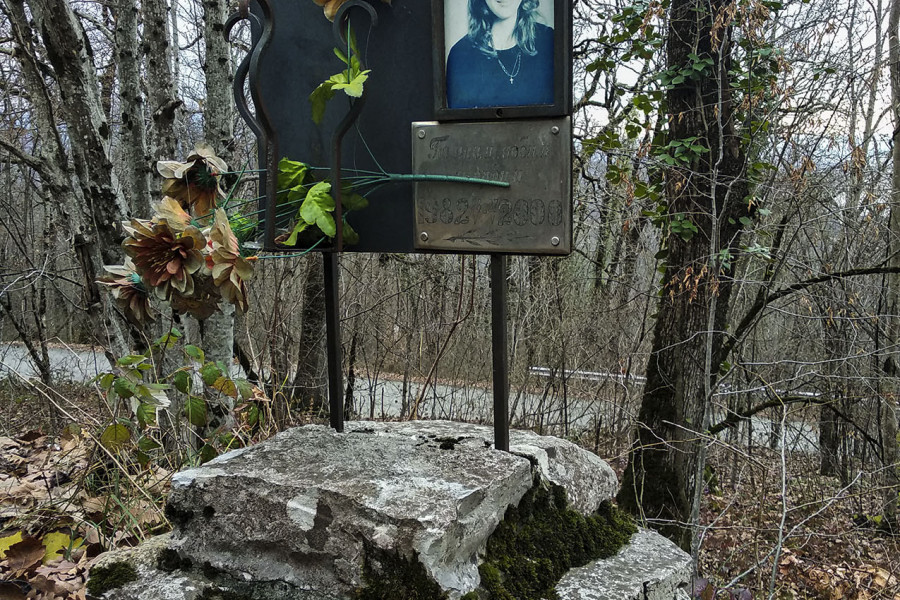


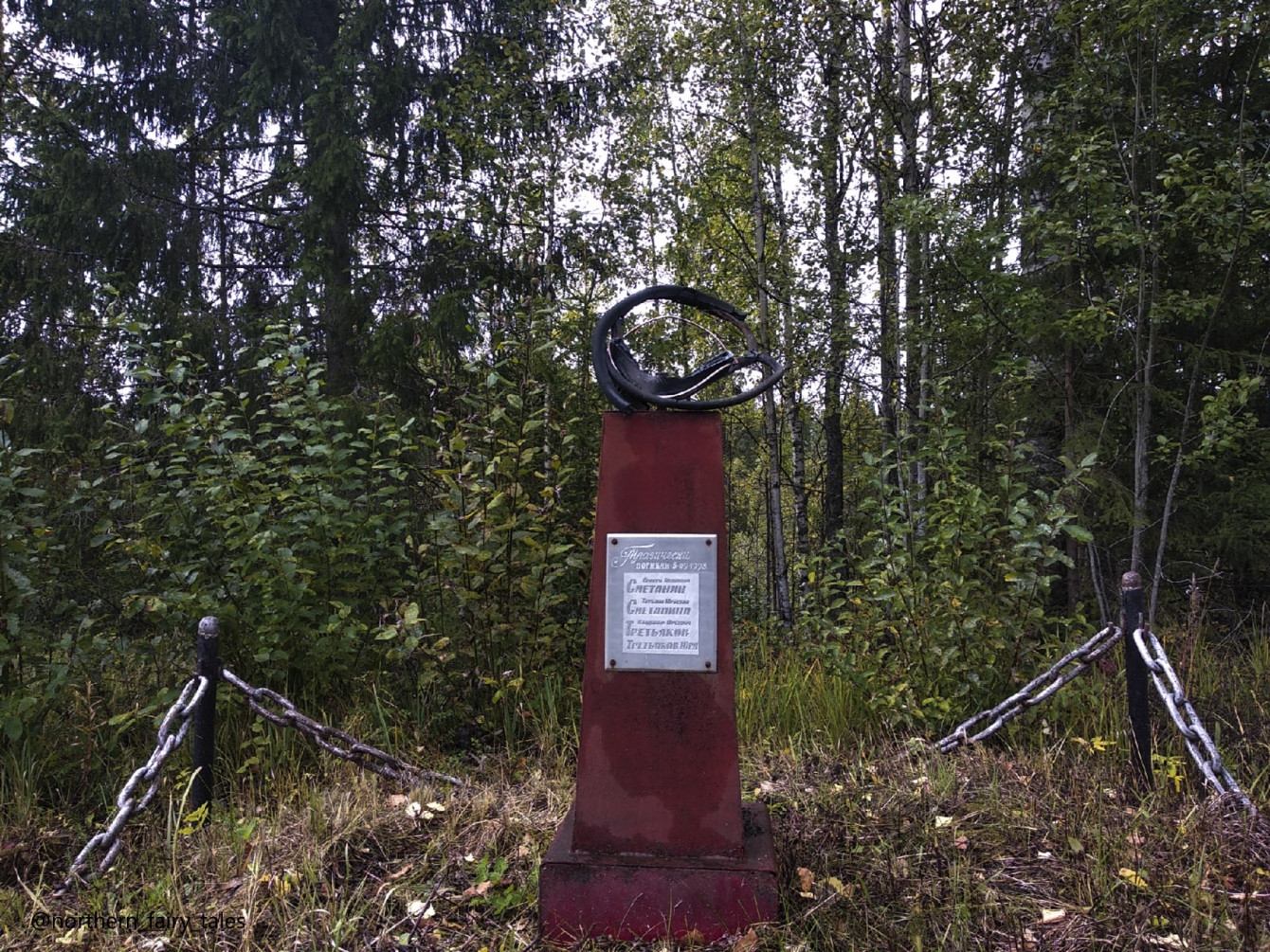

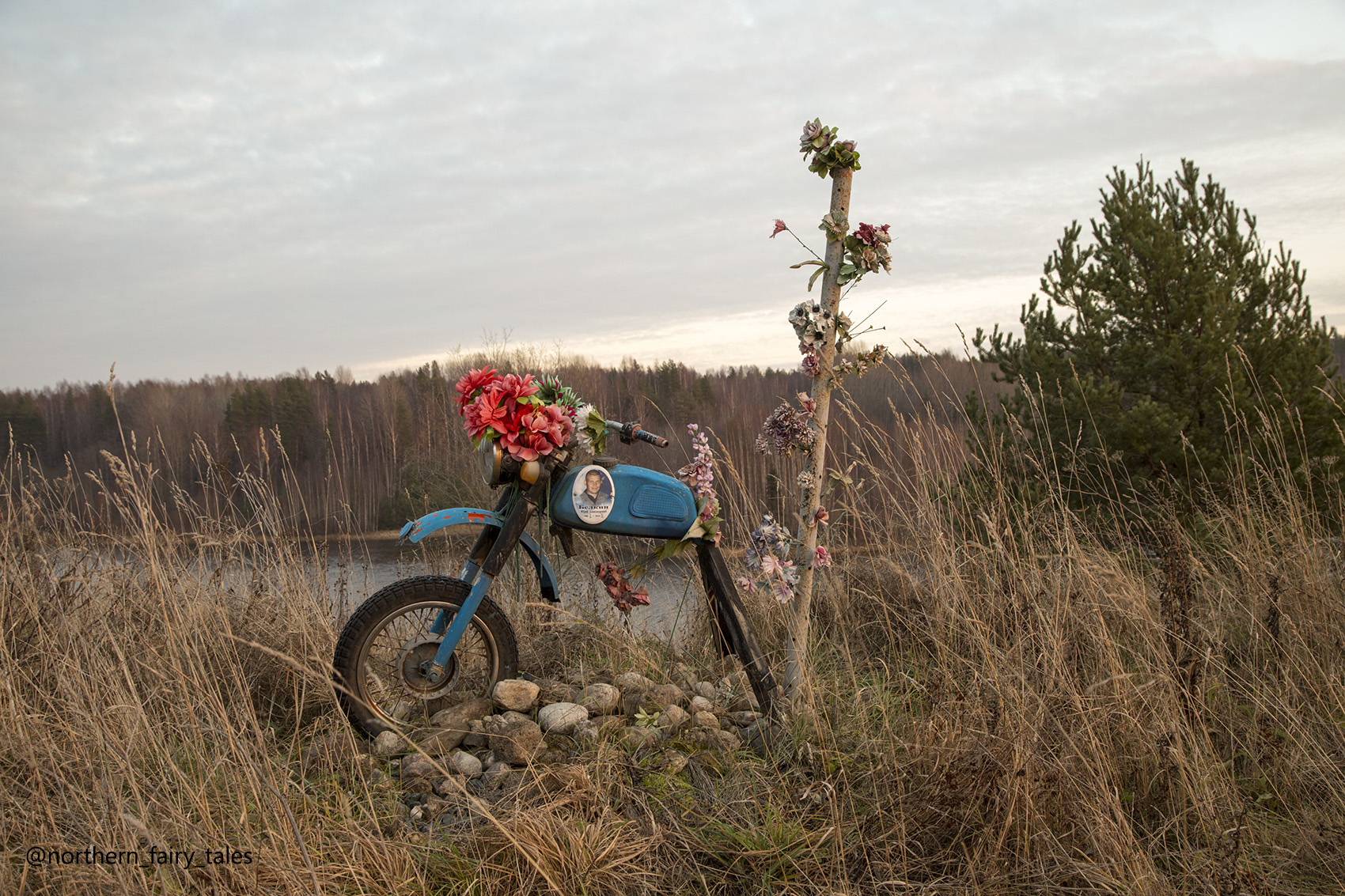
Anyone who has ever been out of town has seen gravemarkers raised here and there along highways—memorials to those killed in car crashes. Sometimes you can find something similar in cities too: wreaths and flowers tied to lampposts. In town such cenotaphs are makeshift and short-lived, but outside the city these “graves” can stand for decades. You can also see such objects on islands and along the shores of rivers and lakes—memorials to drowned fishermen and tourists.
In the modern world, these markers are, of course, memorials rather than real graves, since victims of accidents are buried in ordinary cemeteries—yet people still actively single out in the surrounding landscape places connected with death. Why?
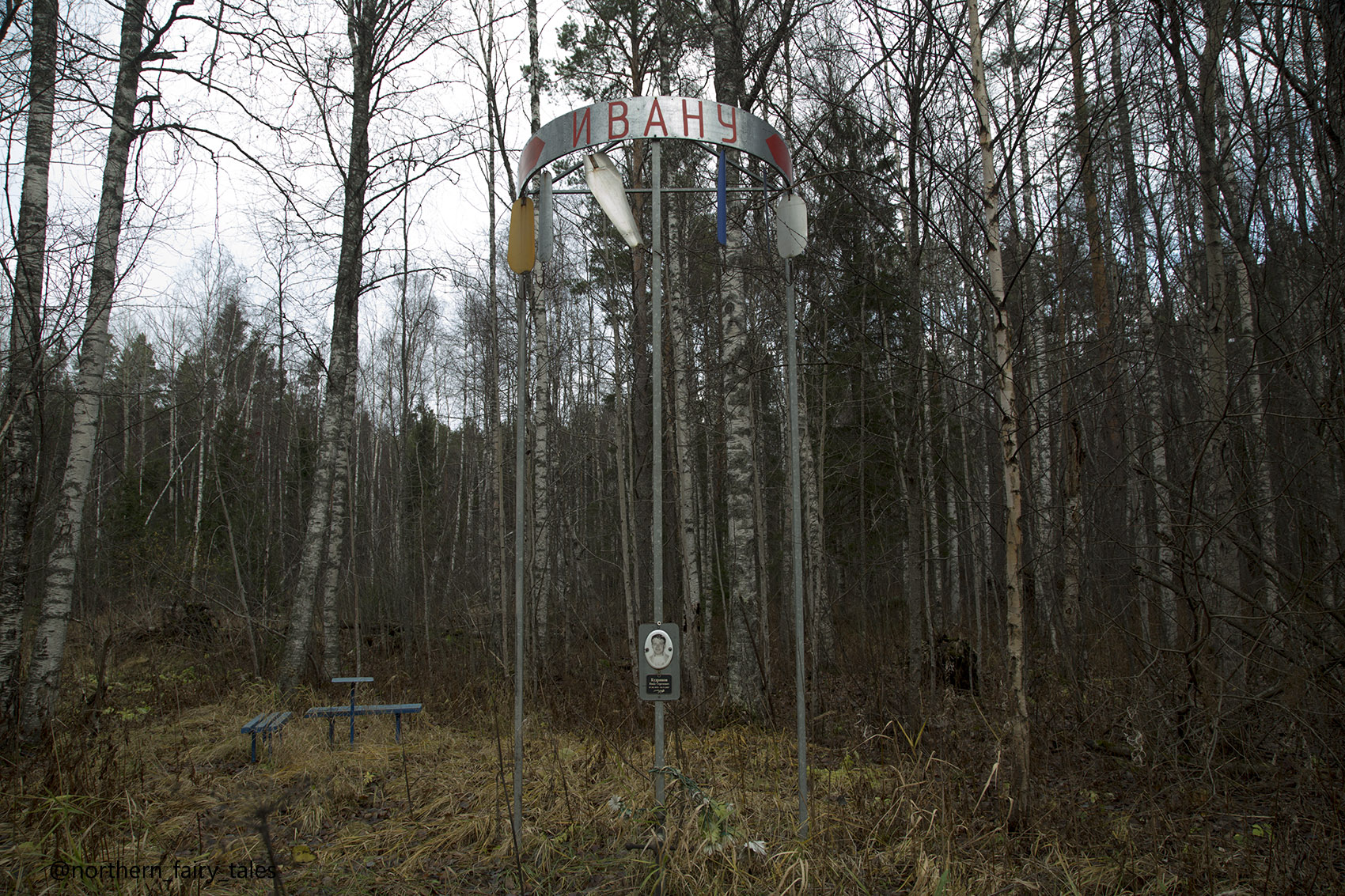
Russian ethnographic scholarship has a term: “zalozhnye pokoiniki”—literally, “the laid dead”: people who died not by their “own” death, before their allotted time (A note on zalozhnye pokoiniki: these were the dead who were not buried in the ground. Instead, they could be placed in special shelters for such bodies—so-called “God’s houses”—or simply covered with branches, blocked in with stones, and so on, because the earth was believed not to “accept” them). In folk understanding this category included the murdered, the drowned, suicides, habitual drunkards who drank themselves to death, and—of course—those we would call victims of accidents. According to folk beliefs, such dead people, “living out beyond the grave the term of their life, preserving all their qualities, their temper, inclinations, and habits,” may actively appear to the living and harm them. In olden times, the “zalozhnye” were most often buried on the very spot where they died.
To understand this logic, we must turn to the texts of the researcher of folk demonology D. K. Zelenin:
“Where do the zalozhnye pokoiniki live after death? In the same place where unclean spirits live—together with devils. The dwelling places of unclean forces are very numerous and varied: first of all, of course, the space underground, and then all standing waters on earth—deep pools, lakes, ponds—as well as bogs, quagmires, ravines, thickets, and in general all ‘unclean places’… Wherever the zalozhnye may live, they always keep the closest connection with the place of their death and the place of their grave. A man was fishing in a place where someone had drowned; then the drowned man climbs up to the fisherman and tells him: this place is mine. Every month, at the new moon, the drowned swim to the place where they drowned and bathe in the moonlight.”
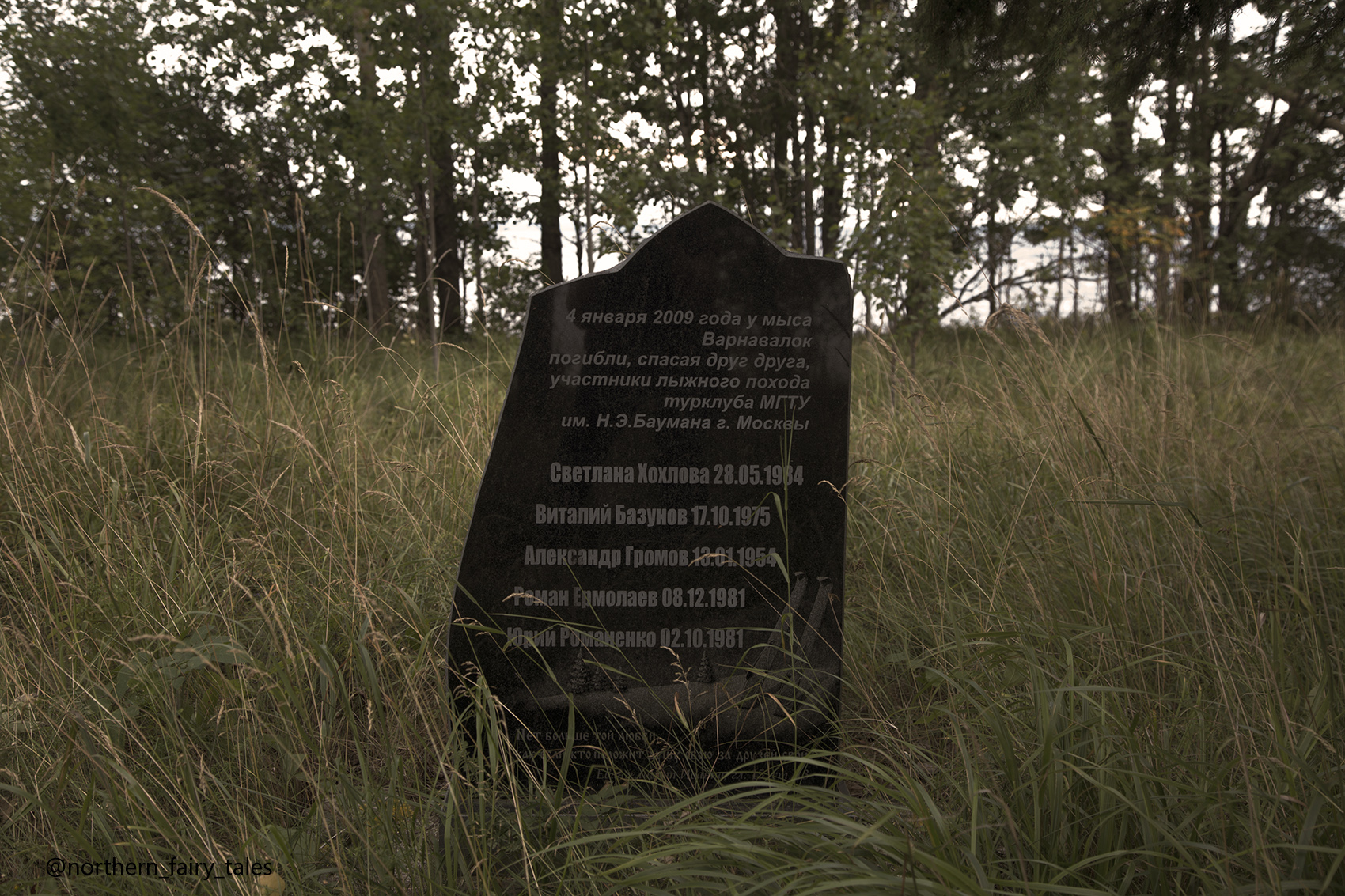
Zelenin gives concrete examples. On September 12, 1884, in the village of Troitskoe-Varypaevo of Petrovsk Uyezd, Saratov Governorate, a peasant lad named Grigorii hanged himself in a grove near the settlement, on a willow:
“No sooner had they buried the suicide than village women began to say that, in the place where Grigorii hanged himself, an apparition had appeared—so frightening that one woman lost her speech. The apparition was in the form of the dead Grigorii… Moreover, many supposedly heard sobbing in the grove where Grigorii perished untimely.”
Or another case: in a deep pit with spring water in a meadow, thieves drowned Akim the forester the previous summer; now, in that spot, the soul of the drowned man laments—someone groans so pitifully, so pitifully.
There were also “practical” rules meant to keep such a dead person from returning:
“So that such a dead man would not go back to the place of his death for seven years, the body should not be moved from the place where he died to a new place. So thought peasants of Novomoskovsk Uyezd. If such a body nevertheless must be moved, then ‘they carry it across a crossroads road: in that case the suicide, reaching the crossroads, loses the way and goes no farther.’”
Sometimes, because of his sin, the dead person cannot be taken to a “normal,” human cemetery at all, and the place of burial becomes the forest—an abode of demons:
“One man had been promised to the devil. He was very proud, and when he died in the forest, they couldn’t take him out of the forest—the horses would not pull. They had to bury him there, by a forest hut.”
In such places, unclean forces could appear not only in the shape of the restless dead man himself, but in other forms as well:
“On the grave of a drowned man buried long ago, on a moonlit night, the kennelman Yermil saw a little ram: white, curly, nice-looking, walking about. Yermil took it in his arms, but the horse stared, snorted, shook its head; the ram looked at Yermil in a strange, unusual way, and then suddenly, baring its teeth, began to mock him, repeating Yermil’s words: ‘byaa, byaa.’”
Demons here usually frighten:
“In Orenburg Governorate they said about one strangled man that he chases people. The drowned and the hanged run extraordinarily fast; if horses come upon them as they run—they neigh, and if cattle—then they bellow, and thus they frighten them.”
On such territory one should not conduct any activity, because it leads to conflict with a being of “lower demonology”:
“In Sarapul Uyezd of Vyatka Governorate, in a newly built house there turned out to be a kikimora: ‘No one can be seen, but a human voice groans; as soon as they sit down at the table, someone immediately says: “Get away from the table!”, and if they don’t obey—it begins throwing coats from the stove or pillows from the sleeping platform; thus the kikimora drove the owners out of the house.’ The reason for all this was seen in the fact that ‘under the house there had once been buried an unchanted dead man or a strangled one.’”

More often, however, these loci are a direct danger to people:
“In Yaroslavl Governorate, the places where a strangled man hung are considered unclean: in daytime they do not pass there without a prayer, and in the evening they try in every way to обходить or go around or ride around that place. In such places a traveler can be destroyed by a devil in the form of the strangled man—can strangle him, can cut him.”
We managed to find only one case where a place of death is considered holy, not unclean. This is “Grandmother’s stump” not far from the village of Vozhgora, in the distant Leshukonsky District of Arkhangelsk Oblast. The place is a small forest glade on a country track where people still travel by cart and on foot. Once, long ago—no one knows exactly when—an elderly mushroom gatherer lost her way and died on that stump. The stump itself has not survived, and it is the whole glade that enjoys a sacred status.
Local residents, going for berries and mushrooms or out hunting, always come here and ask the grandmother for luck and help, bringing her simple offerings and crossing themselves:
“If you go, take a bit of bread, pick some berries—then put it for that grandmother, the grandmother-who-has-been-there. And bring a headscarf too—a white headscarf.”
Researchers who studied the grandmother’s cult could not establish any details about her identity. But as a true mythological figure of folk religion, the grandmother has the ability to appear to people—for example, in dreams:
“There was a case. A woman went for cloudberries. She was walking with cloudberries—she got thirsty. By Grandmother’s stump there is a glass jar with water. She took the water and drank it. And she said: ‘I’ll bring you some later.’ One day, two, three—she doesn’t come, and then that grandmother appeared to her in a dream: ‘And why aren’t you bringing the water?’ So she went later and set water there.”
In this connection ethnographers rightly remark:
“The place is perceived as holy because a person died here. Thus, in modern stories an archaic motif arises: a sacrifice that sanctifies sacred space…”
It only remains to add that dangerous, unclean space is also singled out in the landscape and is, in its own way, an object of veneration—toward which appeasing rites are performed.