We didn’t make it here on the first try—once we took the wrong road, another time we arrived too late, and then deep snow got in the way.
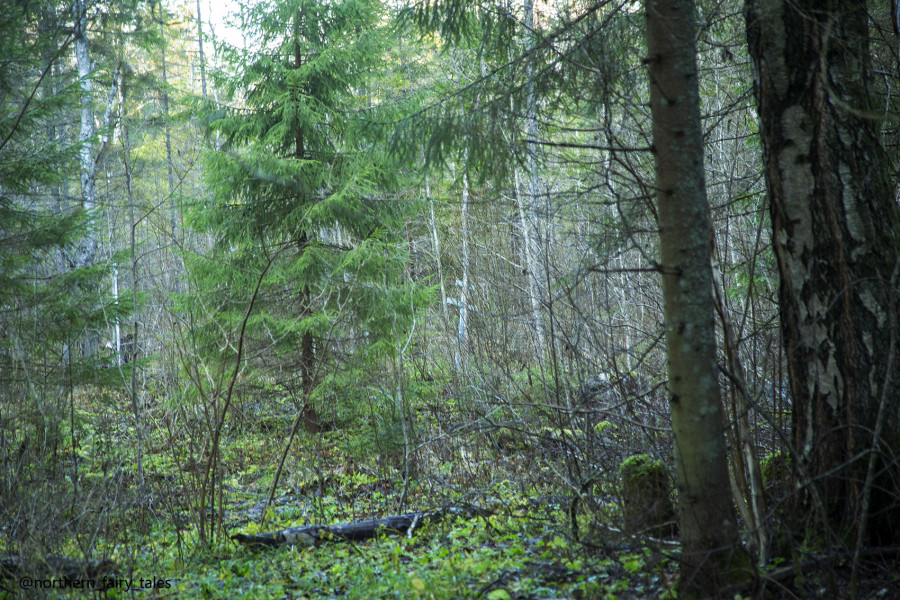
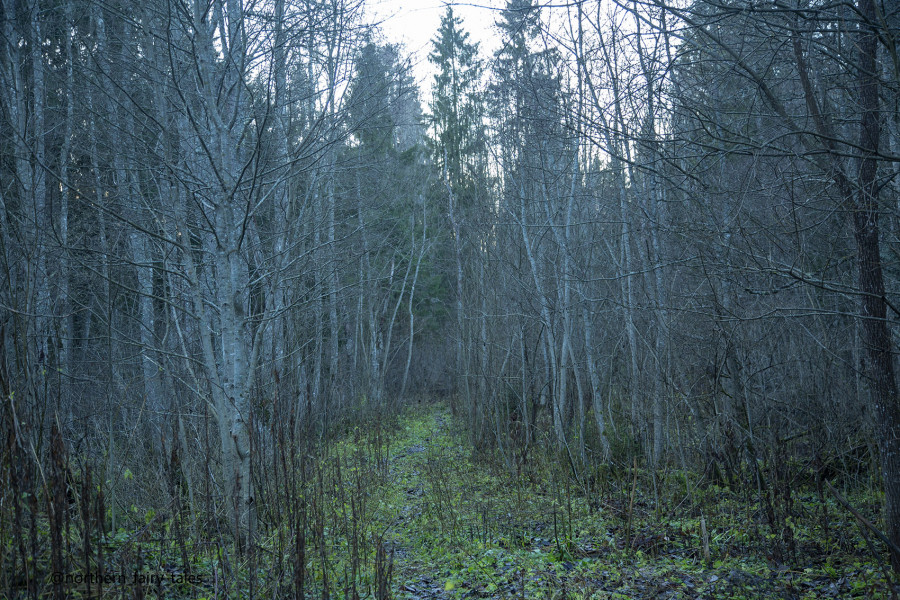
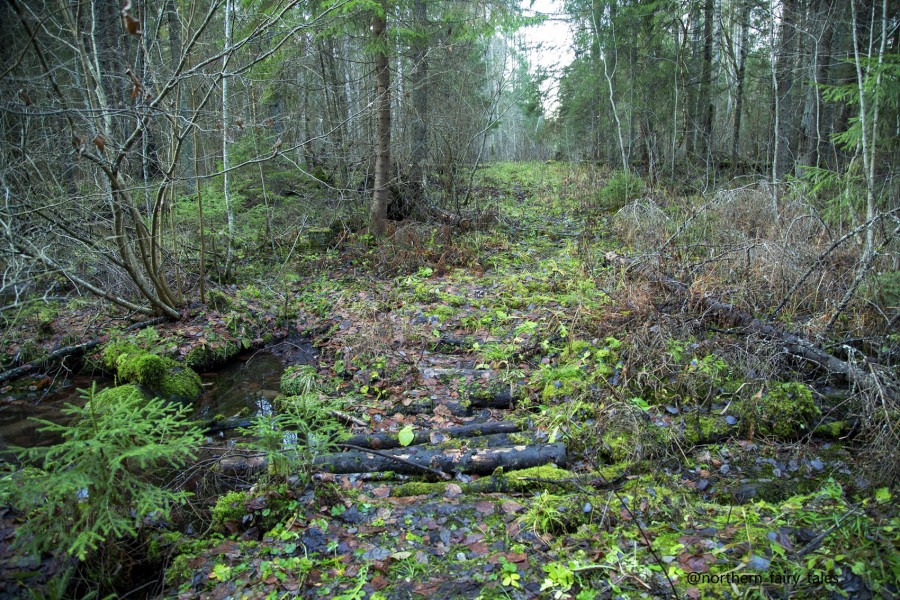
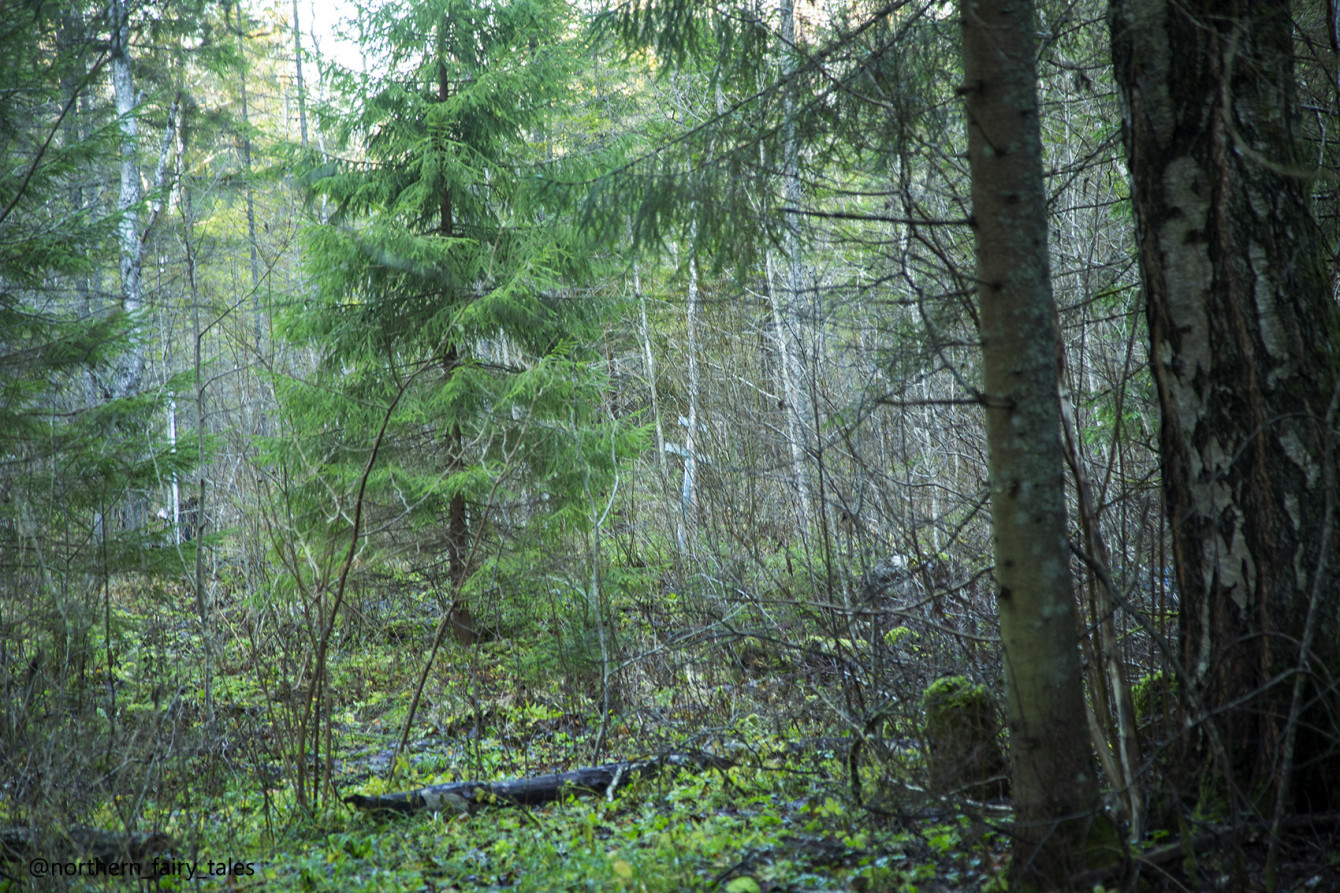
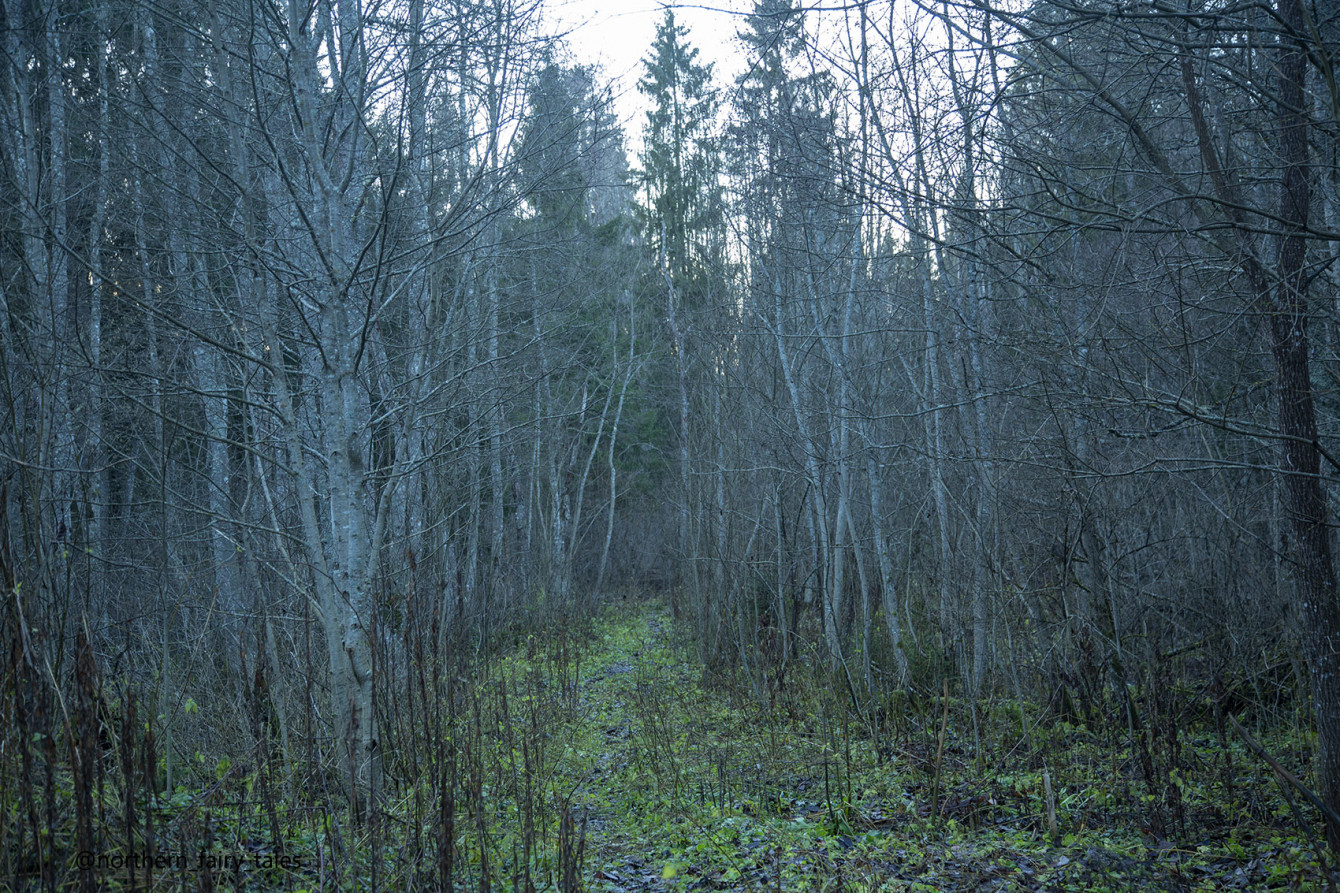
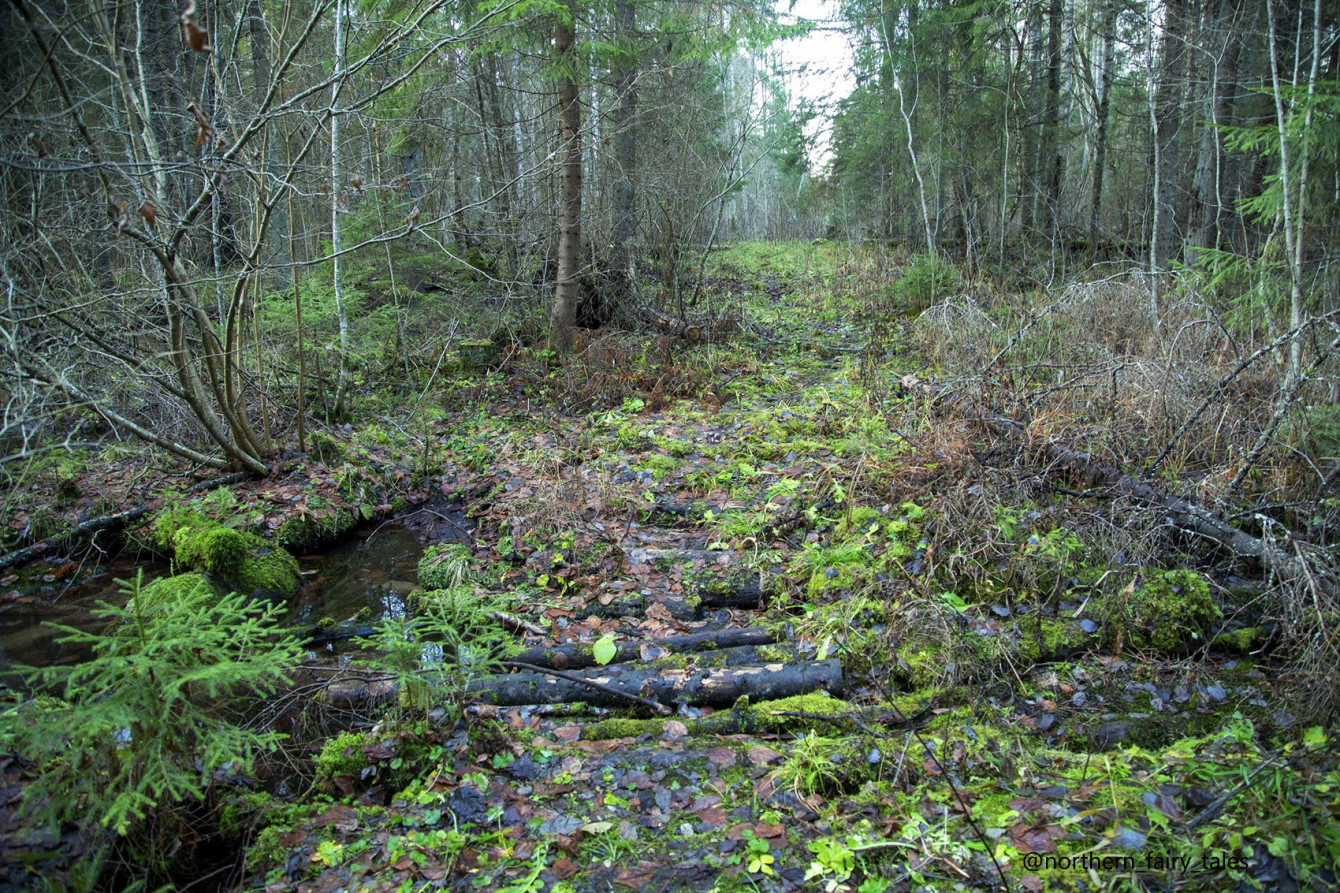
A few kilometers through truly primeval, dense forest and an old log causeway lead to a small but very curious boggy clearing.
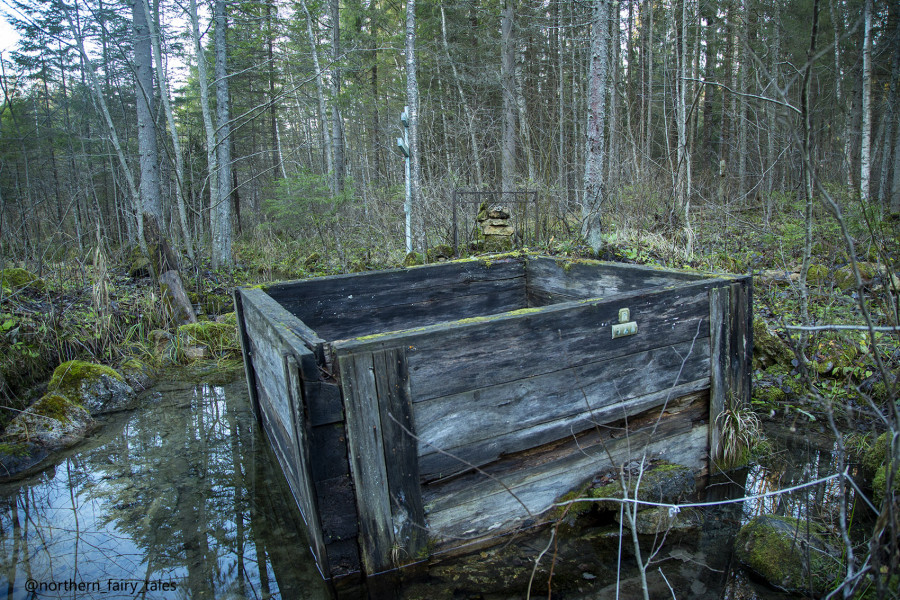
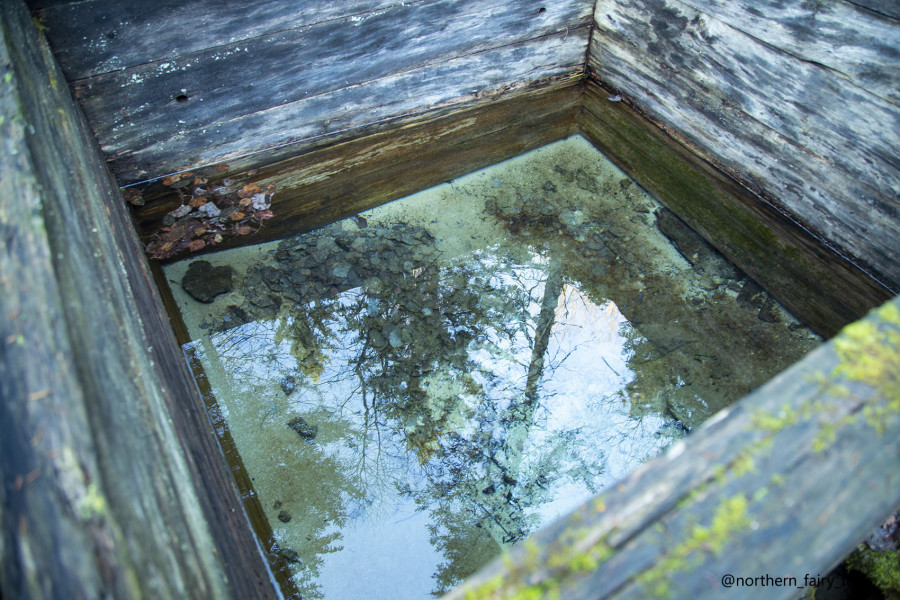
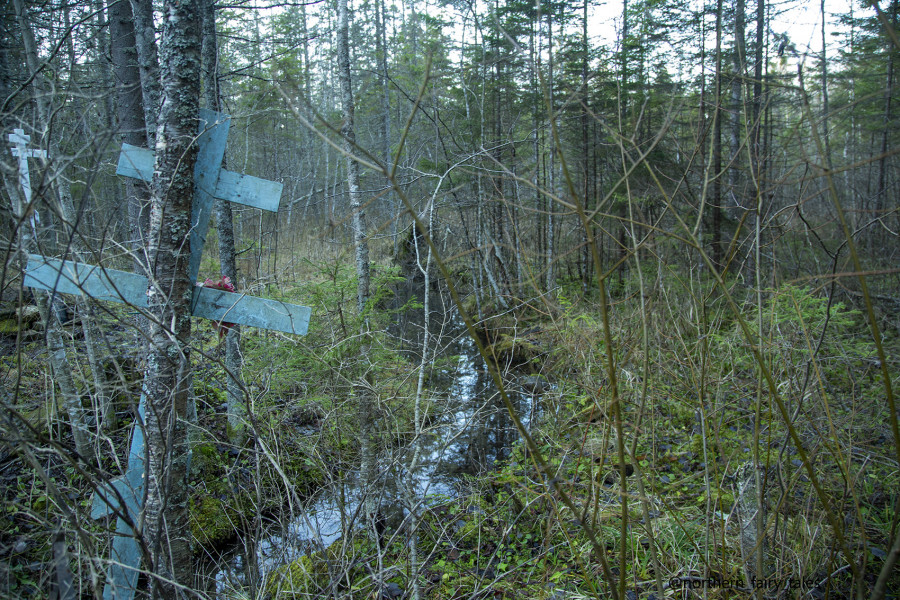
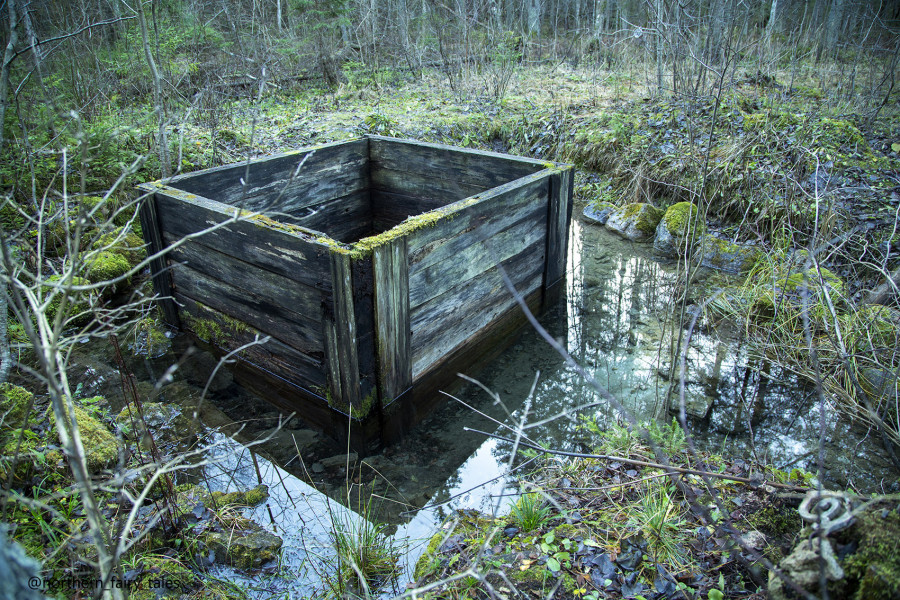
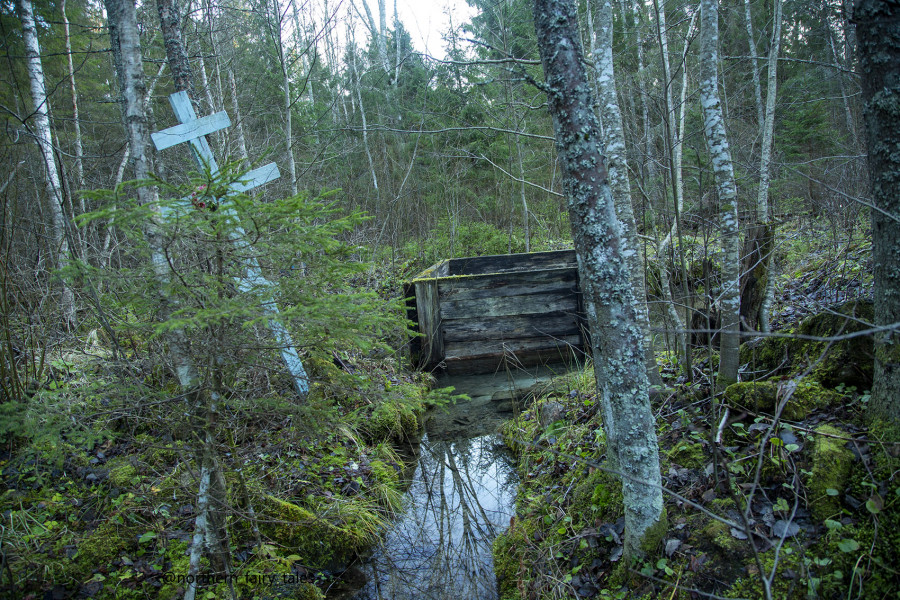
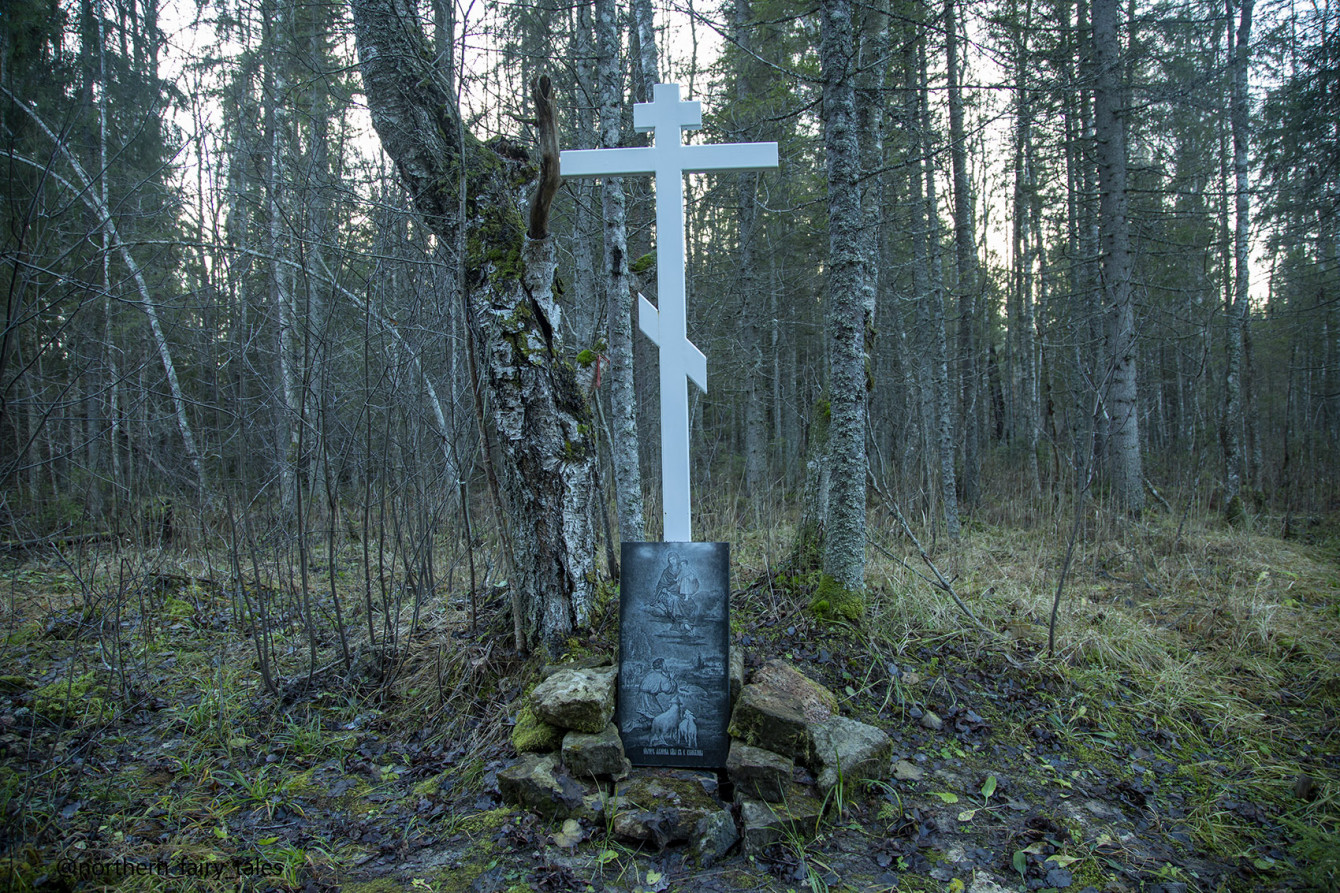
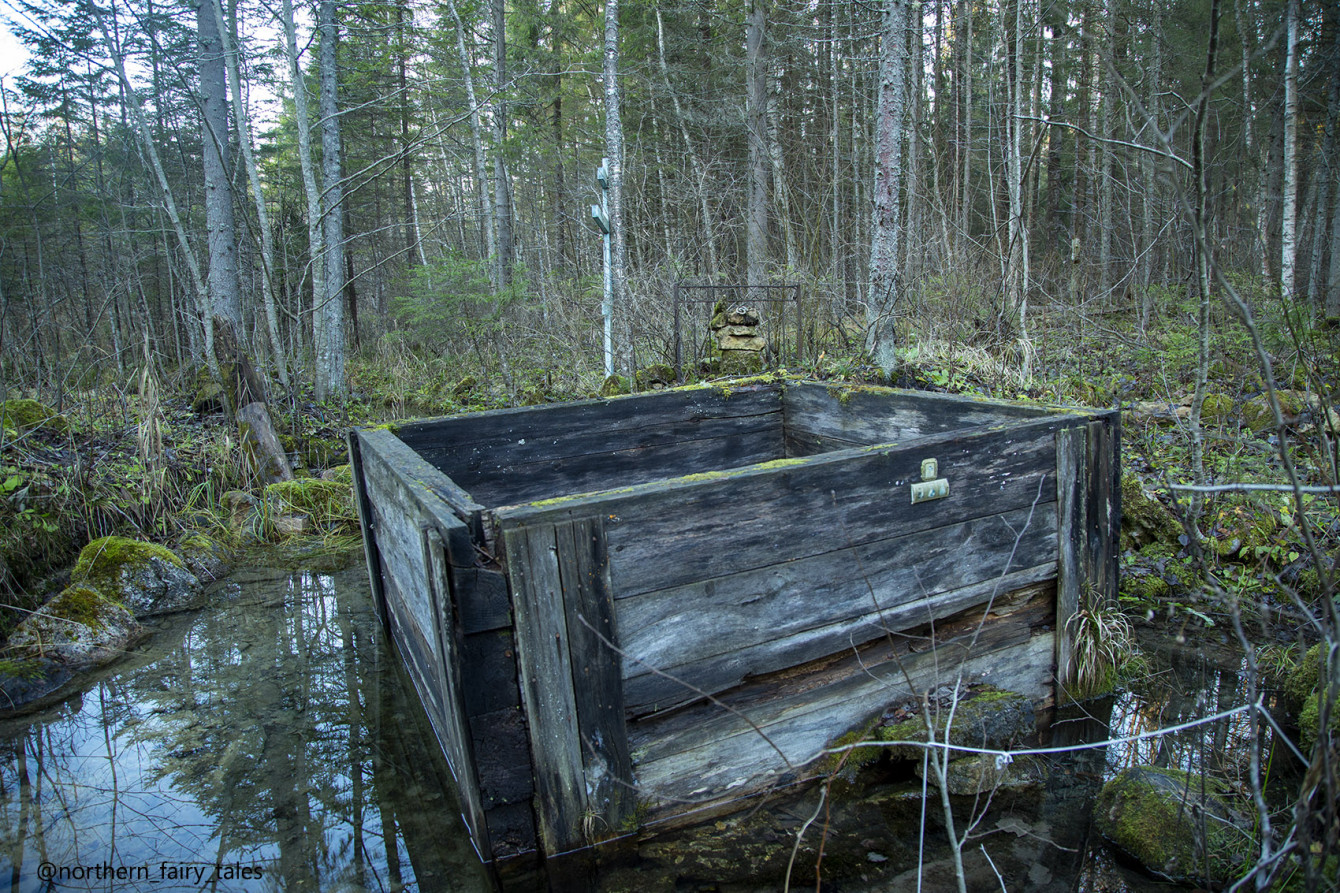
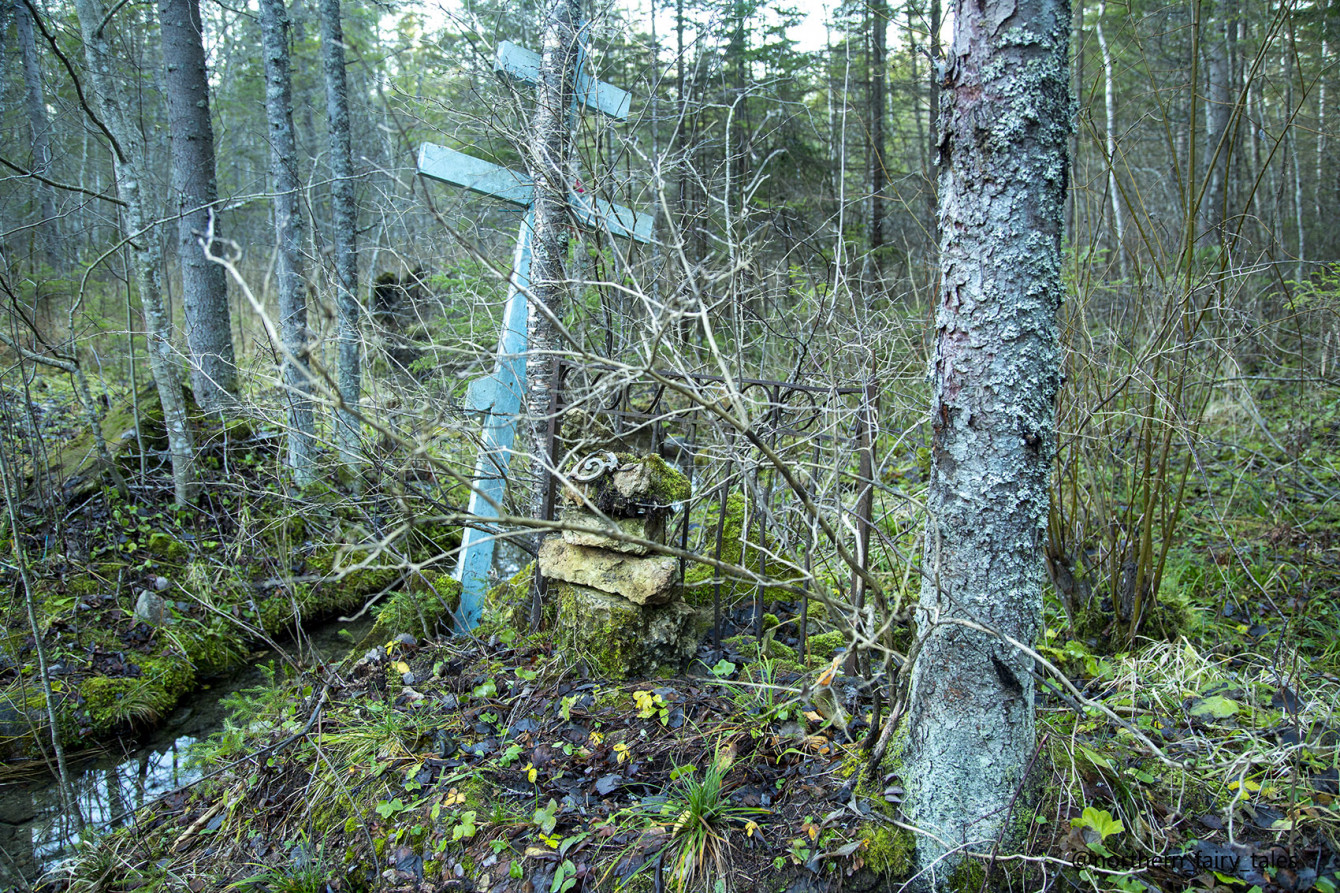
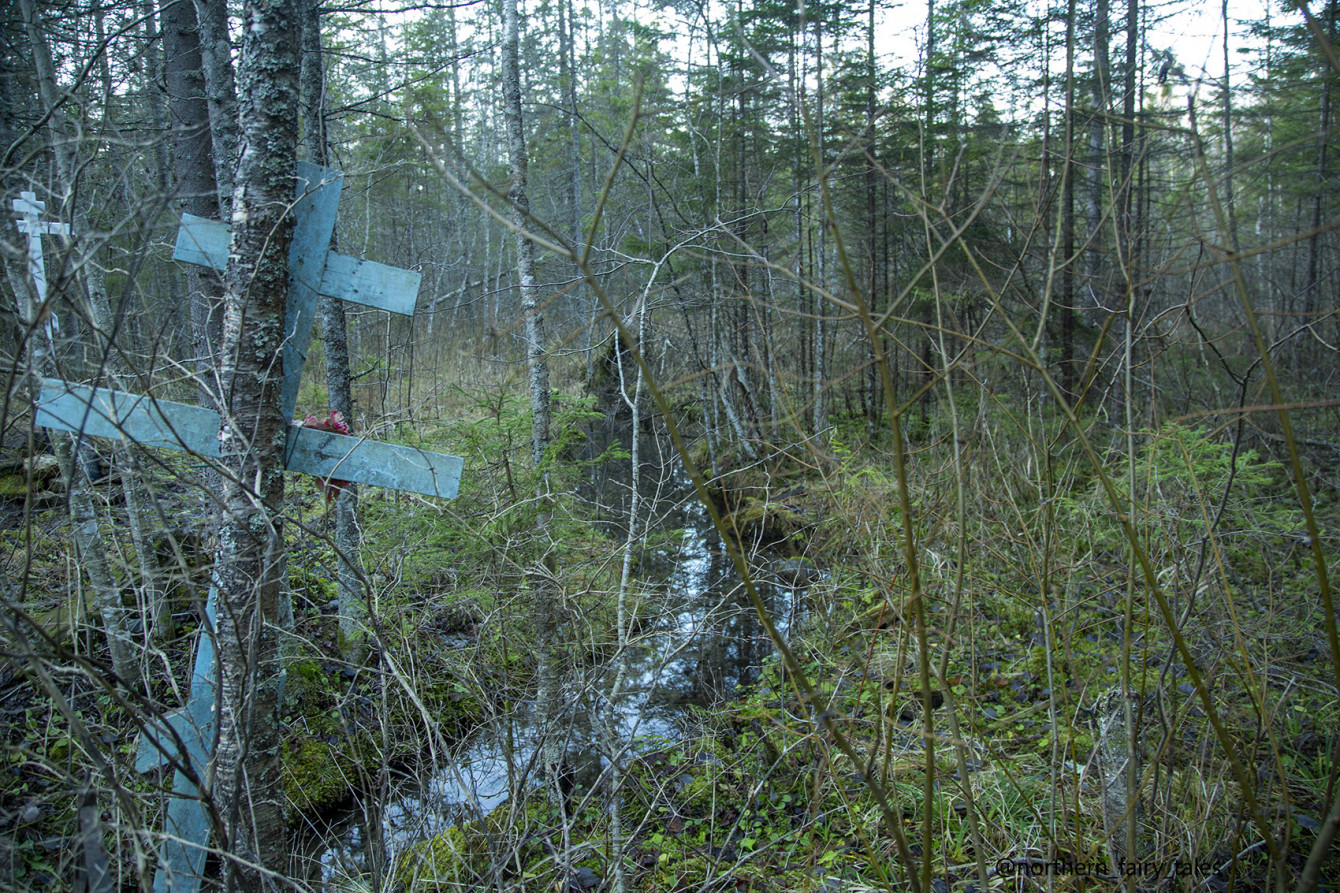
Long ago, in this unusual place, the Mother of God appeared to a shepherd with the infant Christ, leaving a footprint on a stone. Since then, the spot—with its old birch, footprint stone, and spring—has been considered sacred. Estonian Lutherans lived here at the time; most likely it was they who built a chapel over the spring, and on August 15, on the Dormition of the Mother of God according to the old style, they performed a water blessing. But times changed: the Bolsheviks destroyed the little chapel, and before the war the Estonians were resettled; their farmsteads vanished, and the area fell silent and empty.
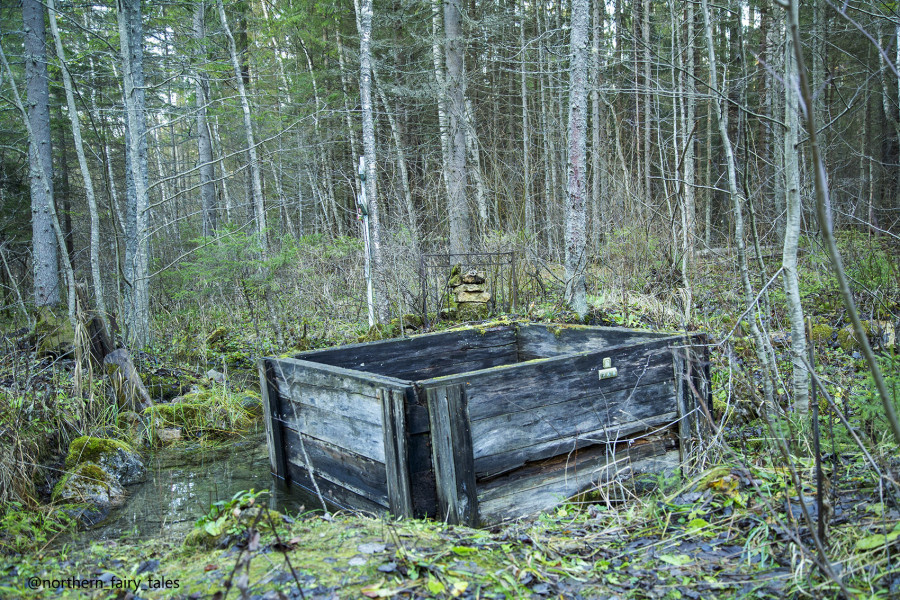
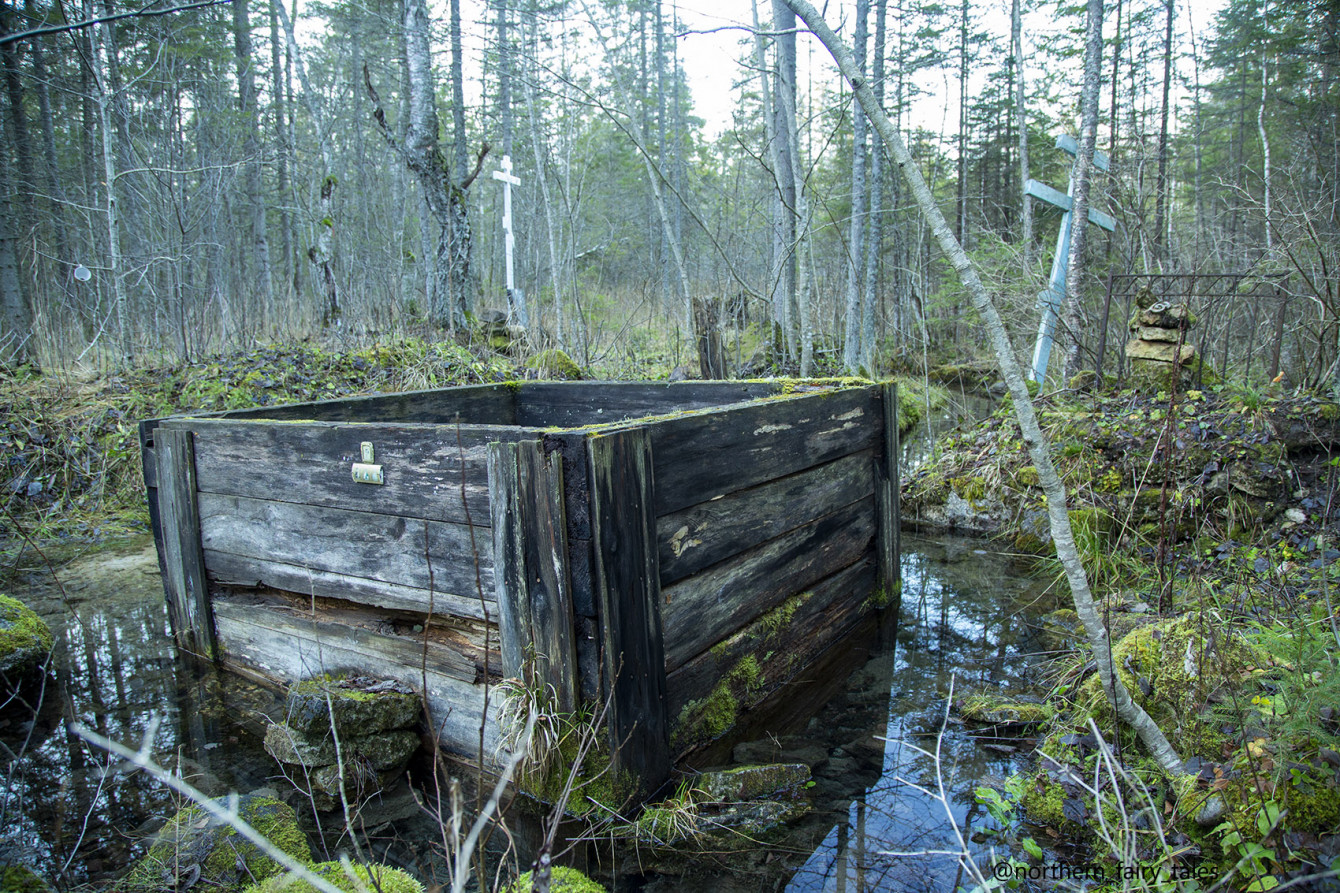
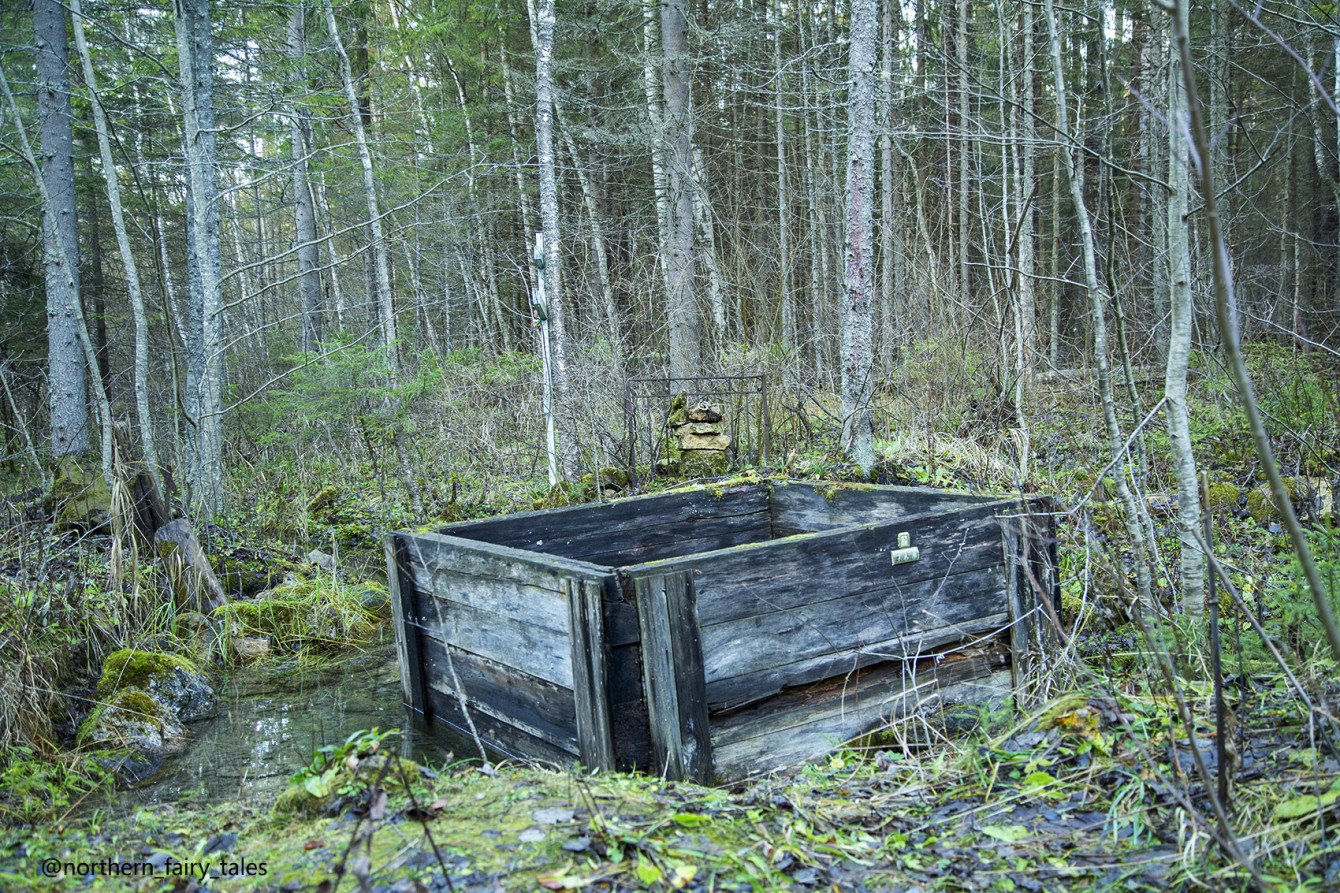
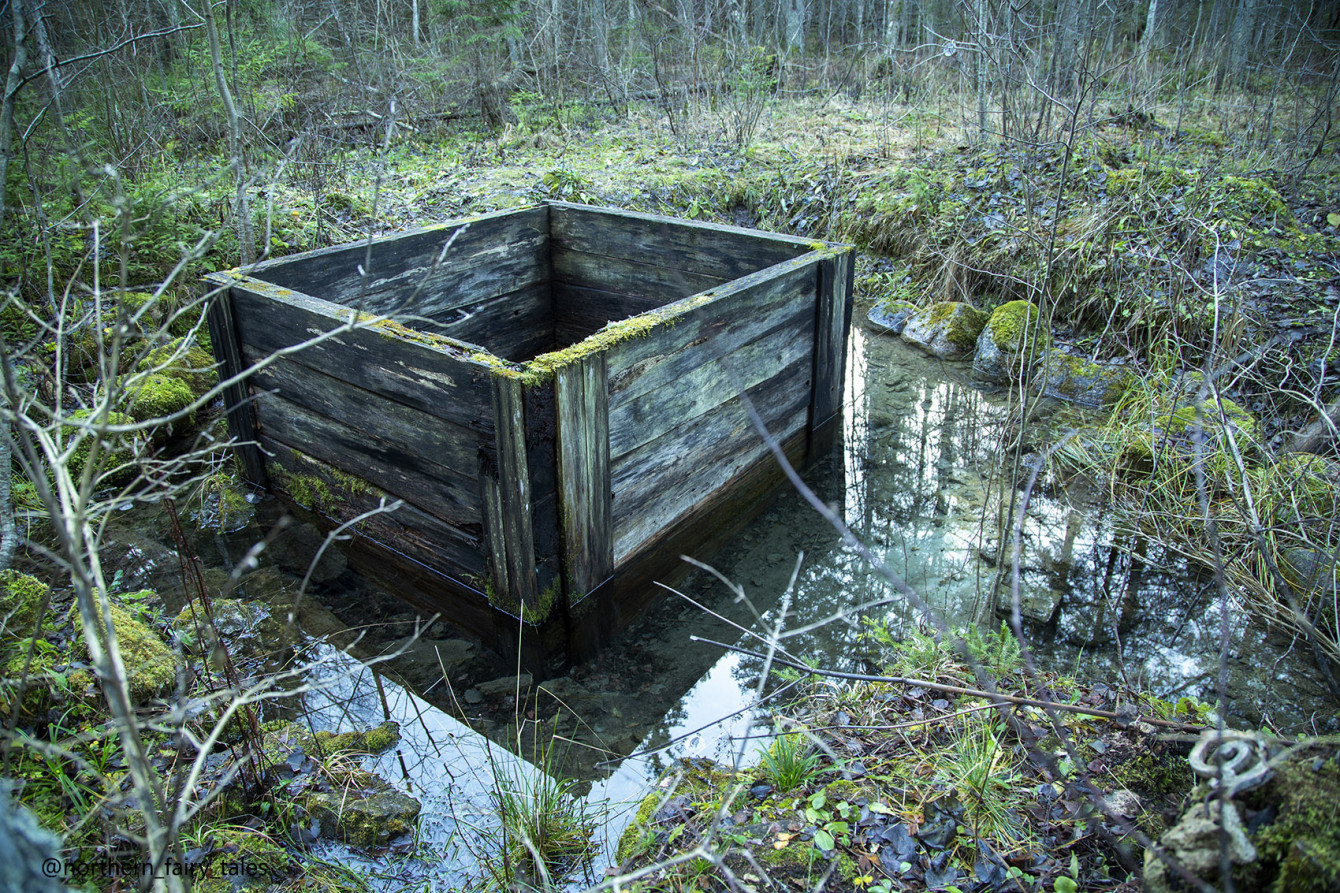
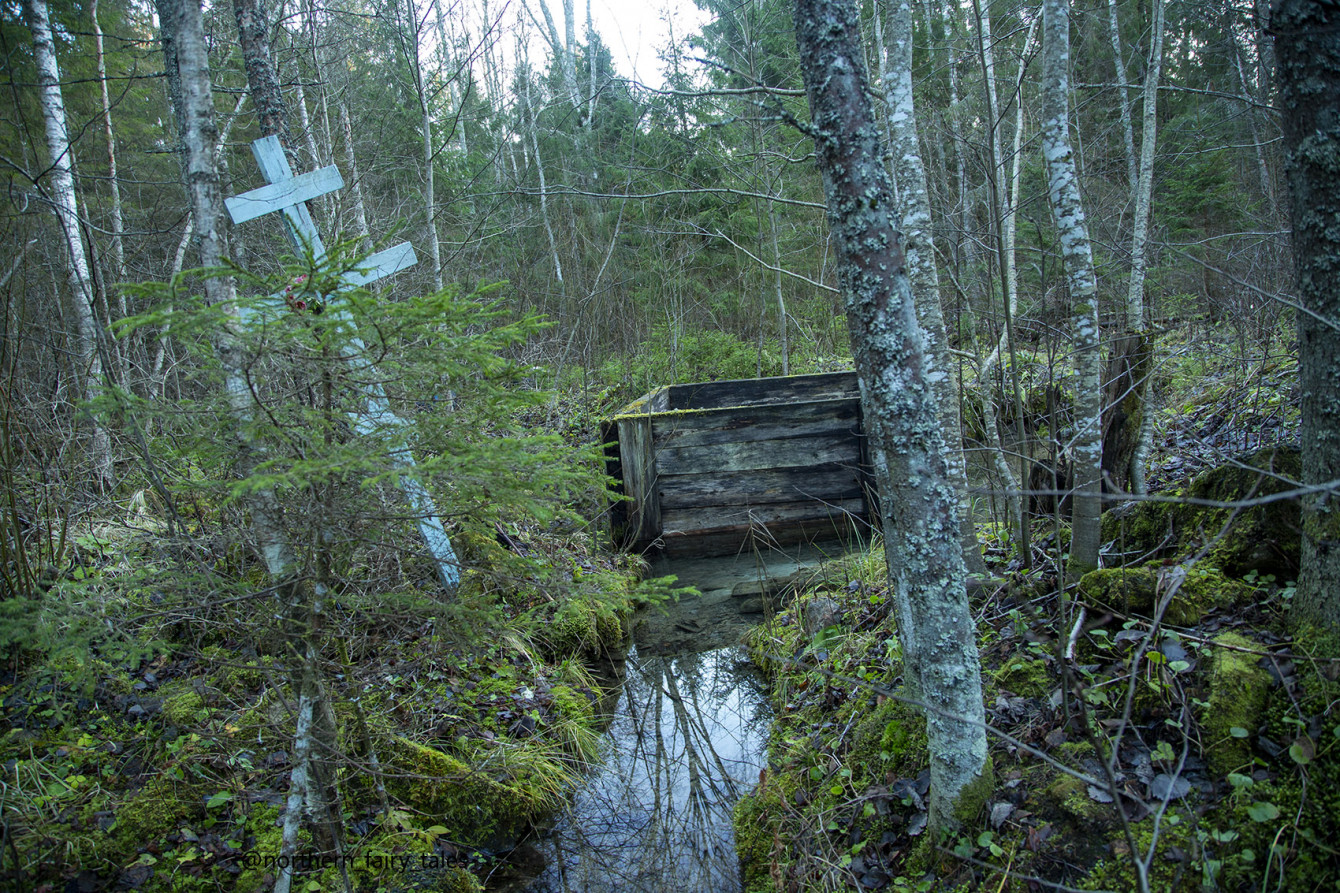
Now, where the cult building once stood, above the spring, there is a small log frame, which, to our eyes, gives this clearing a fleeting resemblance to a set from the macabre horror film Sauna.
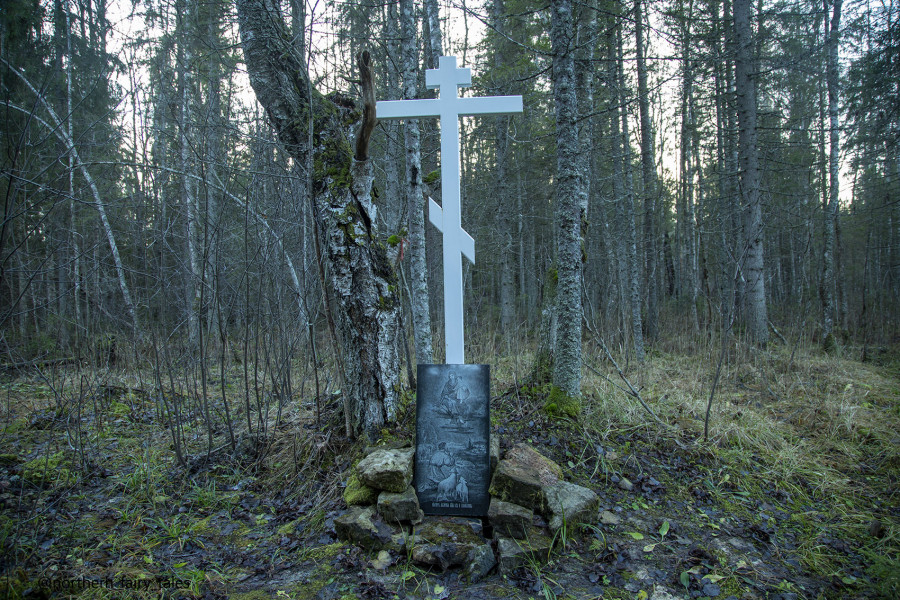
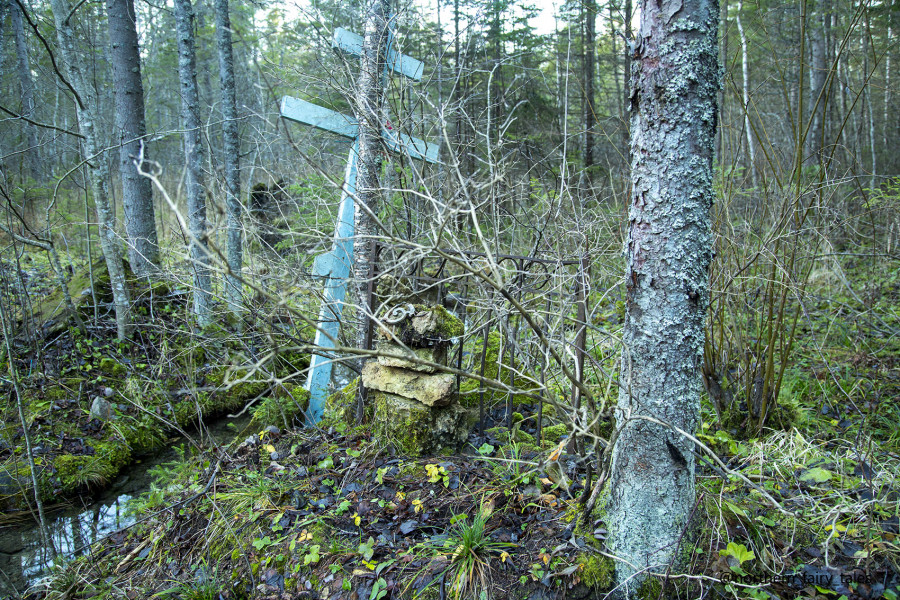
We never saw the footprint stone itself: in winter it was under snow, and in late autumn some enthusiasts set up a white cross over it, covering the top with remnants of a church foundation.
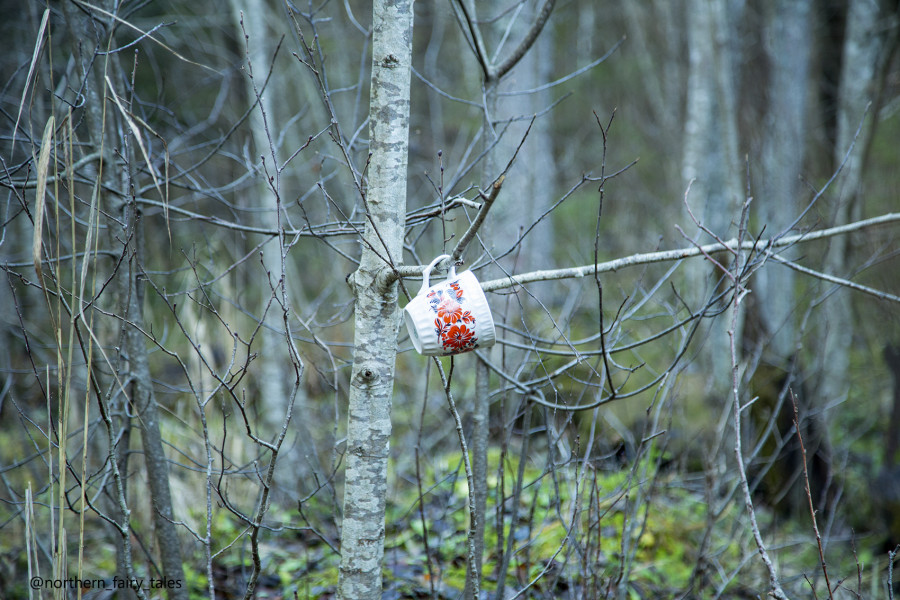
A small detail: there is dead silence here—there isn’t even the usual little flock of chattering birds that were singing loudly just a few hundred meters away, beyond a small stream, before the log causeway began. There is a feeling of wildness, of emptiness, and of something else—indescribable, magical, a little eerie, otherworldly. Here it is easy enough to believe in an encounter with the Mother of God, or with some other figure of folk religion—some Friday-Saint or Mokosh.
There is, in general, not much else to say about the sacred complex in Kalozhitsy, but we state firmly: by atmosphere alone, it ranks very high among the mystical places we have managed to visit.
Comments
There are no comments for this article yet. Be the first to comment!