












In the work Superstitions of the Russian People by the old Russian ethnographer Zabylin, there is the following curious little episode: “About 7 versts from Vologda, along the old Arkhangelsk road, there is the grave of Anika the Warrior, onto which every passerby, by custom, throws a branch or a switch, so that over time a large heap accumulates, which on one summer day is burned. At this gathering they eat blini and make merry.”
This Anika the Warrior was a grim robber; he committed many murders of innocent travelers, but for his sacrilege he received a curse and death overtook him right on the spot. For many years his grave in the forest, 10 versts from Vologda, met passersby who threw a branch onto it with the saying: “Anichka, Anichka, here’s a switch for you!” A thoughtful reader may ask: what kind of rite is this, why do they throw branches onto the grave of this terrible criminal, what, so to speak, is the point? To sort this out, it is worth turning to the work of the well-known researcher D. Zelenin, who in his classic study Essays on Russian Mythology provided a whole compendium of similar cases, of which we will cite a couple here: “In the Yakhnovo parish of Kholm district, Pskov province, near the village of Izgar’, at the mouth of an unnamed stream flowing into the River Oka, by the road leading from the village of Kanishchevo to the River Kun’ya, there is an elevated place (the hill of the bogatyr), past which not a single peasant of that area will go without crossing himself and throwing onto the elevation a tuft of hay, while a rider dismounts, tears up some grass, and places it on the same rise. The old people say that this custom has been observed from time immemorial, in honor of the mighty bogatyr buried there with his faithful horse. The common people believe that if anyone, passing by the grave, does not place on it the customary sacrifice, then the bogatyr, especially at night, appears as a horseman on a horse of extraordinary size and blocks the traveler’s road. By spring quite a lot of hay accumulates on the rise, but no one dares gather it for household use".
For comparison let us point to a similar grave among the Zyryans, a Finnic people. Near the River and village of Izhma in Vologda province there is a small hill covered with assorted wooden debris. This is the grave of Yag-Mort, that is, in literal translation, the forest man. Everyone passing by this mound must without fail spit and throw onto it a stone, a branch, a stick, or whatever else. This custom has been kept from time immemorial; among the local inhabitants it has already become a habit. Whoever neglects to perform it will at once be condemned by the old people for disrespect toward tradition: ‘He will see no good,’ they will say, ‘he does not even spit on Yag-Mort’s grave.’ Many tales circulate among the Zyryans about this mound. Old people assure us that in former times terrible monsters were often seen wandering near the kurgan, and the kurgan itself was embraced by a bluish flame, while inhuman cries and howls were heard. Yag-Mort was a robber; he lived in an impenetrable forest beyond the marshes. Both in appearance and in cruelty he resembled a beast more than a man. He killed every person he met. At night he set villages on fire and during the blaze plundered and committed all kinds of outrages. All the Zyryans feared him terribly. Once he abducted a Zyryan beauty named Raina. Then a whole crowd of Zyryans laid an ambush, wounded him, chopped off his hands, made him show them his dwelling (it was a cave, where the beauty Raina lay as a lifeless corpse), and then buried him on the spot of the struggle and drove an aspen stake into his back.” The cases studied by Zelenin involving such graves belonged either to bogatyrs or to villains, and what united them all was that they had all died an unnatural or untimely death, which in general fully corresponded to the main theme of the Essays—the so-called “unclean” or “pledged” dead.

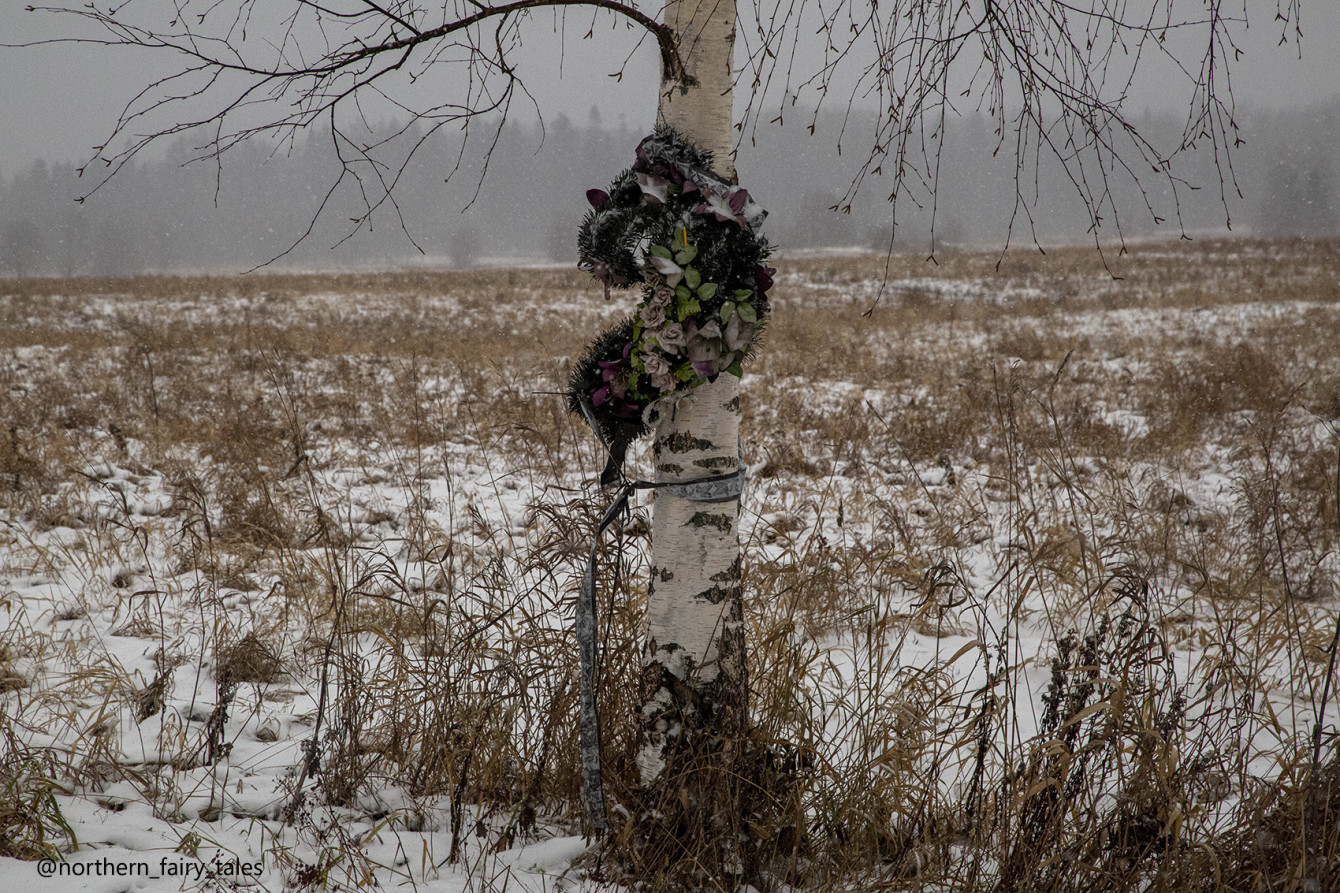
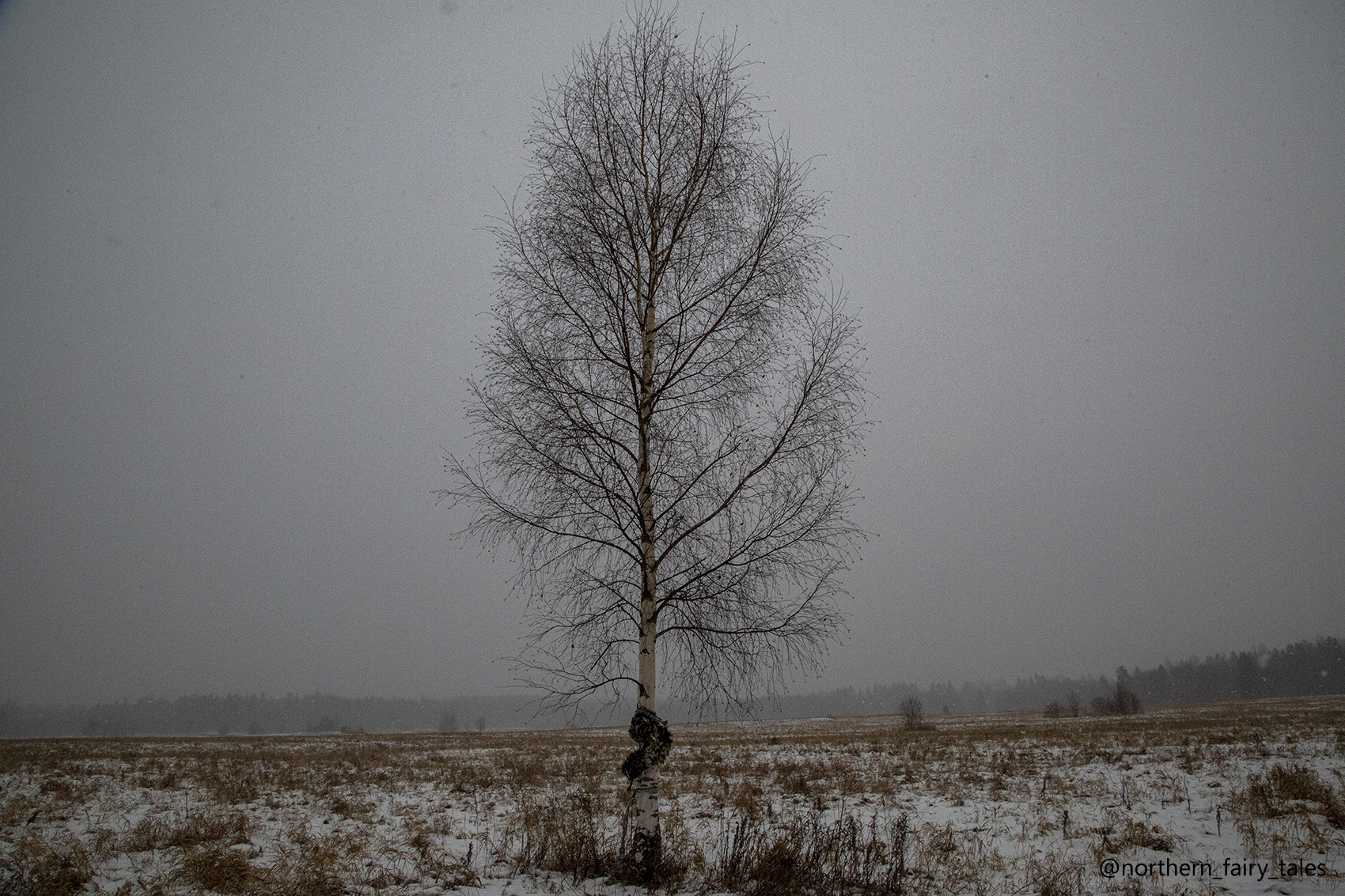
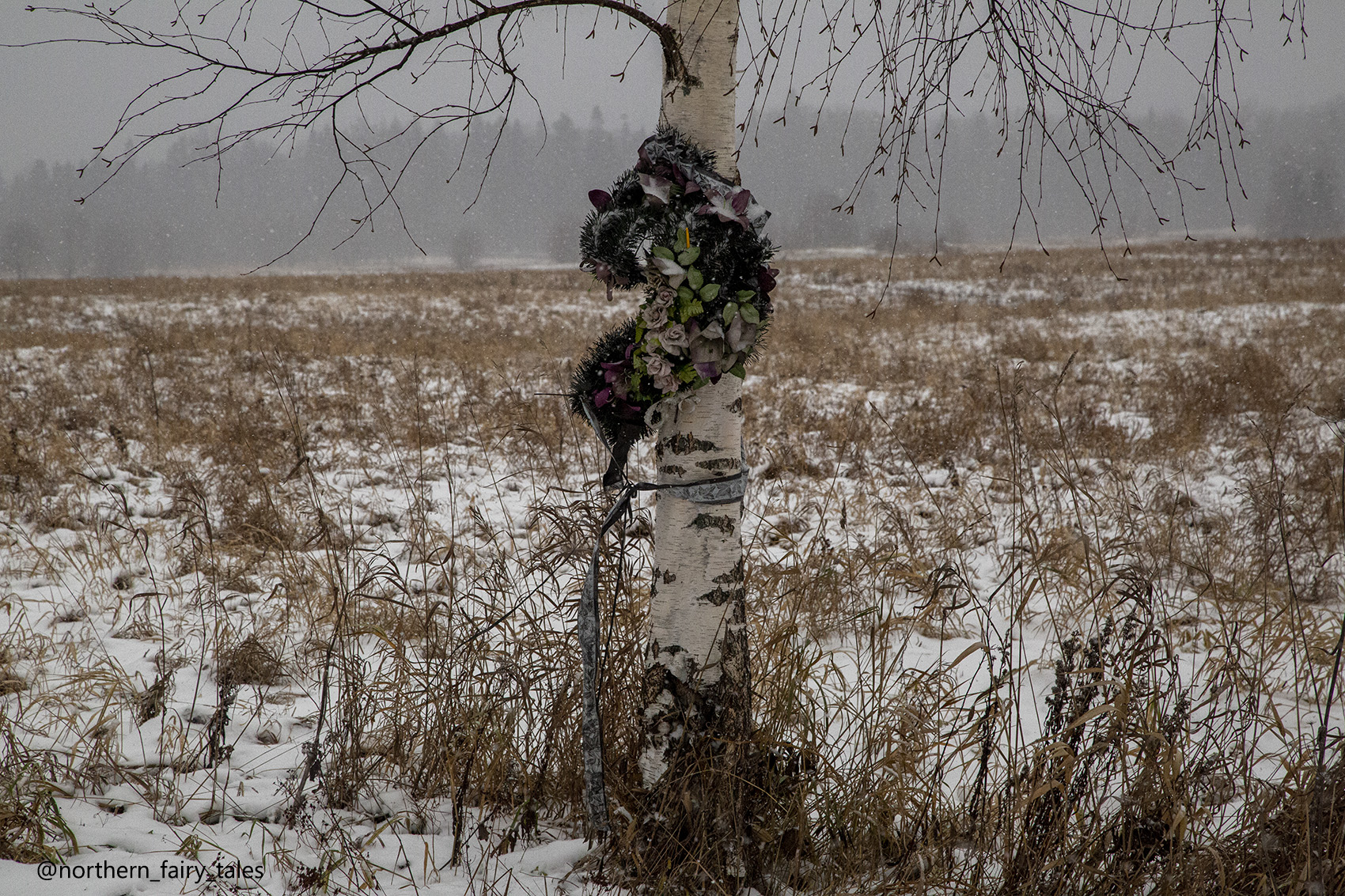
In the book he cites a certain informant from Saratov: “The very grave where a suicide is buried is a dangerous place because of the presence in it of an unclean force that can always, and especially at night, do some harm to a person; and therefore peasants, passing or riding by such a grave, throw onto it tree branches or straw, which, in their understanding, paralyzes the action of the unclean force.” If, however, one ignores the ritual prescription, there are considerable risks, as popular rumor held, that the walking dead person may begin to pursue the careless traveler. Thus, one may state that for the “paralyzing” of dangerous entities, low-value objects are used, objects that in nature are available in excessive abundance: sticks, stones, grass, rags, whatever comes to hand. Even at the end of the nineteenth century one could see huge piles of such junk over the graves of suicides and other “unclean” dead. In the Russian North such “headstones” were called nabrosy. What conclusion did Zelenin draw from this? He believed that the nabros was both an attempt to cover the unburied corpse with rags, thus burying it and rendering funeral honors, and an appeasing sacrifice, and the establishment of a magical (and not only magical—for by covering a dangerous dead person with rubbish, one creates a literal, material barrier as well!) barrier between the living and the demon, especially if it is straw or bast shoes, objects connected with the cult of the ancestors.

While in general agreeing with the above opinion, we have some remarks and a final conclusion. First of all, it should be noted that such acts in folklore were directed not only toward objects connected with the burial of those who died prematurely or violently—for example, their burial places—but also toward other manifestations of the demonic. For example, among the South Slavs, so that a swirling whirlwind should not cause harm, one had to throw a branch or a straw in its direction and say: “Here, build yourself a house.” Among Poles and Slovaks, if a wandering light had guided one home, then in order to rid oneself of the demon one gives a small coin or even simply says: “May God grant you and me a good evening.” The Karelians gave gifts to the water spirit, among other things, in the form of plucked flowers, red scraps of cloth, and bread crumbs".
But not only personages of lower demonology received such symbolic gifts; so did trees, bodies of water, and structures such as bathhouses: “The custom of ‘giving a gift to the water’—a spring, a river, a bathhouse—something edible, money, a piece of cloth, a thread from one’s belt, or at least one’s own hair if there is nothing else, is widespread. This was done upon first acquaintance with a body of water or upon the first washing in someone else’s or in a new bathhouse. It was said with a formula,” writes the contemporary researcher of the folk picture of the world, O. Khristoforova. They acted similarly with karsikko, the marker-tree of the Finnic peoples: “…when passing by a karsikko, the custom was to bring a stone to it or in summer to throw a field flower,” “A pine tree in the parish of Orivesi, under which everyone passing by had to throw a green branch in order to avoid неприятности,” “According to accounts from Hauho, each time one passed by a karsikko it was necessary to ‘sacrifice’ something metallic.” Not only places of those who died unnatural deaths among the peoples of the North are marked by such gifts, but also entirely ordinary ancestral cemeteries: when visiting a cemetery, the Khanty first approach the grave of the eldest person buried there and leave a birch branch on the grave. Among the Udmurts, indeed, all necrolocales—whether clan cemeteries, burials of those who died unnatural deaths, or kurkuys’kony—places where the belongings of the dead were thrown away or where water after washing corpses was poured out, or yyr-pyd syotony—places where the heads and legs of an animal were sacrificed to the dead, and so forth—were considered dangerous for the living (not only staying there, but even being near such places!), and in order to avoid this ritual danger one had to fulfill certain prescriptions, namely, to leave on such an object or throw toward it a small coin, a piece of bread, a thread, a scrap of cloth.

From these examples we may conclude that all these low-value and insignificant items—branches, grass, flowers, rags, hair, even spit—may relate to the gifting of practically the entire spectrum of supernatural beings and objects of folk religion. All that remains is to answer the question: why? Here, in our view, one should turn to the concept of memory, memory in the archaic and traditional understanding. Already Eliade in his encyclopedic work A History of Religious Ideas indicates that the ancient Greeks considered death equal to oblivion: the dead are people who have lost memory, and only certain divinely chosen individuals retain it after death. Returning to our northern latitudes, one should note that in folk consciousness it is necessary not only to remember oneself, but also that others remember you, for even the very name of the cycle of posthumous rites for members of the kin—pominki (memorial rites), or the name of the gravestone—pamyatnik (memorial), directly points to this. The same applies to sacred objects: “You go, place some little coin, make a vow that you will keep coming, I will not abandon you, only help me.” “I will not abandon you” in fact means: “I will remember you.” And conversely: forgetfulness concerning the sacred can bring many troubles. “Near the village of Luzhitsy there was veneration of a wild gray stone. On November 14 peasant children from 4 to 10 years old came here, bringing every year a rooster, and after cutting off its head, threw it onto this stone. Having boiled it, they ate by this stone. They began bringing roosters to the stone because that stone in summertime, if they did not bring a rooster and did not throw the head onto the stone, would drown children and livestock.” The logic here is simple: do not remember me—and you will receive drowned people. The invisible inhabitants of an ancient kurgan in Lodeynopol district punished villagers with a failure of the oat harvest for their forgetfulness: from ancient times the local people observed “Kisel Day” on the Thursday of Trinity week in the grove by the chapel standing on an elevation—an old burial ground. All the villagers gathered for the celebration with milk and kissel, placed gifts a little below the icons, and then began to eat the brought products and playfully douse one another with them, thus commemorating the “panowie” lying in this burial ground. Once they decided not to celebrate, but as a result—where there is transgression, there is punishment—the oats perished. Since then, taught by bitter experience, the peasants celebrated Kisel Day every year. Thousands of such archetypal stories about sacred punishments for forgetfulness and negligence, capturing folk psychology, can be unearthed.

But what is there to say about magical stones, entirely different forms of existence, or legendary “panowie”(panowie—mythical primordial inhabitants of the land, or figures associated with a mythological invasion in the Russian North, whose supposed burial places were usually identified with medieval kurgan-type graves. Such graves became either places of peasant veneration or, on the contrary, frightening and ominous places.)—in folk representations even the “parents,” the deceased ancestors, can punish for the absence of remembrance. “And then their cow went missing, nowhere to be found. And there was a woman among us who told fortunes with cards. So she laid out the cards and says: ‘Your father,’ she says, ‘hid the cow. And it will be found,’ she says, ‘in such a little enclosure,’ she says, ‘that it can’t get out in any way. Somewhere it’s wedged into something like that, it doesn’t move anywhere, this cow of yours.’ Well, and ‘whoever finds it,’ she says, ‘will tell you,’ she says, ‘a dark-haired man will see this cow.’ So mother heated the stove, baked blini, we commemorated him, and went out onto the road, to the plot. There is a gazebo right there by them, a park. So we sat by this park, by the gazebo, and the people from Vetkovo were driving the cows along. And I ask: ‘Didn’t any cow at all join up with you somewhere, didn’t one come over to the herd?’ — ‘No,’ they say, ‘we haven’t seen any чужие ones.’ And the son-in-law, the one whose cow it was, the one from whom he took it, he was dark-haired. And he says: ‘Lyuba,’ he says, ‘the cow!’ And it was as if someone had thrown this cow right before us. So yes, one has to remember the parents.”