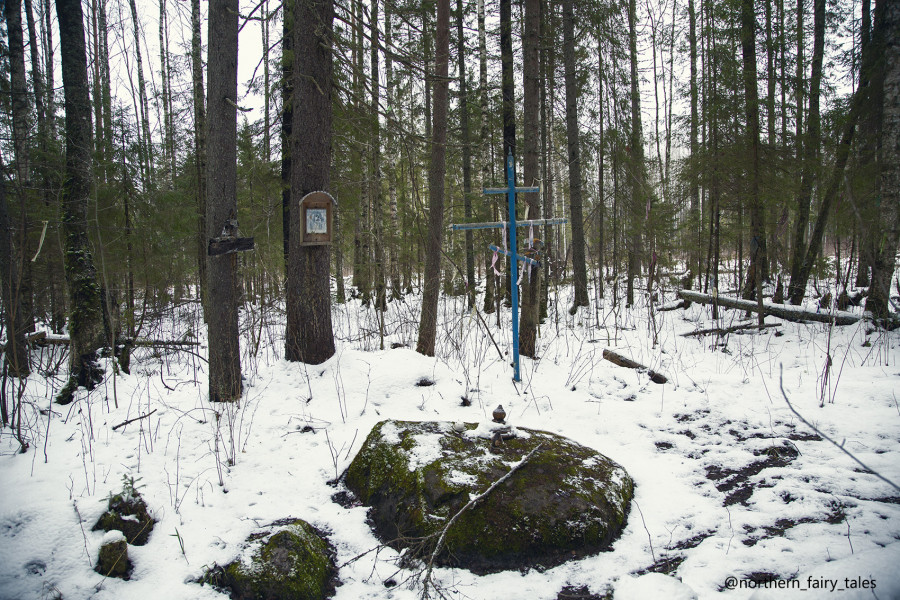
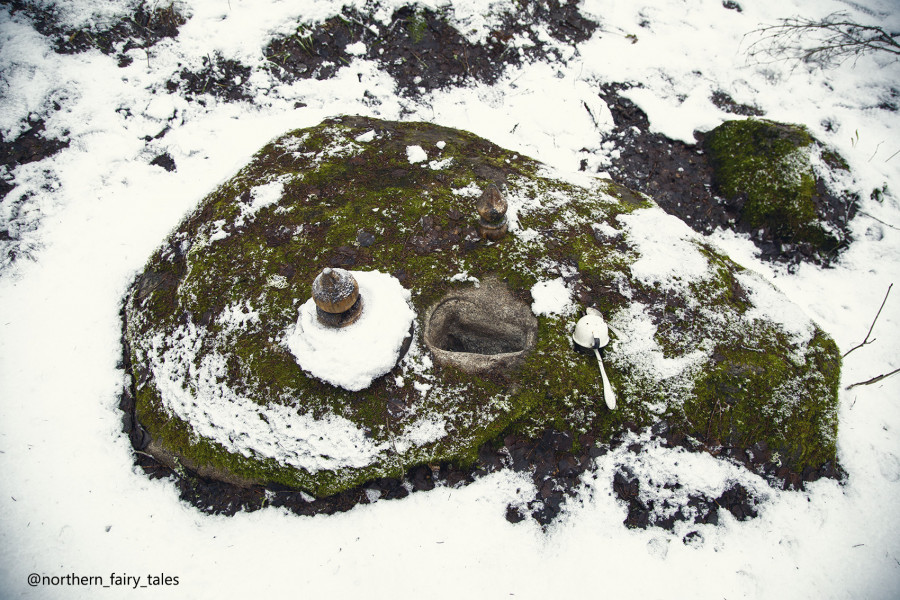
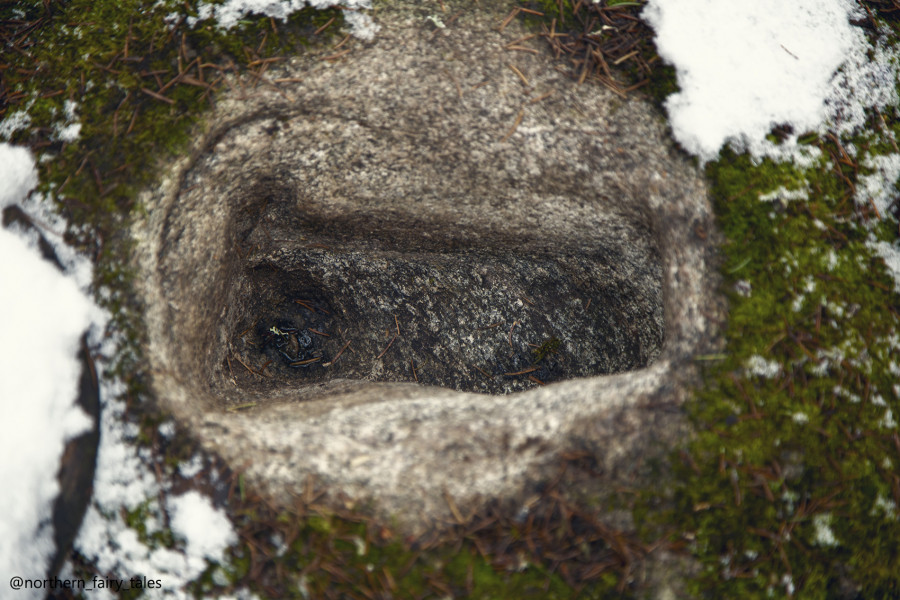
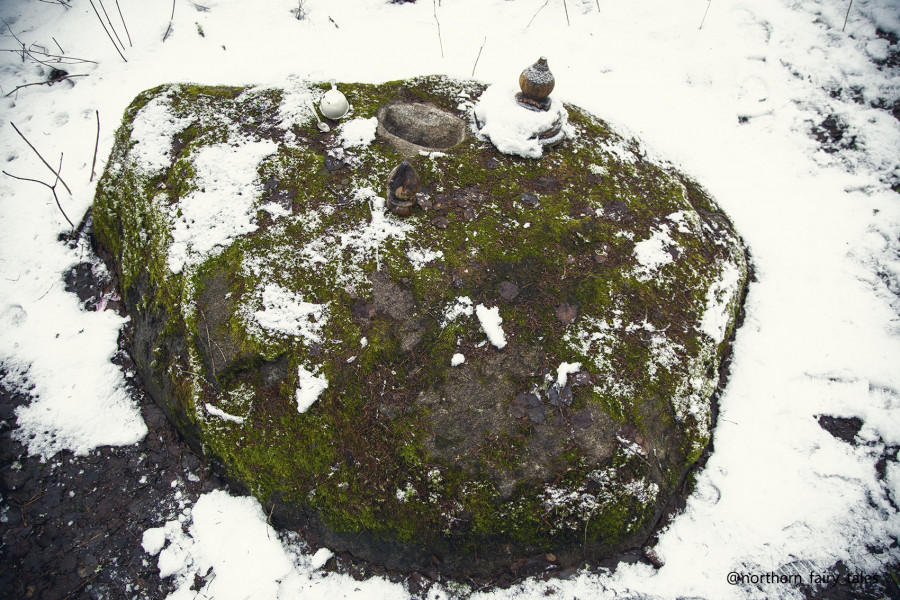
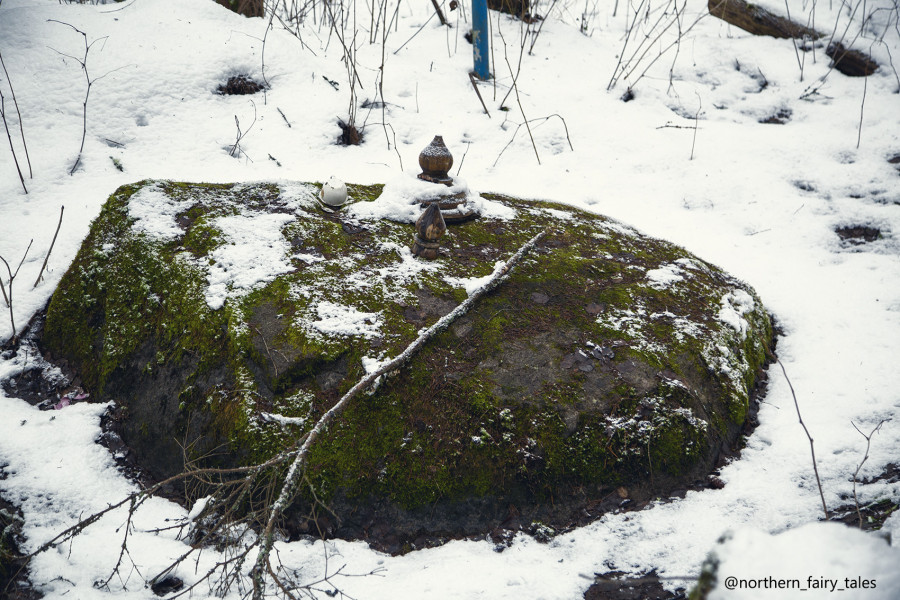
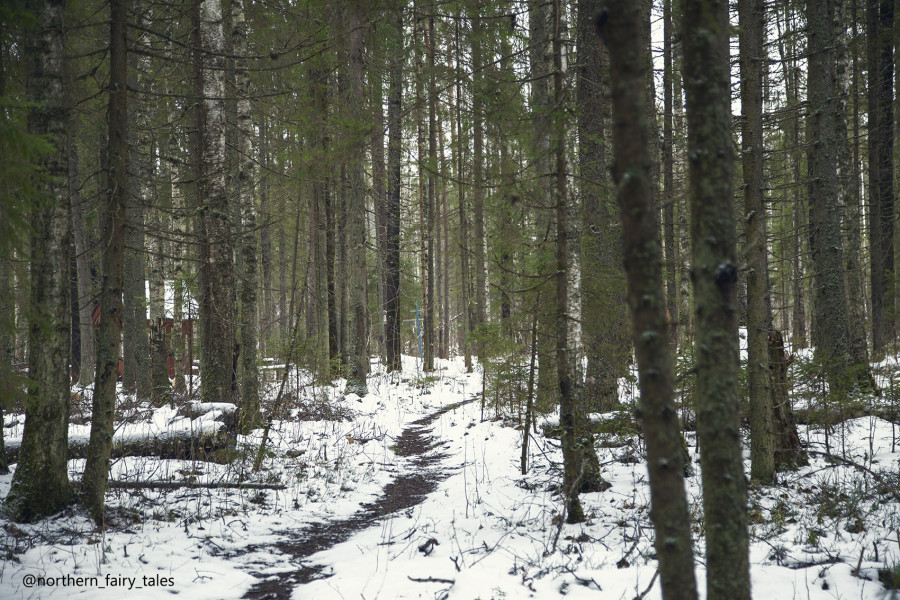
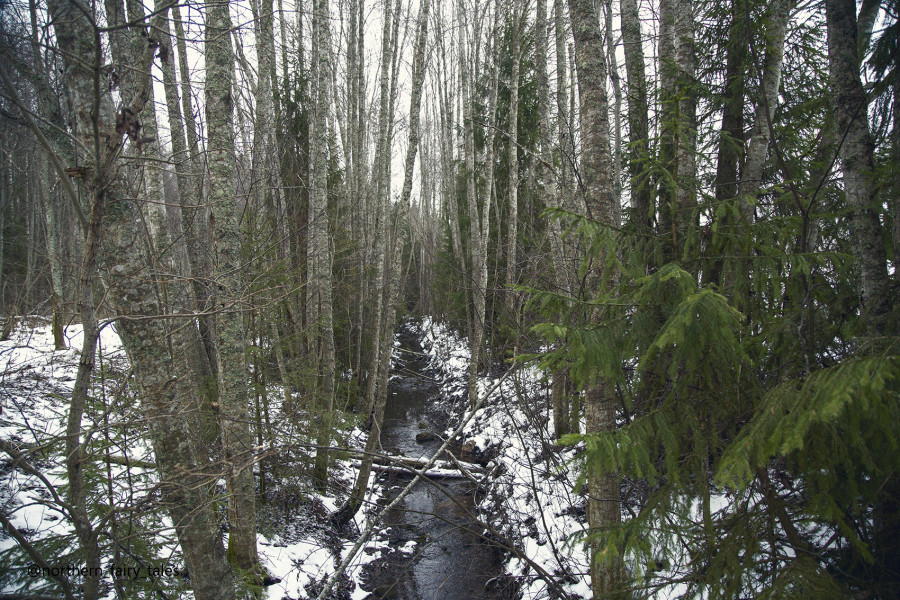
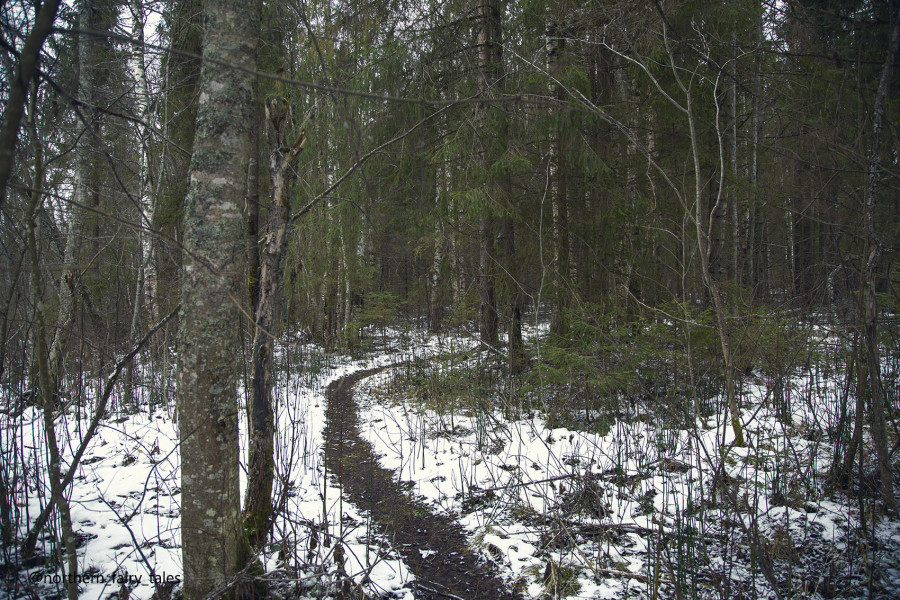
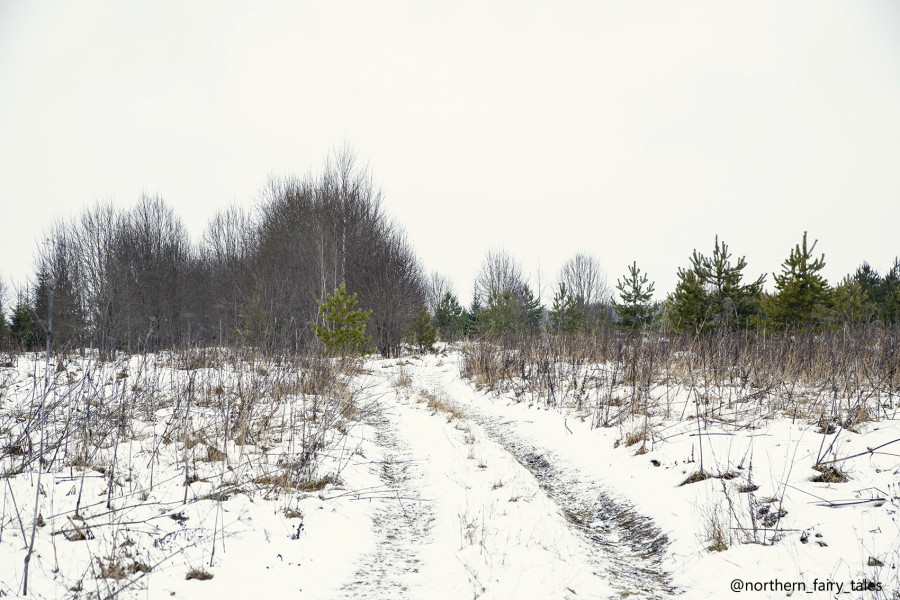
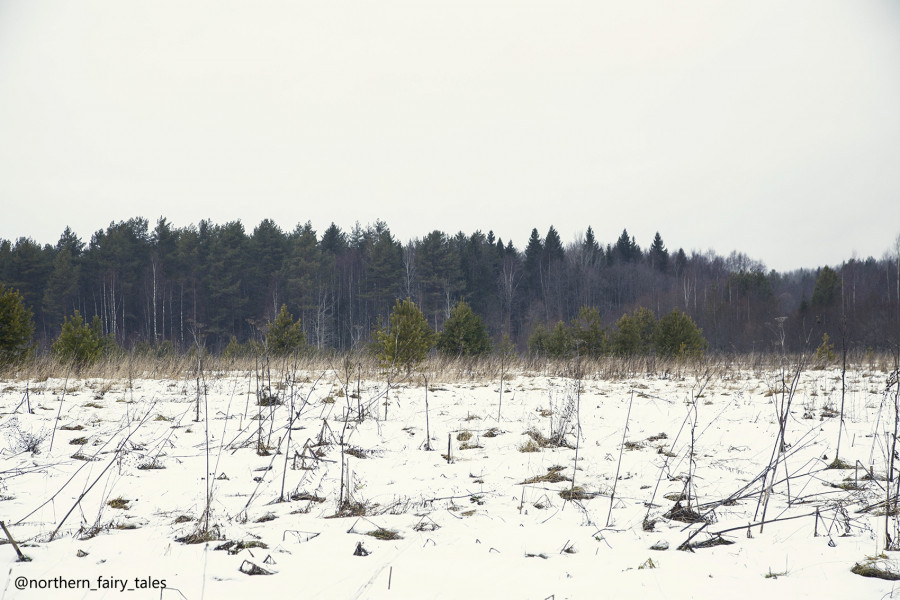
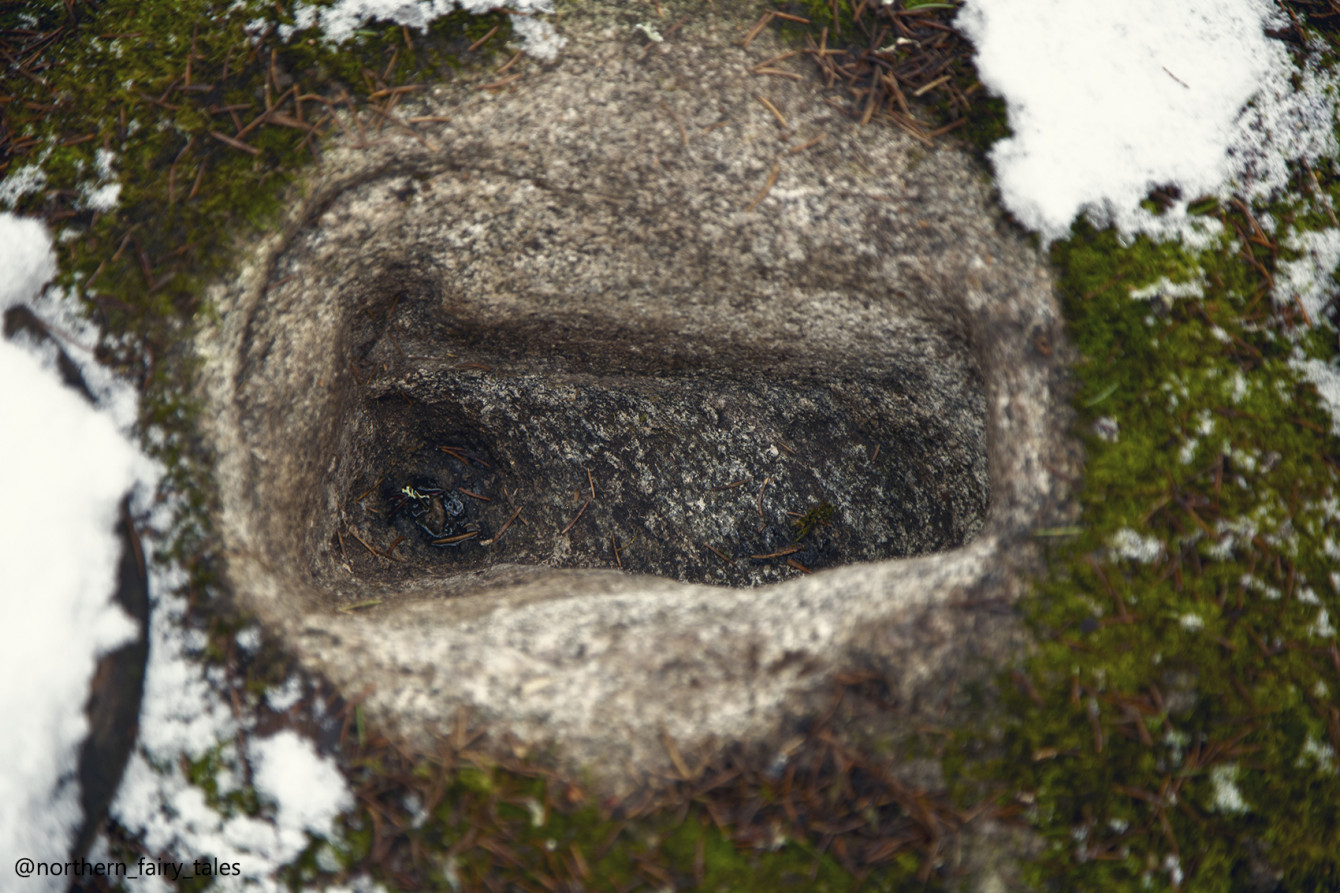
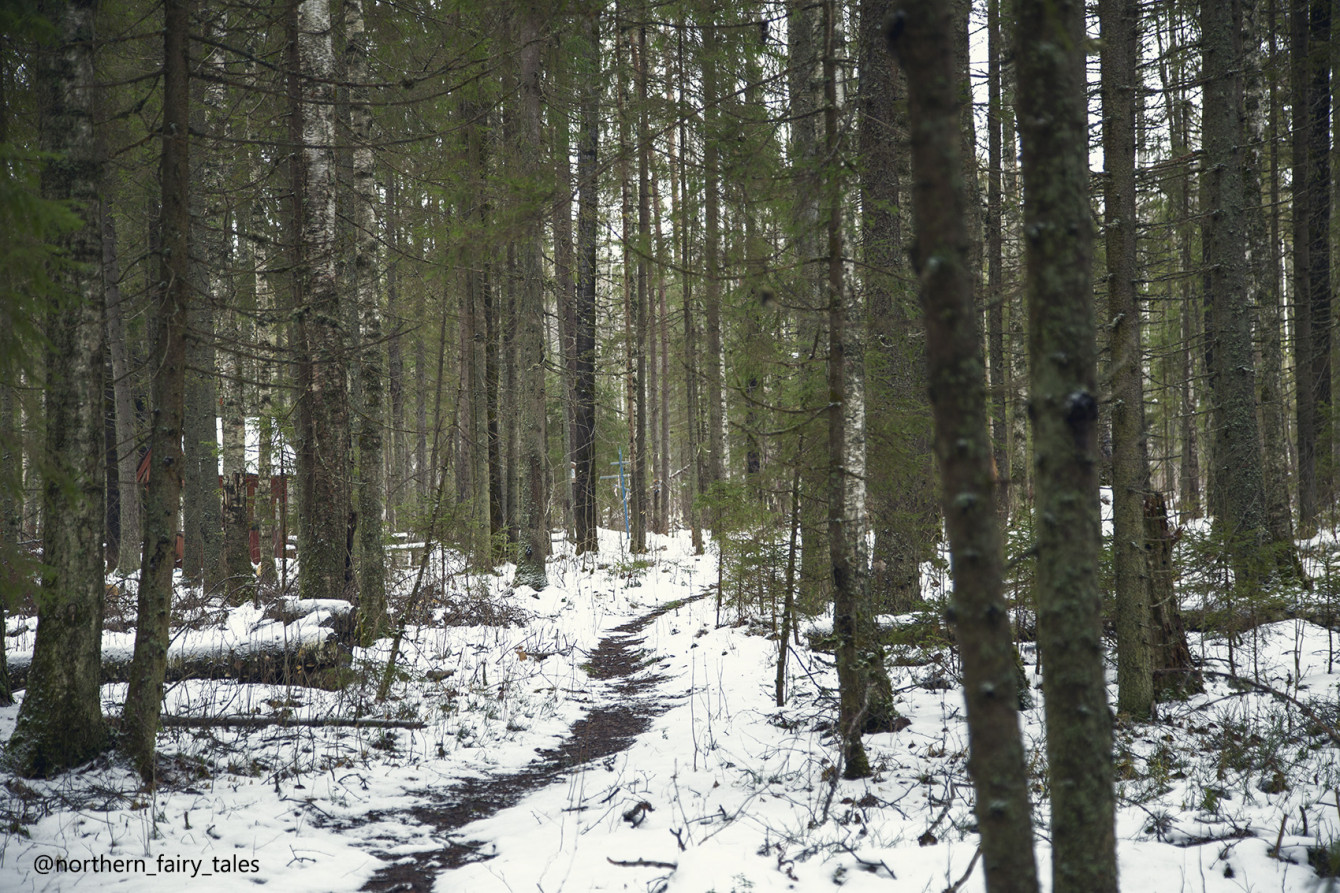
Another forest shrine: a stone—one of the many miraculous “footprint stones”—in the Kostroma taiga, not far from the town of Soligalich. According to legend, in time immemorial the Mother of God herself stepped on it and left the imprint of her foot—an ordinary kind of story in the northern lands.
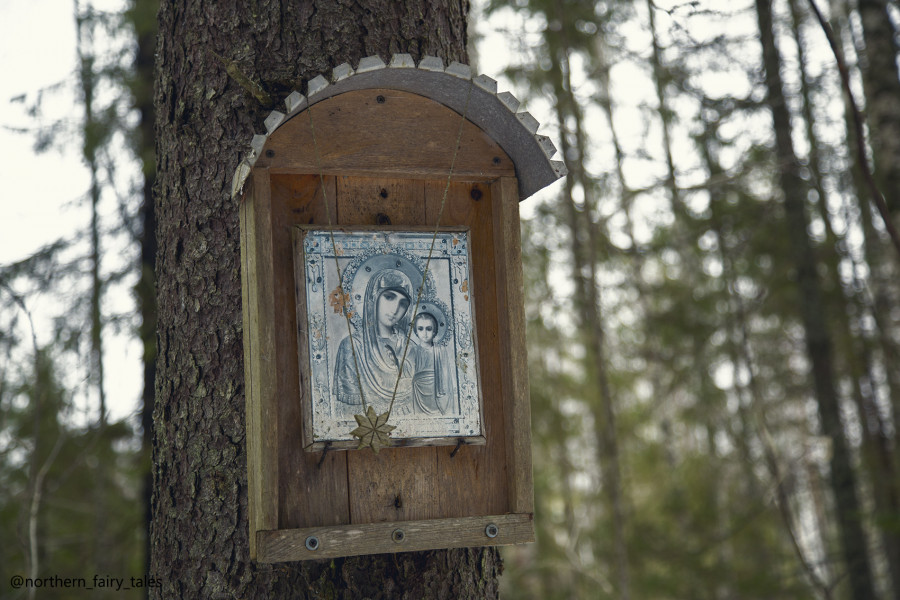
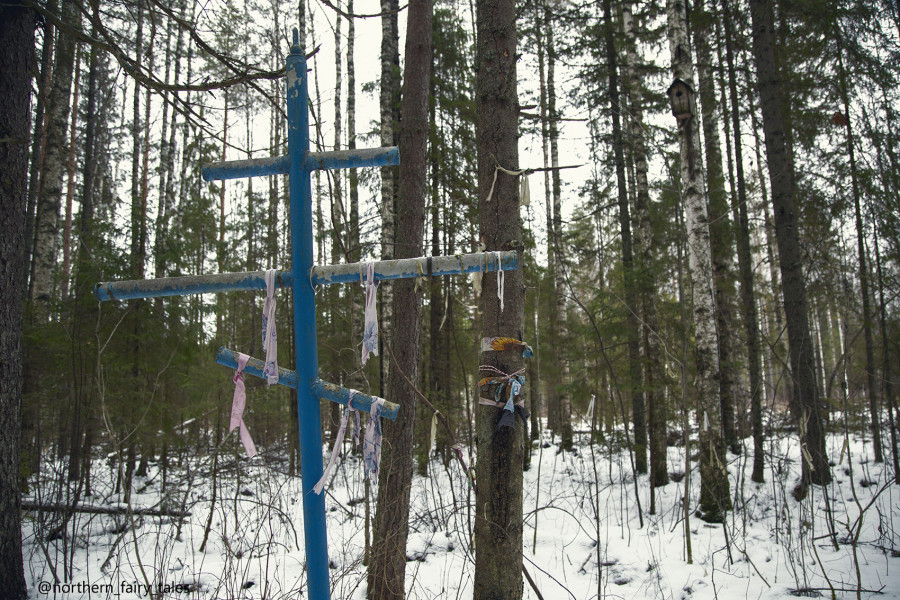
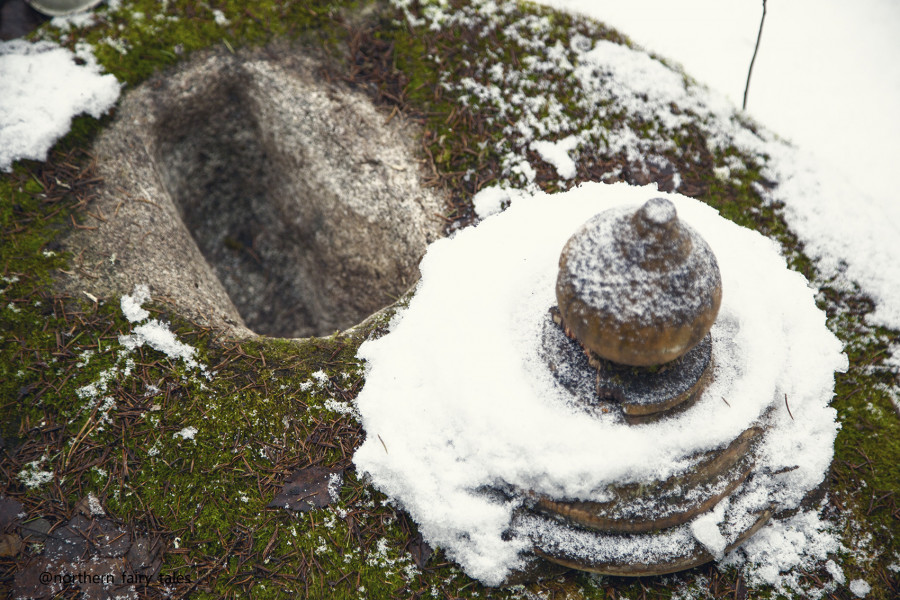
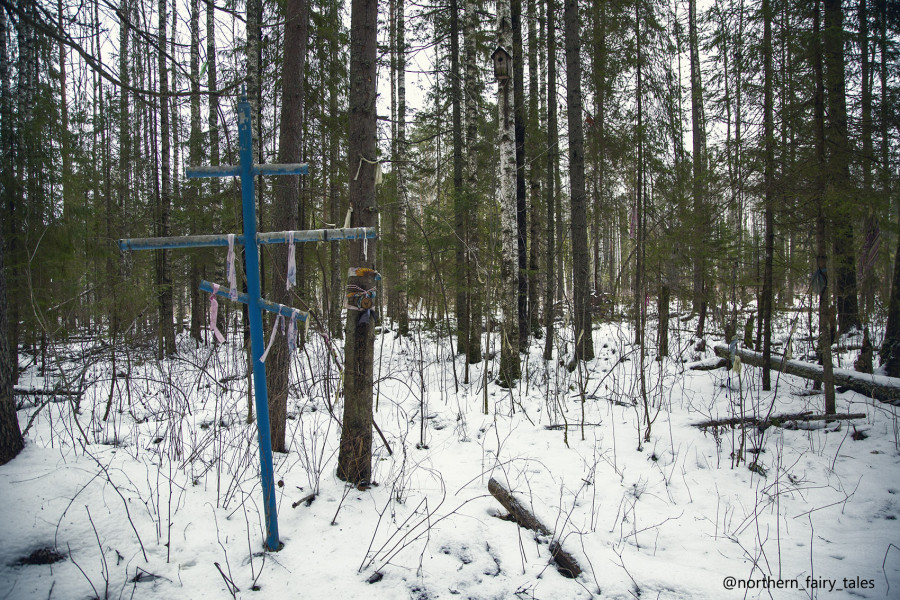
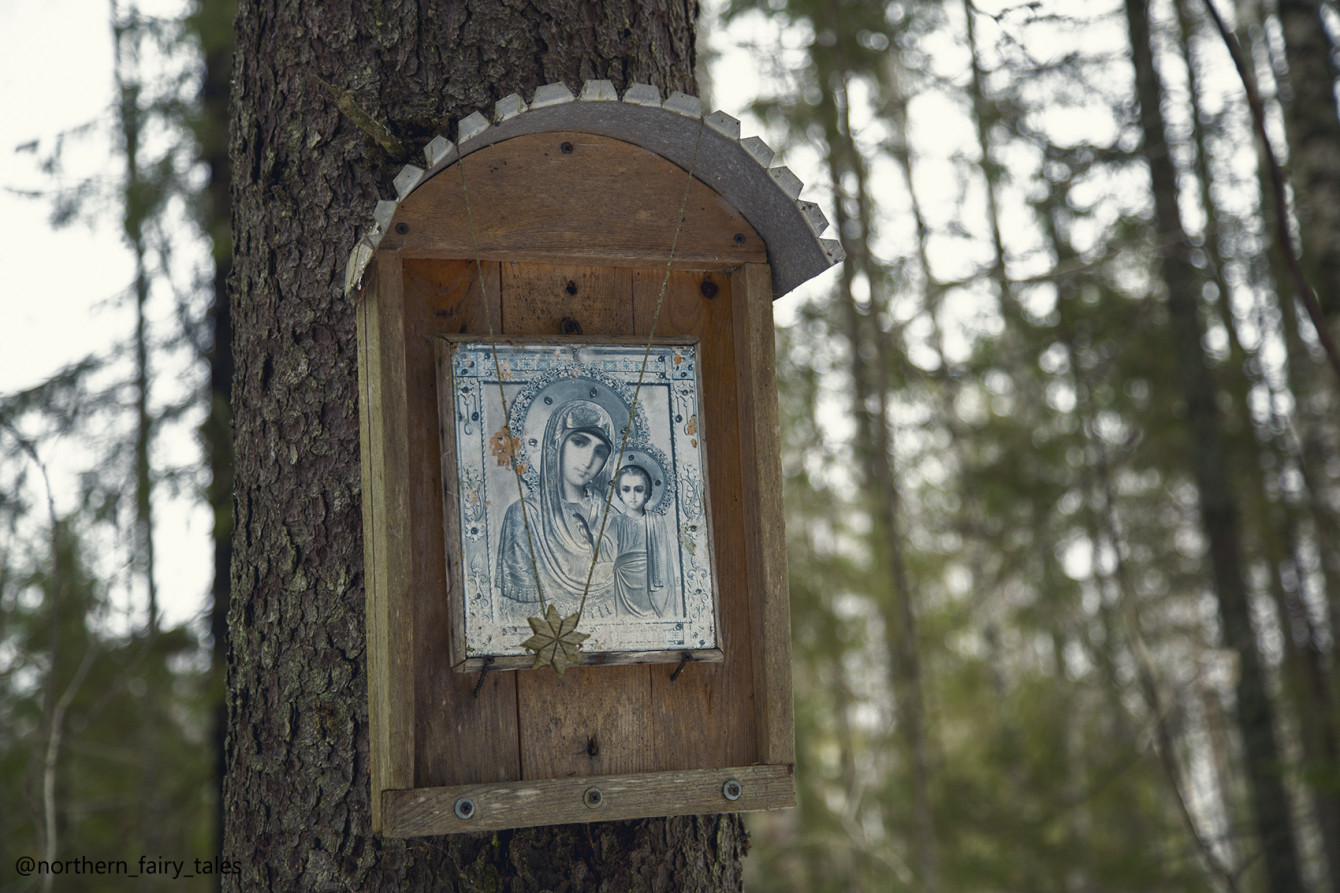
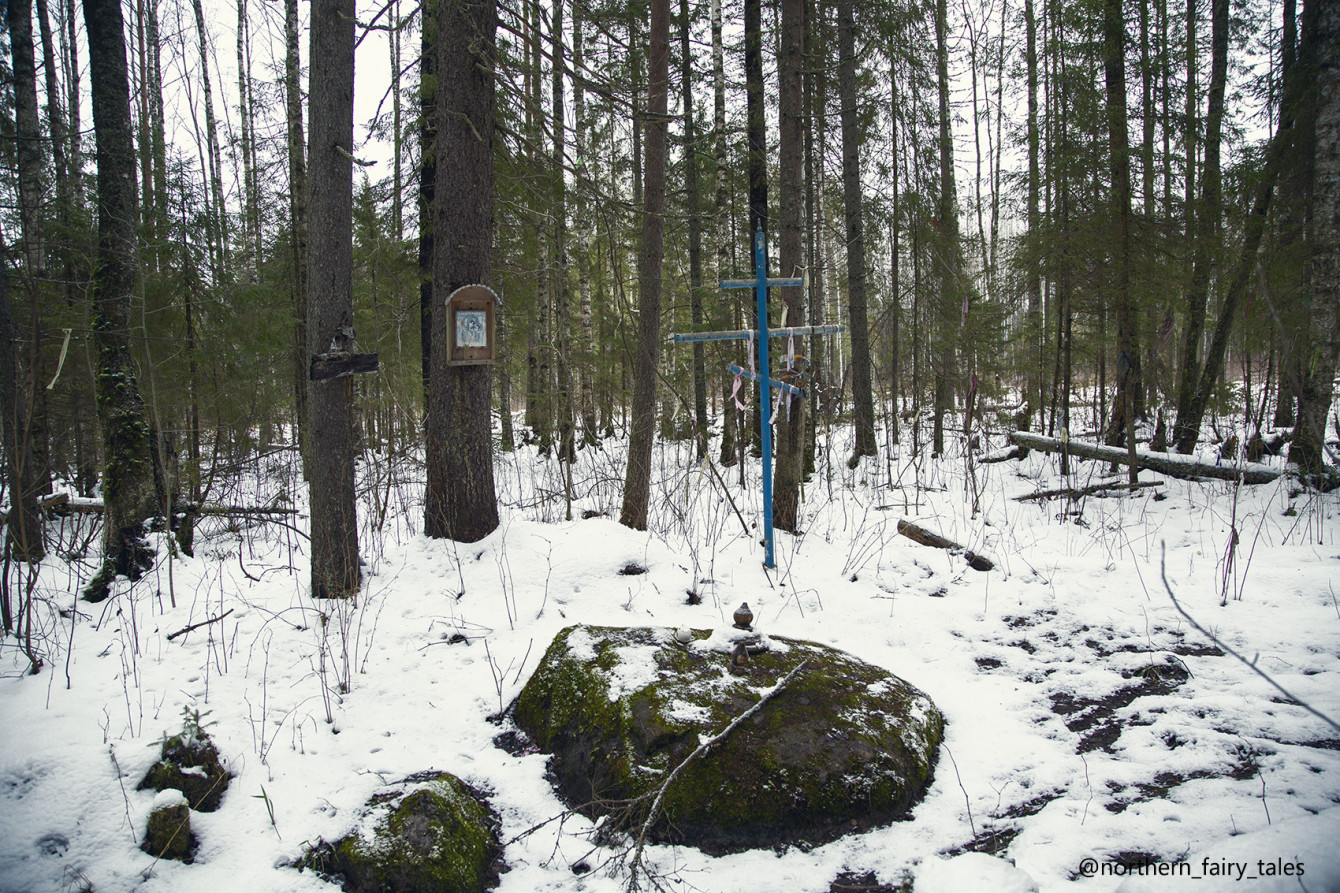
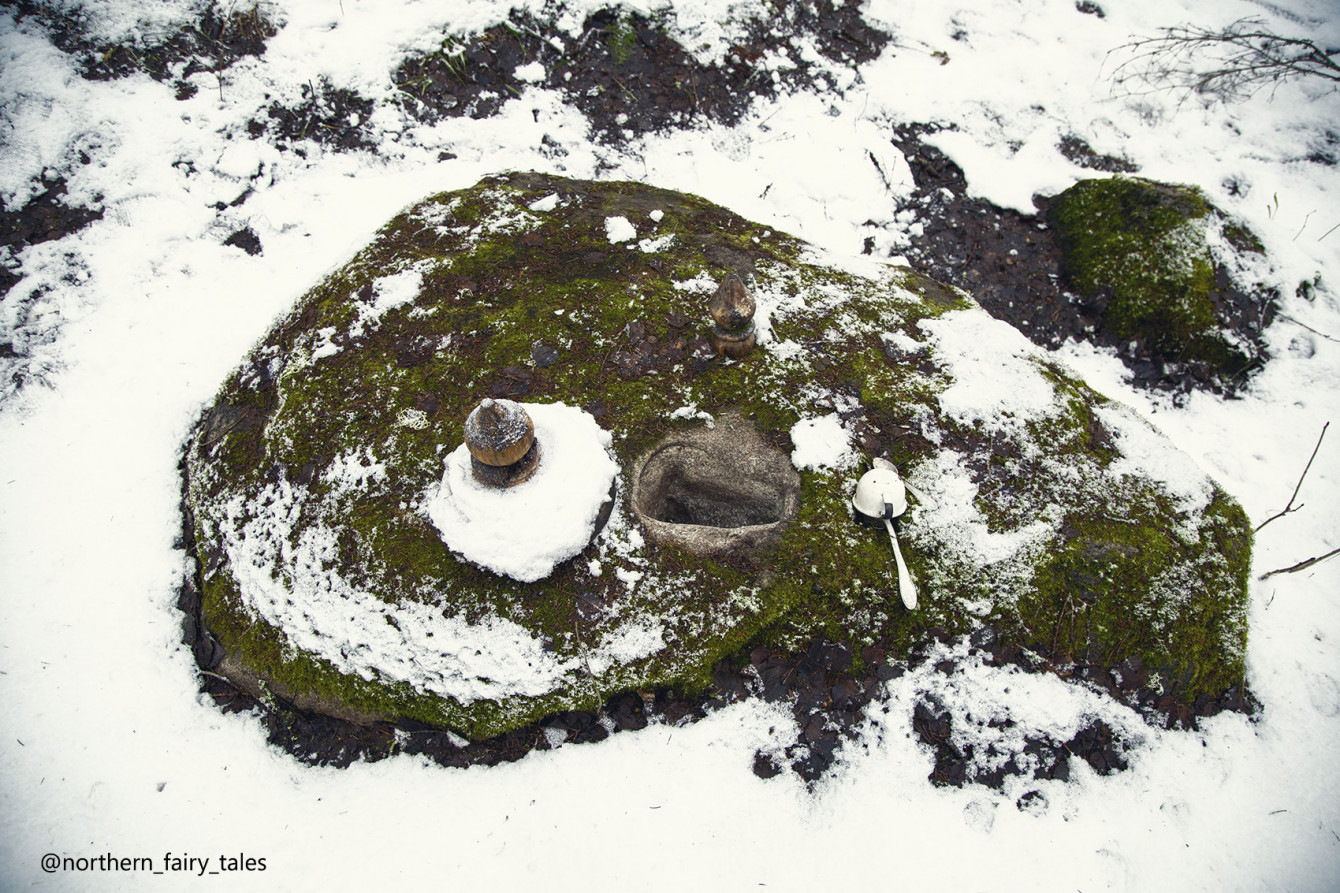
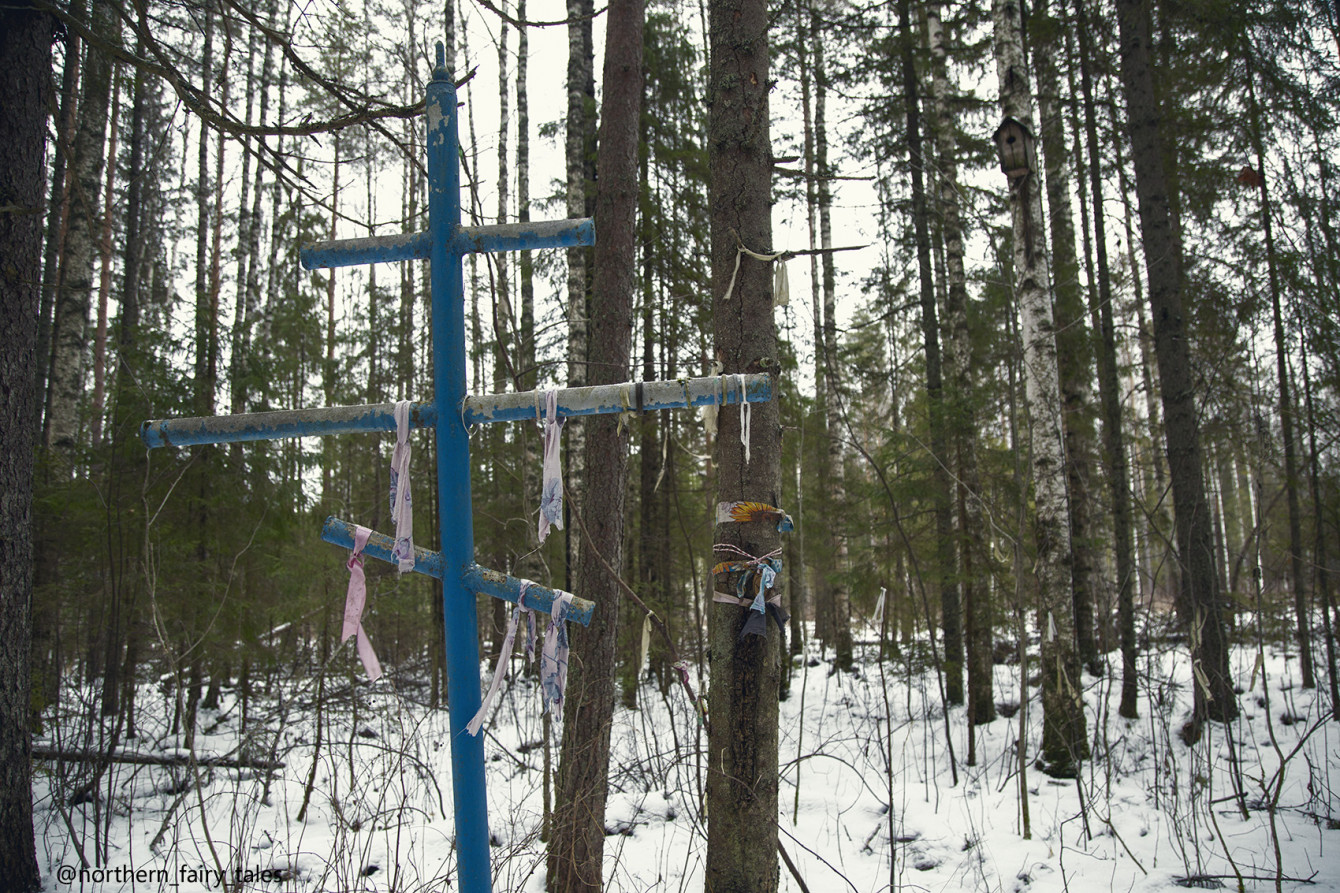
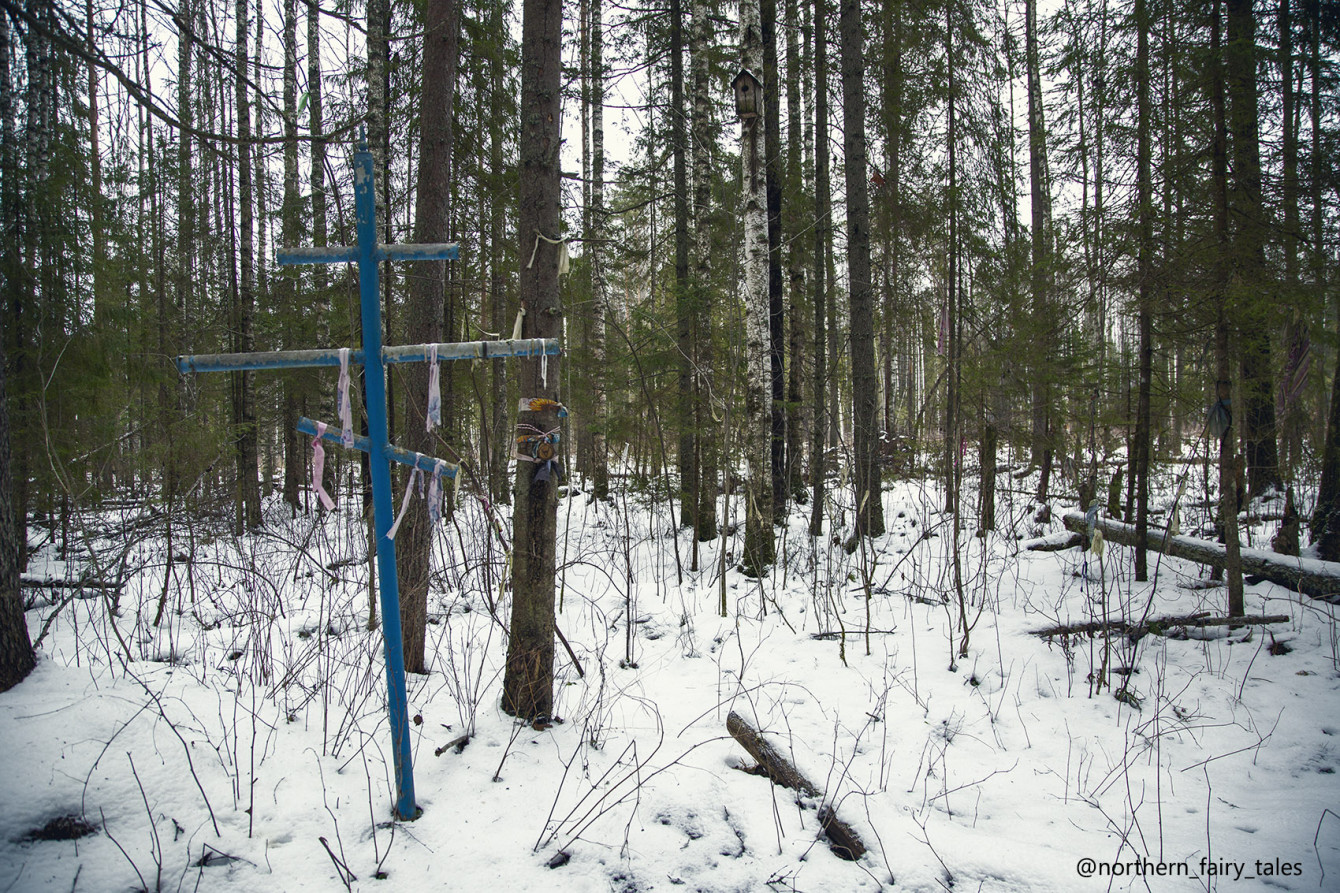
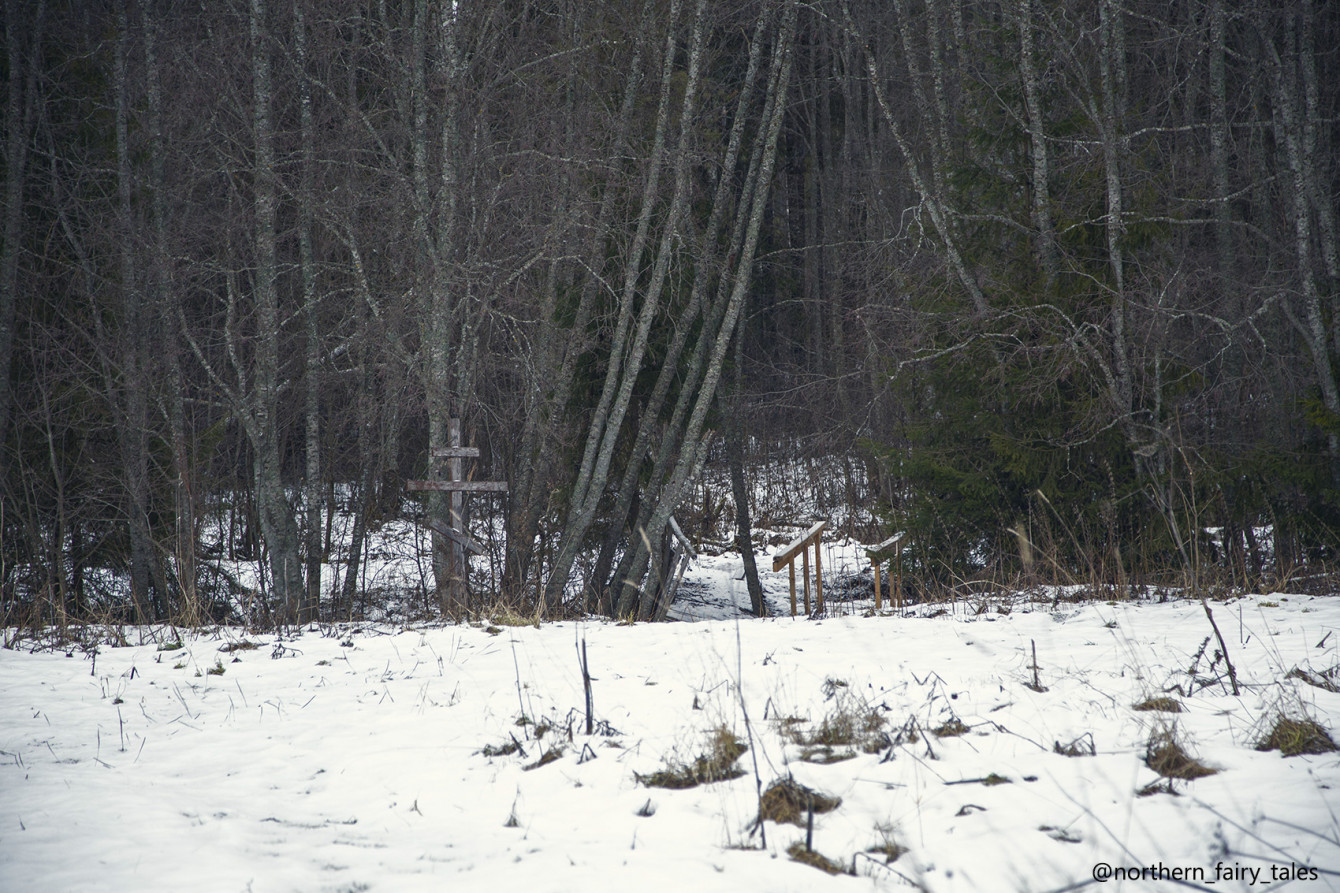
This stone is surrounded by signs that emphasize its sacred status: an icon of the Mother of God hangs on a tree, a cross is set in the ground nearby, and the footprint hollow in the stone is covered with a small wooden lid so that nothing evil can enter the holy, healing water that gathers there; a spoon lies nearby for drawing the water.
On the feast day of the Tikhvin Icon of the Mother of God, a cross procession comes here from Soligalich. Some local priests, however, do not approve of this cult, considering it a legacy of pre-Christian beliefs.
From local accounts, someone has seen a glow here in the dark—and that is quite possible: this is a long-venerated site, shaped by sustained prayer practice. One sign of its holiness is a huge anthill beneath the spruce with the icon; in our photographs, it looks like a snow-covered mound. Nor should we forget that, in folk belief, an anthill is one of the places where one is most likely to encounter Leshy, the forest master.
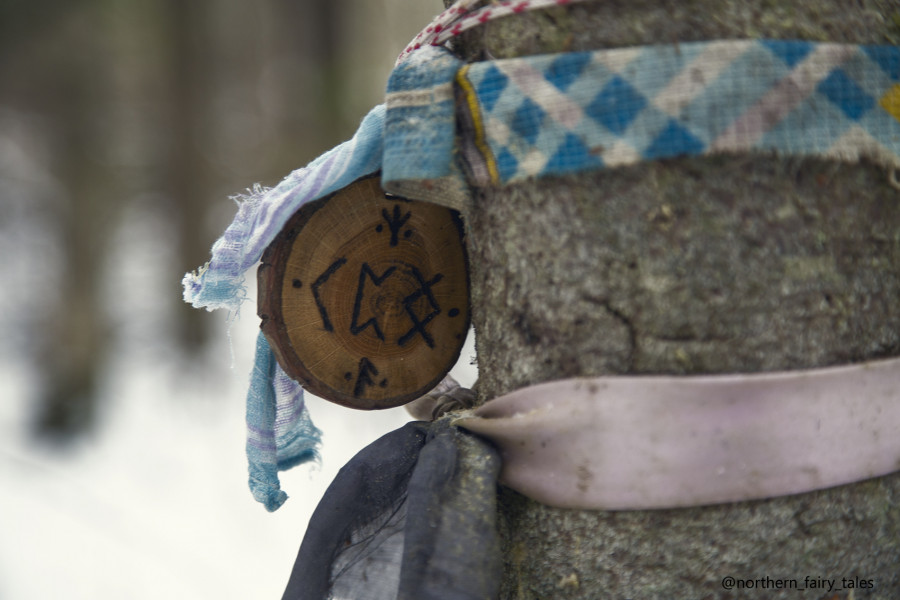
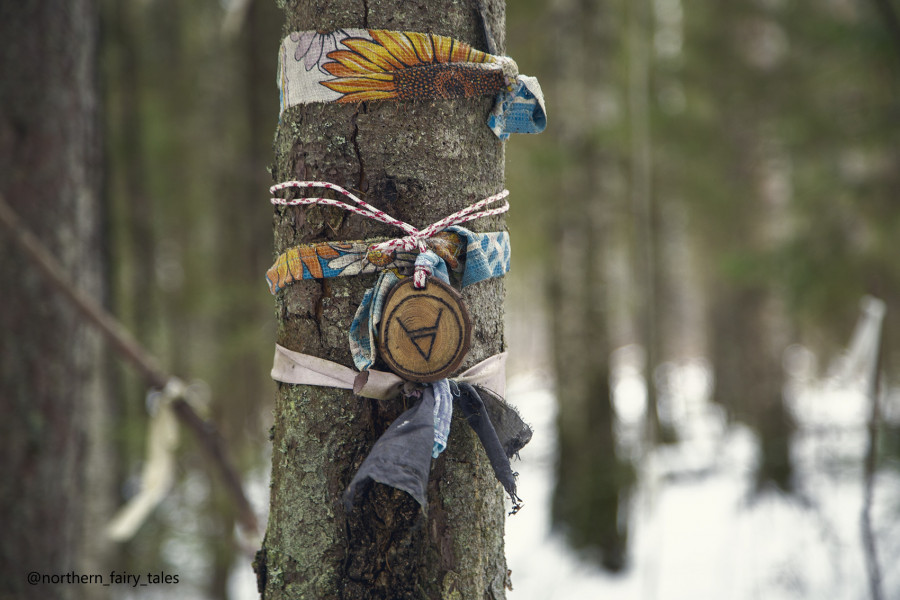
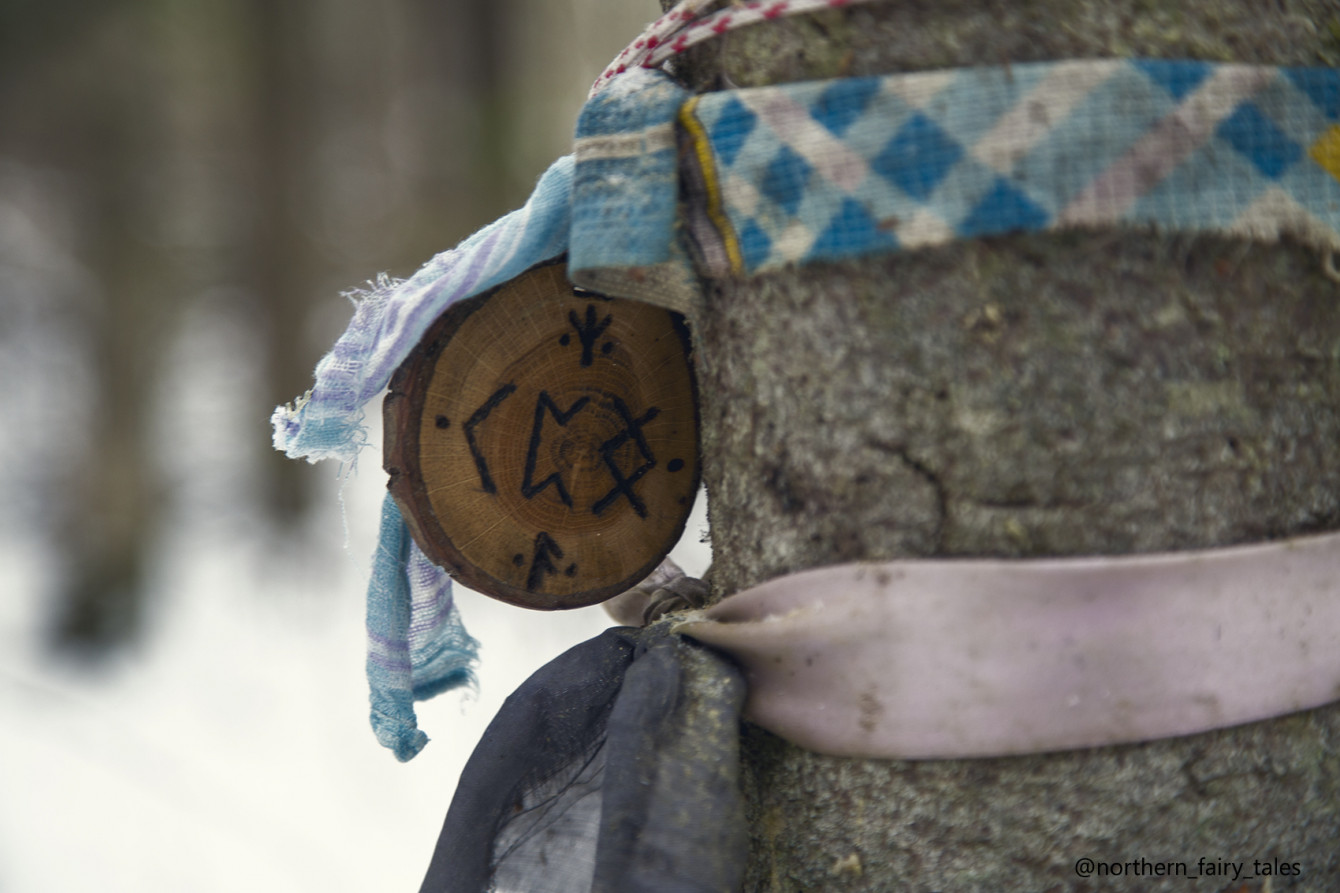
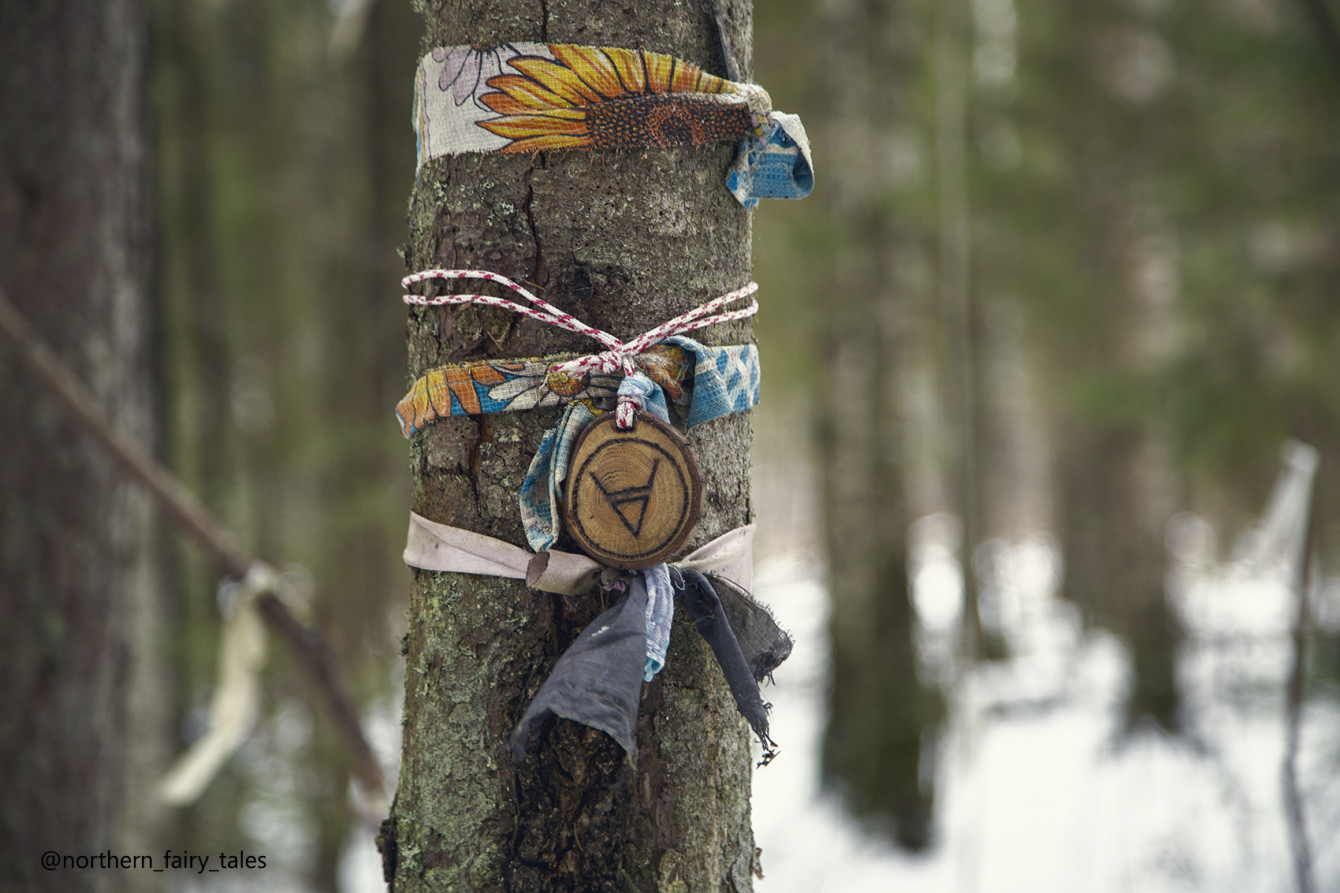
Indeed, this is a complete harmony of archaism and traditionalism. The nearness of Christianity and paganism in the Russian North even today is symbolically indicated by an amulet tied to a tree, which modern pagans regard as a sign of the ancient Slavic god Veles—coexisting quite naturally and harmoniously beside the cross and the icon.
Comments
There are no comments for this article yet. Be the first to comment!