Khalui II - The Chapel of Prophet Elijah and the Sacred Stone
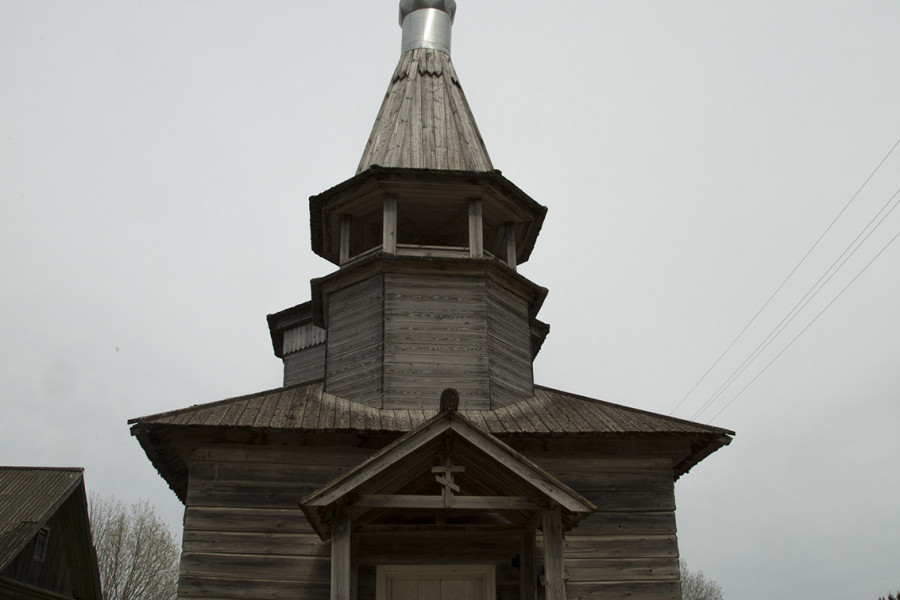
Approaching Khalui from the direction of Oshevensk, the first thing that greets you after crossing the Churyega bridge is the Chapel of Prophet Elijah. Erected in the grim and hoary 18th century, it stands as a classic example of northern wooden architecture: an octagon atop a quadrangle, covered by a hipped roof, clad in planks, with a small tented bell tower attached. Once, before a great fire, Khalui had many houses clustered before the Churyega bridge. Now there is nothing—only a field. Back then, the chapel stood almost at the very heart of the village.
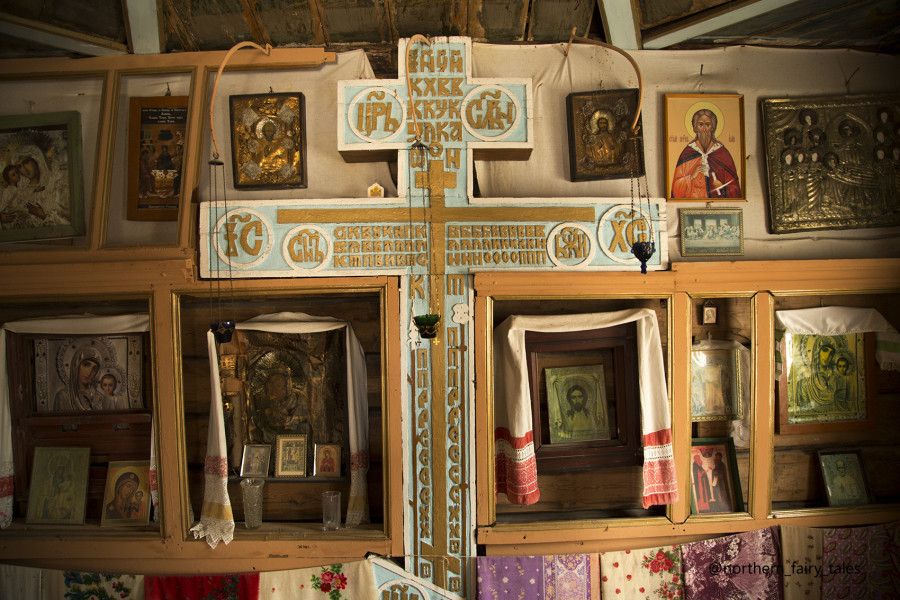
In the 1980s, during the wave of interest in old architecture, the icons were removed from the chapel, and it has remained closed ever since, though we were allowed a glimpse inside. Its interior is starkly modest: a modern, cheaply made iconostasis—a child of contemporary printing—adorned with a handful of old icon frames. This has become a typical sight in rural chapels and churches.
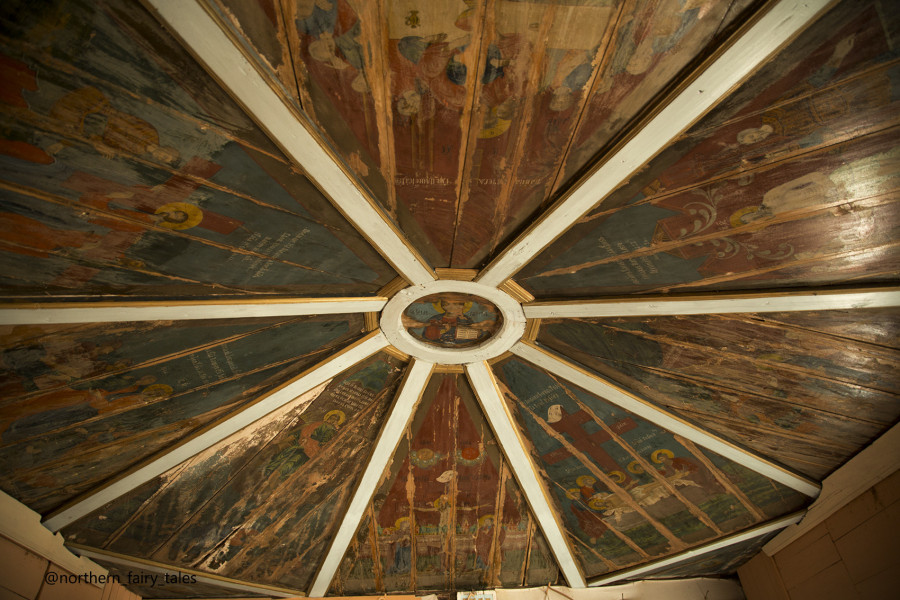
The only real ornament left is an old wooden cross. Yet something else remains: the chapel’s “heavens”—a wooden ceiling painted with biblical scenes, seraphim, prophets, or evangelists—of which only a few dozen survive in the entire Russian North, untouched by the hands of black-market antique dealers, looters, or museum curators.
Outside, near the chapel, stands another local curiosity: a small, leaning, menhir-like boulder. Our guide told us that people here worshipped this stone in prehistoric times, though he did not explain the nature of that worship—likely long forgotten.
Unlike the rigorous Judaism that once destroyed the sacred groves and stones of ancient Arameans, Russian Christianity—during its apostolic mission among the northern peoples—excelled at embodying such principles as “no sacred place should remain empty” and “if you cannot defeat them, lead them.” Thanks to this, a centuries-old symbiosis was born and thrived—folk religion, or folk Orthodoxy—with its unique worldview, understanding of good and evil, holiness, and interaction with the otherworld. Perhaps it is this very coexistence of Stone and Chapel that we can still witness in Khalui today.
Comments
There are no comments for this article yet. Be the first to comment!