In the Pskov lands, caught between the cultivated Enlightenment of St. Petersburg on one side and the former Baltic provinces on the other, one can still encounter relics of ancient faith that rival those of Mezen or Komi. Among them stands a stone cross near the village of Porechye, known as the Stone Woman.
The use of stone and wooden crosses in folk ritual was once widespread across the Russian North. People brought offerings, hung pieces of clothing from the sick, or raised them in gratitude for deliverance from disaster—fires, epidemics, near-death escapes. Such crosses also protected against evil forces: “The cross was set at a crossroads—a boundary mark, showing the limits of the human (Orthodox) world, surrounded by the chaos of the demonic anti-world.”
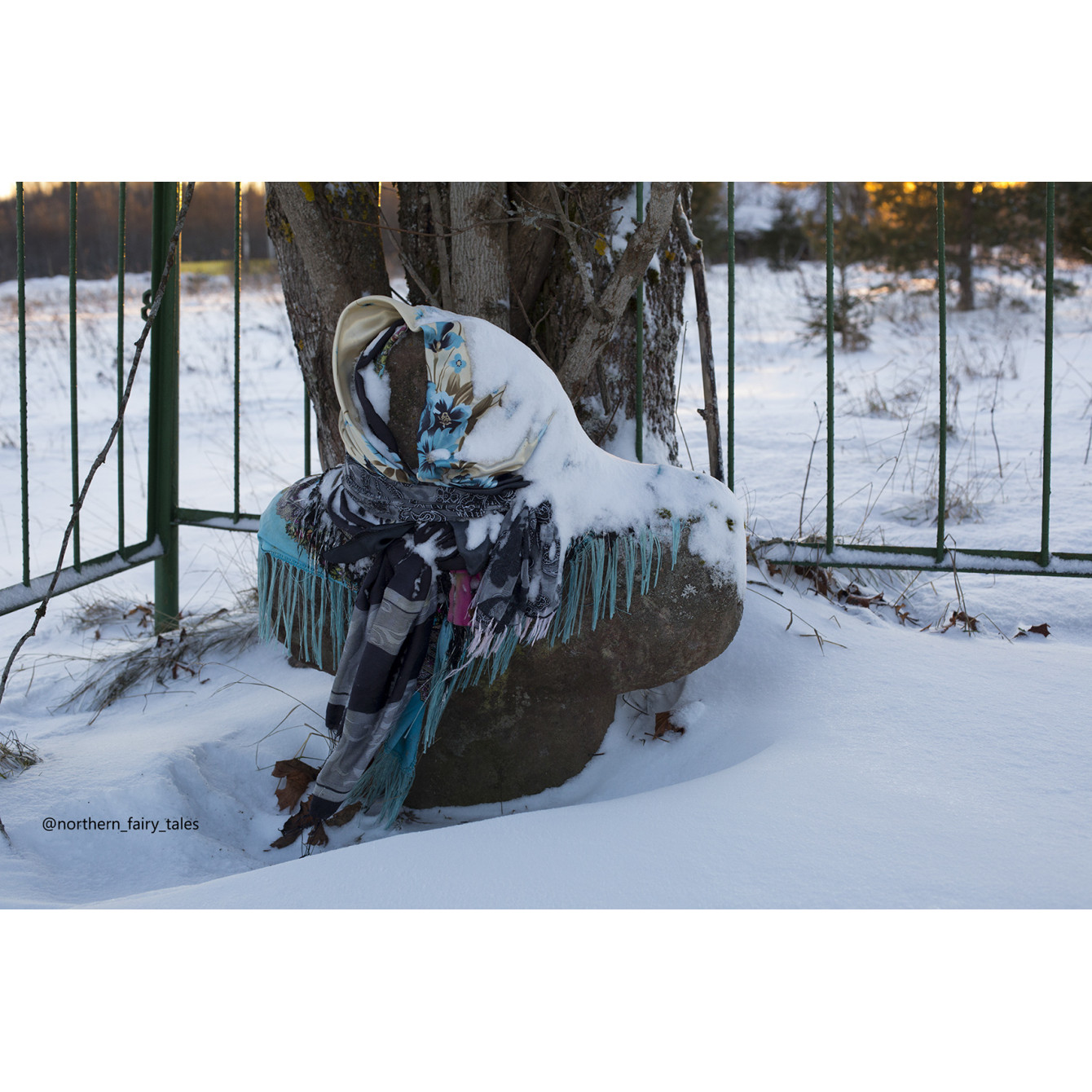
Pskov’s stone crosses are true survivors from the Middle Ages. They once marked ancient burial grounds—graves and mounds—and in later centuries became revered village shrines. Peasants lit candles before them, dressed them in children’s burial shirts, adorned them with kerchiefs, rugs, or ribbons, and even brought ritual food on Trinity. Frequently these sacred stone crosses were simply called Kamen’—“the Stone.” What mattered was not the form, but the essence: stone as primordial matter, as an elemental force.
Traditional beliefs saw crosses differently from Orthodox dogma. Above all, the cross was an anthropomorphic symbol—a figure with outstretched arms. Among the Komi, it was thought that the soul of the deceased would dwell within the cemetery cross. In local folklore, stone crosses could even take on mythic life: in one tale from Gdov, a stone cross rides a horse, following wedding processions.
The Stone Woman standing on the edge of Porechye belongs to this class of revered objects. It is enclosed by a grave fence and dressed in kerchiefs. According to tradition, a pious woman named Anastasia is buried nearby. No legend about the idol has survived, but clearly one must have existed. Even now people come seeking healing, for the cross is believed to be miraculous. They leave coins, ribbons, and other tokens of devotion—modern substitutes for ancient vows. It proves once again: myth may change, even vanish, but the ritual endures—even in an age as materialistic as our own.
Comments
There are no comments for this article yet. Be the first to comment!