






When the Bolsheviks came to power, they faced the monumental task of reshaping not only Russia’s socio-economic order but also completely reformatting the very paradigm of social consciousness, including the inner, spiritual world of the Russian people of that era. This transformation extended even into such a conservative cultural sphere as funerary tradition, which in the Russian context rested on a deep-rooted Orthodox–pagan syncretism.

To overcome these religious customs in a domain so closely tied to existential questions, the new authorities needed to offer something radically their own — a secular vision, a reimagined concept of death, and a new funeral ritual. This opened vast territory for experimentation, later loosely united under the term “red funerals.” There was no single canon; the only principle was simple: “new people must not be buried the old way.”
The idea had emerged as early as the Revolution of 1905–1907, when revolutionaries killed in the struggle against the autocracy were buried “in red.” The main criteria of such funerals at the time were the absence of religious rites, no priest or service, a coffin draped in red cloth, revolutionary banners, and a mourning rally of workers. The funeral of the revolutionary Bauman, for instance, turned into a mass proletarian demonstration.

The 1920s — a testing ground for experimentation in all areas of life — added several other, more radical practices. On one end were utilitarian burials, stripped of any ritual symbolism: simply lowering a body into the ground without ceremony, often without a coffin at all (coffins in the 1920s–40s were a luxury and frequently rented), sometimes even in mass graves. On the other end were advocates of cremation, who emphasized both practical benefits — saving cemetery space in fast-growing cities, public hygiene — and ideological ones, as burning the body contradicted Christian doctrine.

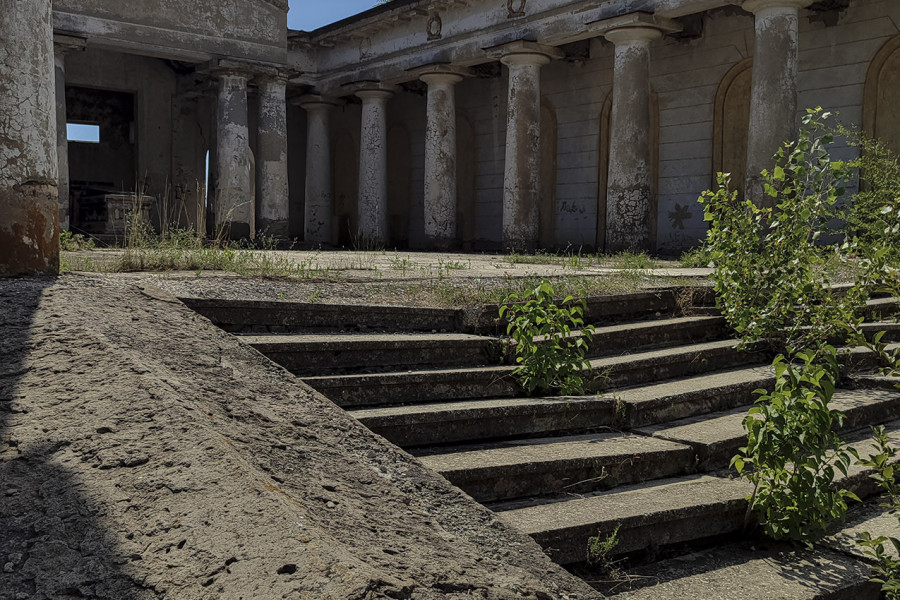
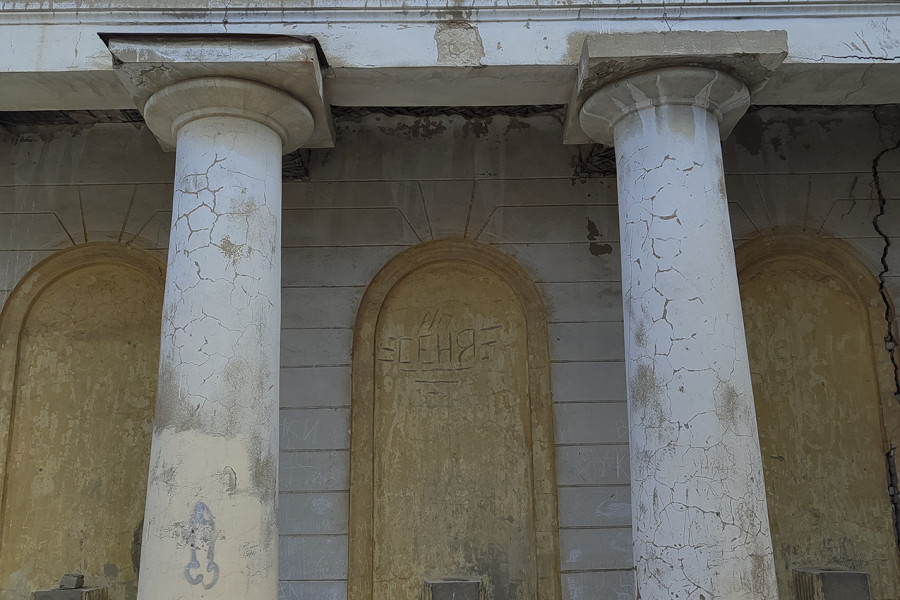
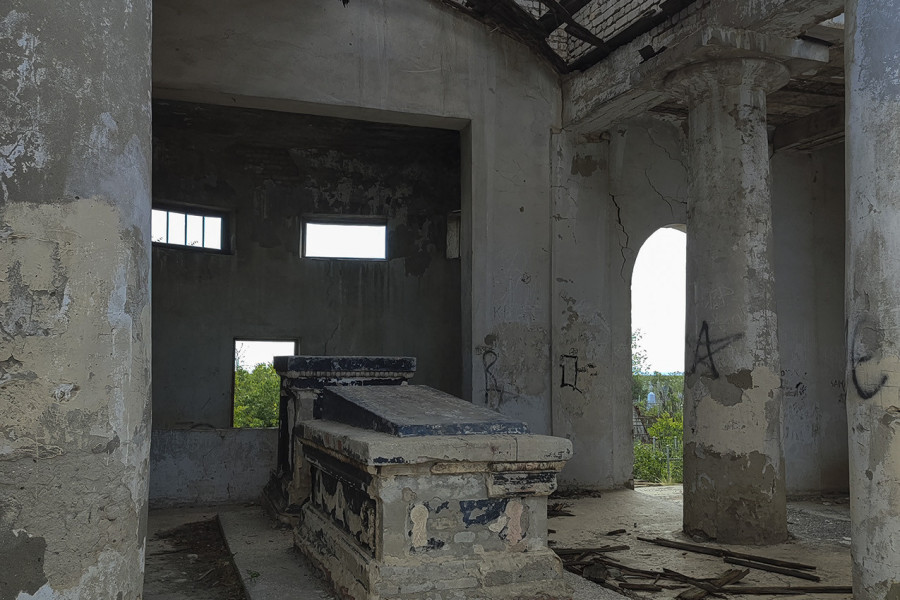
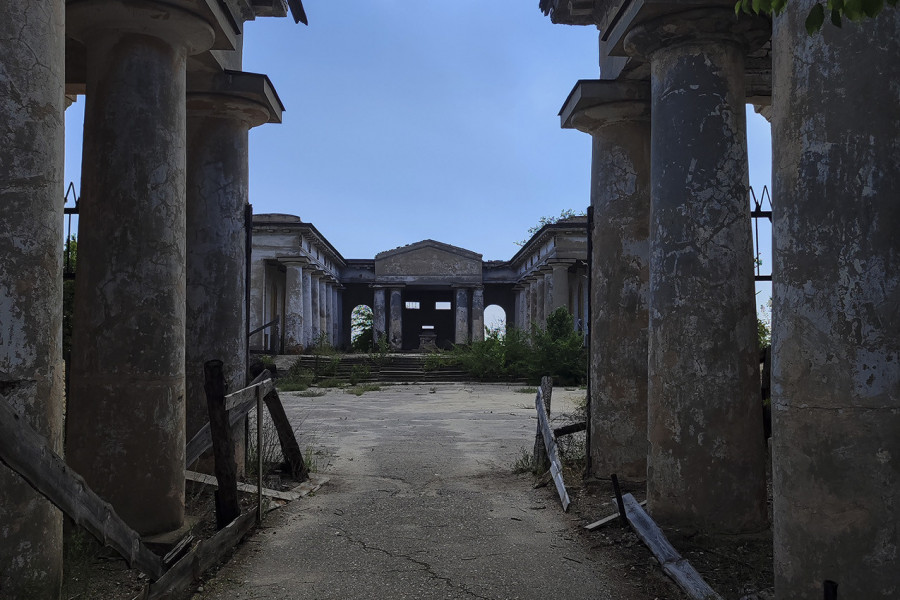
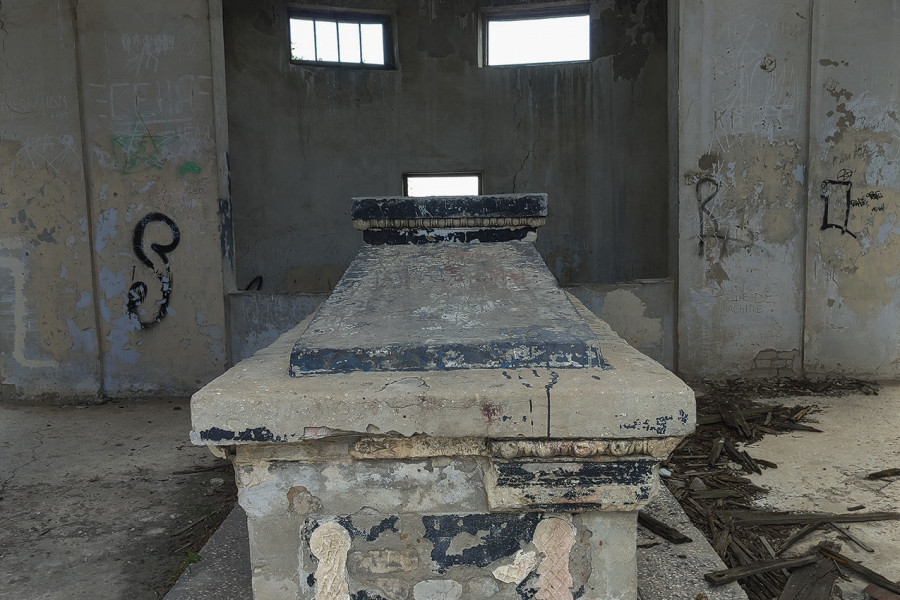
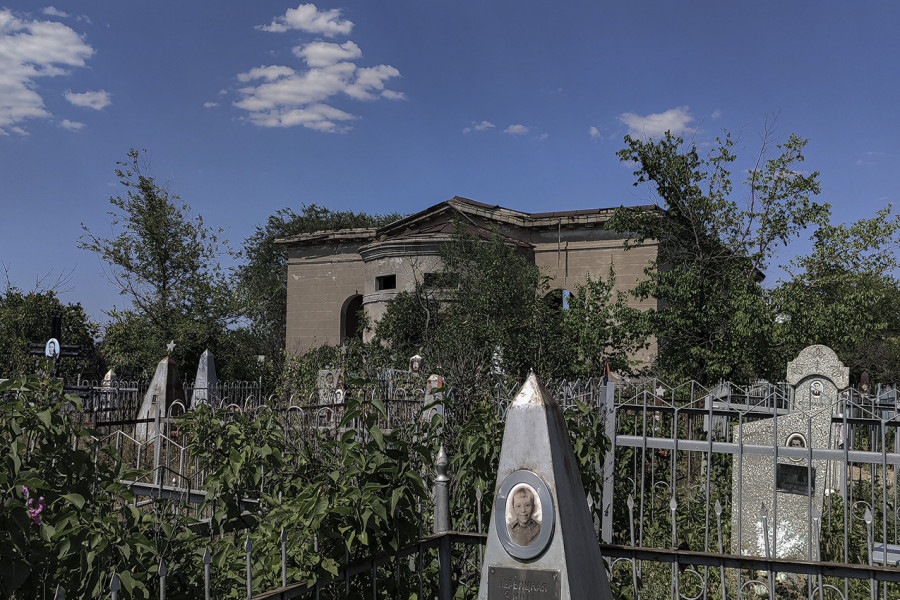
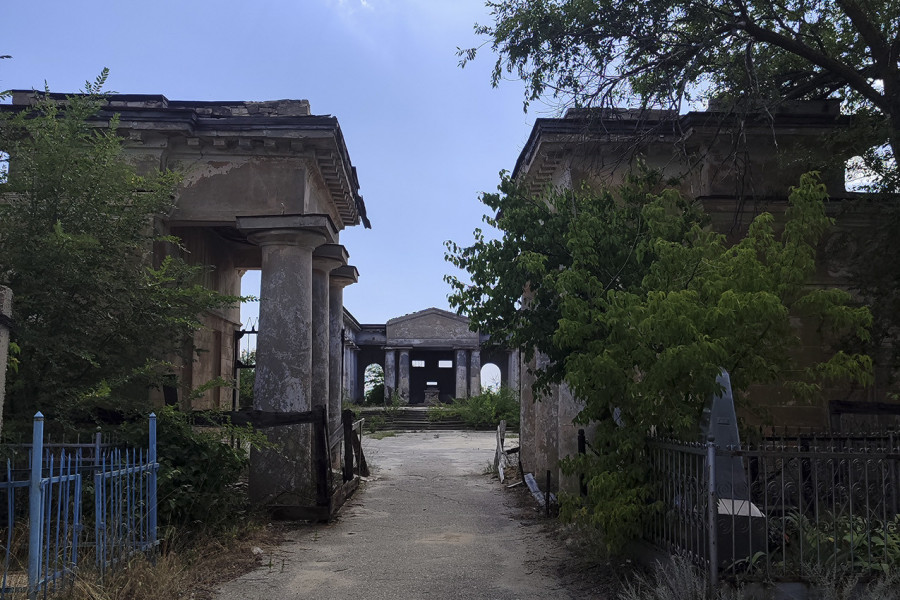
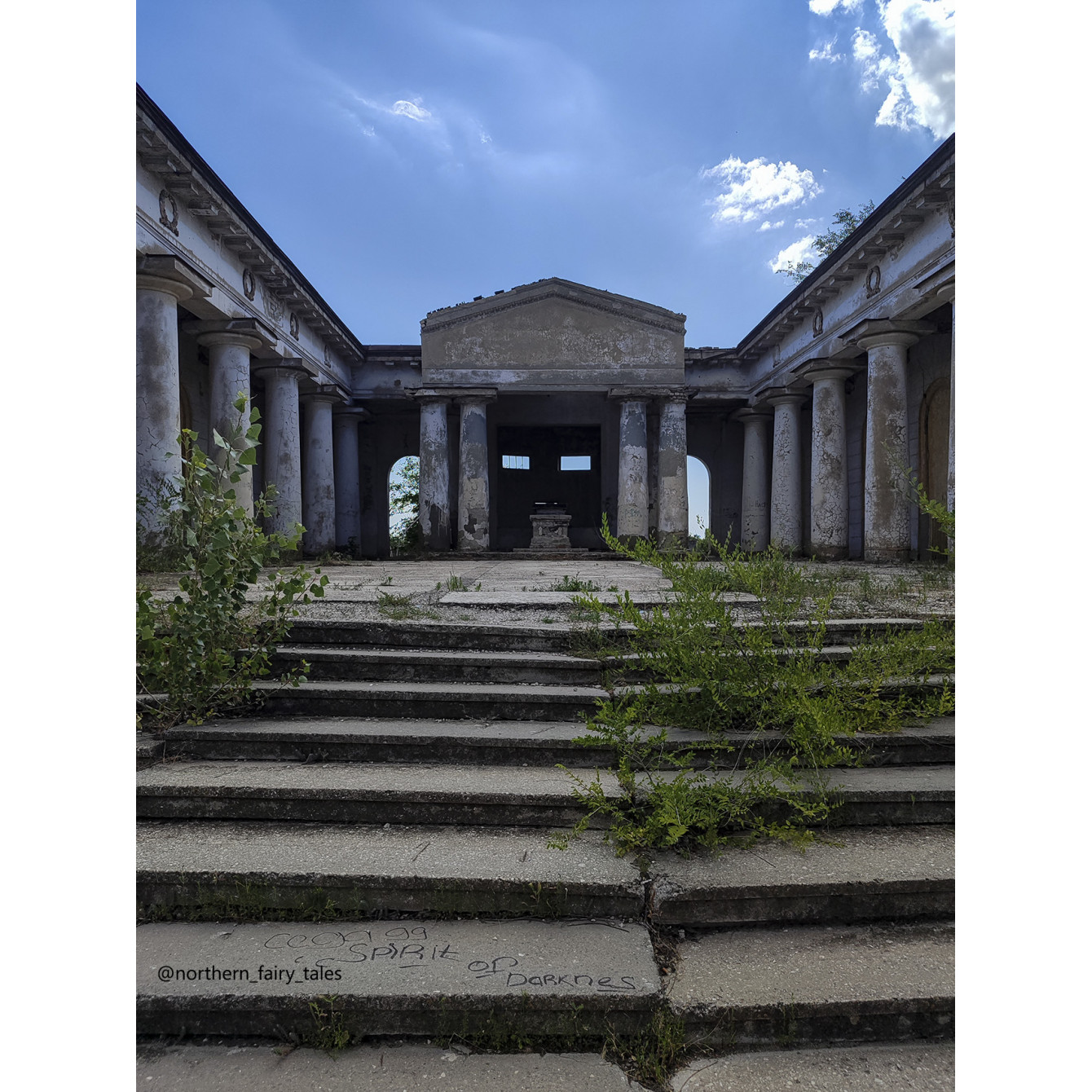
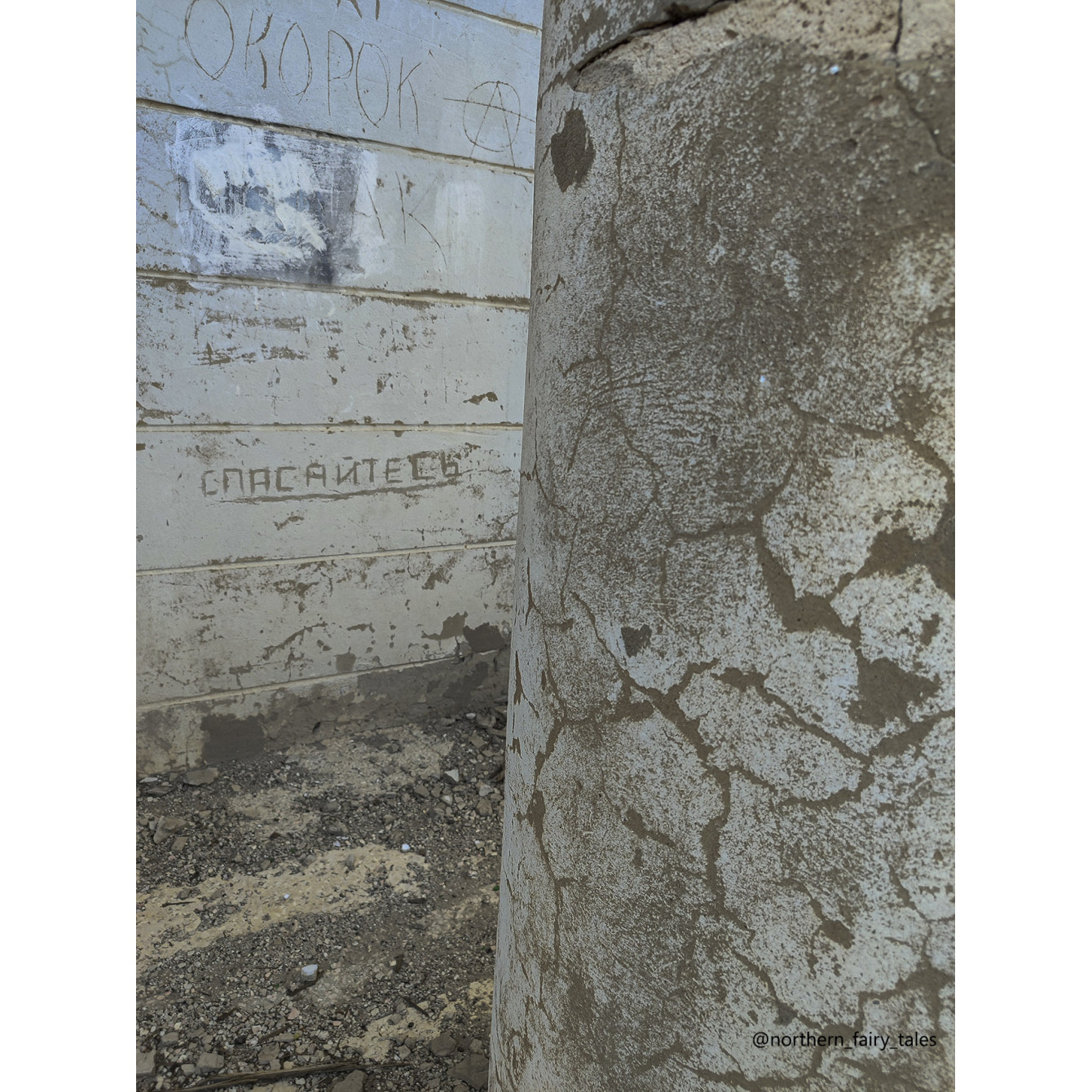
Among the most unusual funerary projects of that era stands the Mortuary on the old cemetery in the city of Volzhsky — an abandoned burying ground long closed for new burials. Built in a pompous pseudo-antique style, it is a unique structure in the former USSR: a ceremonial courtyard dominated by a columned portico adorned with wreaths; a coffin pedestal shaped like a sarcophagus; a tribune for the orator; numerous plinths meant for busts. The deserted grounds amplify its solemn, uncanny atmosphere — even on a bright summer afternoon the place leaves a strong impression.
Without exaggeration, the Volzhsky Mortuary may be called a Red Castrum Doloris — a Soviet Castle of Grief.

The story of its origin — or rather the absence of a clear one — suits its mysterious aura perfectly. Two versions circulate online. According to one, the mortuary was created by enthusiasts shortly after the 1917 Revolution. According to the other, it was built in the 1950s by an architect who, having fallen into disgrace with high-ranking Moscow officials, spent his years in exile in Volzhsky. Burials at the cemetery continued until the 1980s, after which it was officially closed.
Lacking information about how funerals in the Mortuary were actually conducted, we turned to Soviet funeral manuals and attempted to visualize the ritual.

A Funeral in the Era of Mature Sovietism
The heroic revolutionary spirit has by now been replaced with industrial pragmatism. Through the monumental gates, beneath the strains of Chopin’s funeral march, comrades carry the cushions with the deceased’s medals, funeral wreaths, the coffin lid, and finally the coffin itself — borne by exemplary workers of the local factory. A guard of honor follows: party officials with mourning armbands. Behind them walk family members, colleagues, and friends — those who spent decades at the same workshops and assembly lines.

The coffin is placed on the narrow pedestal, its head facing the entrance. The stone busts of Volzhsky’s honored citizens — revolutionaries, war veterans, labor heroes — stare emptily at the ceremony, each having taken their place here long before.
The funeral march stops. The master of ceremonies steps onto the tribune. Strictly observing the deceased — whose hands lie straight along the body, not crossed on the chest, breaking once more with Orthodox tradition — he proclaims:
“Citizen of the USSR (name), has completed his life’s journey. May the bright and kind memory of him remain in our hearts for many years.”

He is followed by colleagues, activists, and relatives who speak of the deceased’s professional achievements and honest labor. When the speeches fade, the organizer invites everyone to bid farewell. He covers the deceased’s face with a cloth and, with the assistance of factory workers, nails the coffin lid shut.

Under the sound of the orchestra, the procession moves to the waiting grave, where the body is lowered into the earth. Those present throw handfuls of soil over the coffin, lay wreaths and flowers on the fresh mound, and leave the cemetery grounds, heading to the memorial gathering in the factory canteen aboard a departmental bus.

This is how the ideal atheist funeral of the ideal Soviet citizen might have appeared in the mind of a designer of communist rituals. The funeral organizer replaced the priest; the mortuary replaced the church. One is tempted to conclude: “a sacred place never stands empty.”

Yet the experiment failed. The mortuary never spread beyond this small provincial settlement, and communist ideals collapsed. Now the Red Temple of Sorrow is a rapidly crumbling artifact of the Soviet era, belonging to one of the most intriguing spheres — the sphere connected with death and eternity — and it is a place that should be visited by anyone interested in the subject of Memento Mori.
