





In Christian terminology—and in common popular perception—any interaction between humans and natural objects on a sacred level is usually interpreted as “pagan worship” of stones, springs, trees, or groves. As if people were praying to an empty stone idol or a rotting stump. One is tempted to exclaim, “How foolish!” Such a view, however, is a widespread misconception that oversimplifies these practices.

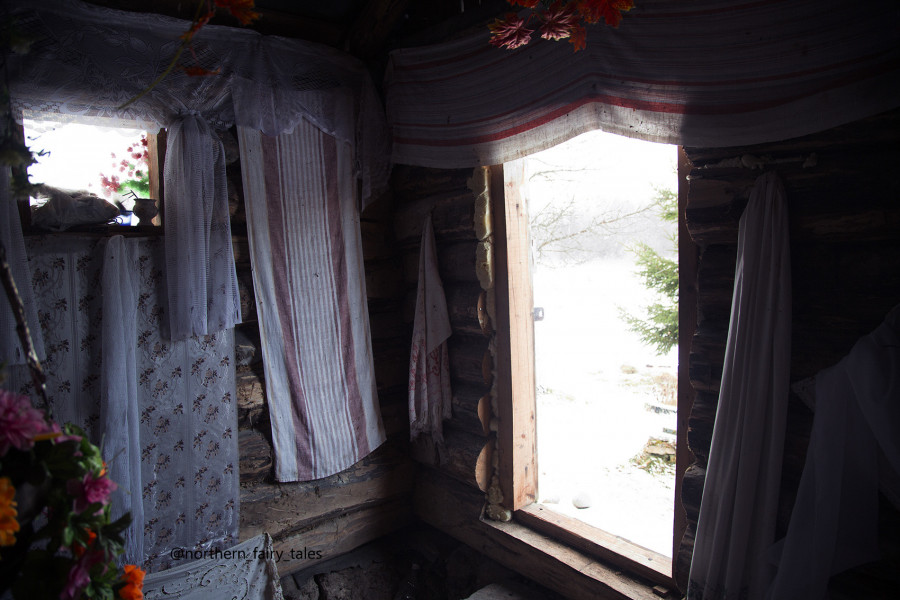
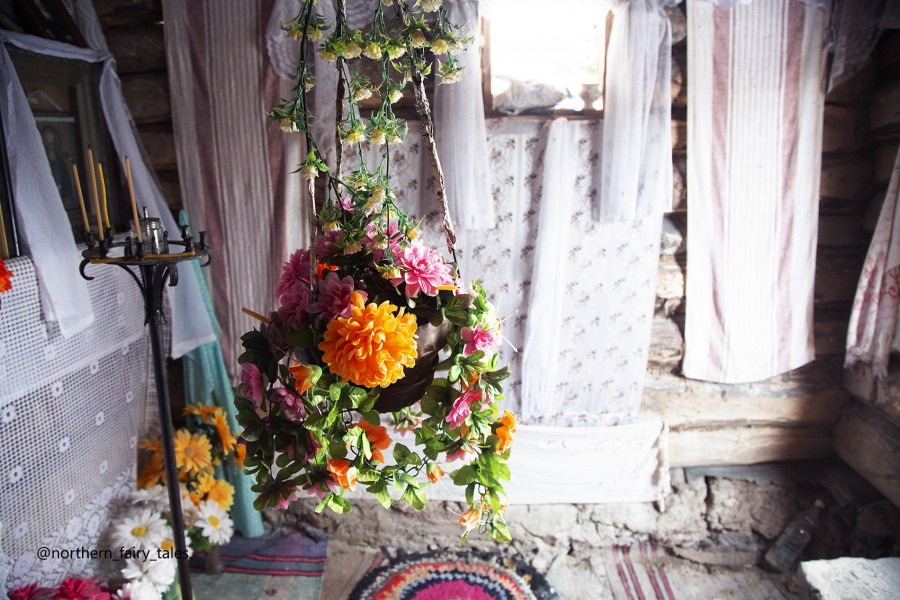
A second misconception claims that with the arrival of monotheism such “shameful” phenomena disappeared, for the people supposedly “became smarter” and renounced superstition. But this is not so—or at least not entirely so. The photographs that accompany this article undermine this stereotype: here, a stone occupies the central place inside an Orthodox chapel.
Why does this happen? Why is Christianity unable to eradicate so-called “pagan superstitions” and establish a completely “pure” faith? Christianity is, after all, quite young—only a couple of millennia old—whereas the human use of natural objects as mediators of the transcendent may be hundreds of thousands of years old. No “world religion” could possibly abolish such ancient layers of experience; therefore, Christianity had to find ways to adapt. One of these was to incorporate natural sacred objects into its own ritual sphere.

Signs of this incorporation include the construction of chapels over or beside natural sanctuaries, the appearance of icons, candles and votive offerings—objects belonging to human culture—around stones, trees, and springs.
A 19th-century account of the Christianization of the Komi people provides an illustrative example:
“The altar of the first church was built upon the stump of an enormous birch or spruce tree, to which the Zyryans once offered animal pelts. When the old wooden church was dismantled, the people took the stump apart and carried the pieces off as amulets.”

Thus, in popular Orthodoxy, a “holy grove,” a “holy tree,” a “holy spring,” or a “holy stone” represents the legitimization of archaic cults.
Omphalos and the Betyl: Stones as Centers of the World
René Guénon, in The King of the World, writes about the Omphalos, the “navel” or center of the world. In the material plane, such Omphaloi often manifest as stones known as baetyls. The term is likely related to “Bethel” (Beit-El—“House of God”), the name Jacob gave to the place where the Lord appeared to him in a dream:
“Jacob awoke from his sleep and said: Surely the Lord is in this place; and I knew it not… How fearful is this place! This is none other but the house of God, and this is the gate of heaven.
And Jacob rose early, took the stone he had used as a pillow, set it up as a pillar, and poured oil on its top. And he called the place Bethel.”

The Old Testament thus shows that monotheism is not inherently opposed to natural “places of power.” Through incubation—a sacred sleep in a holy place—Jacob encountered Yahweh via the very stones of the desert.
Northern Traditions: Stones, Trees, and the Border of Worlds
Moving closer to our own lands: in Karelian folklore, mountains, stones, and trees can represent boundaries between worlds or serve as entrances into the Otherworld. In Vepsian charms, the stone is treated as the center of another realm, surrounded by a sea or lake. There, at this center, one meets a magical helper.

A. Konkka, a researcher of karsikko—sign-bearing sacred trees—believed that a holy tree is “a manifestation and representative of the spirit of that place. The spirit is invisible and impermanent; the tree is a tangible, intermediary object.” The same role may be taken by a stone or a spring.
These places, then, are the abodes of mythological beings, who dwell there for part of the time and may occasionally reveal themselves.
Mircea Eliade confirms this idea succinctly:
“Idols were merely containers of the divine.”

In other words, the sacred object is comparable to a chapel or a church. No Christian would claim to worship the building itself; rather, the building is the place where God or the Holy Spirit resides. Therefore, the notion that “pagans worship the stone itself” reflects either a late decay of polytheist tradition in the Roman Empire or a deliberate polemical device of Christian missionaries who caricatured their opponents as venerators of inert matter.
How Stones, Springs, and Trees Become Sacred
For a natural object to become holy, there must be an Event—a miracle or a supernatural occurrence. For archaic consciousness, any miracle is sacred, as it originates from the Otherworld. Whether it is benevolent or dangerous is another matter entirely: folklore abounds with ambiguous powers and paradoxical outcomes.

The ethnographer A. Panchenko systematized the types of Events that could initiate a local cult in rural northern Russia:
-
Appearance of a mythological being at the site, sometimes leaving a trace on a stone.
-
Miraculous appearance of a sacred object—found at the site, or carried there by a spring or a river.
-
A sacred object that “refuses” to be moved from its place.
-
Stories of miraculous healings.
-
Tales of a sunken (subterraneously vanished) church.
-
Accounts of someone killed at the site, leaving a mark.
-
Events occurring in mythic Time—such as stones once being soft enough to bear footprints.
Particularly widespread are следовики—“footprint stones,” marked by impressions left not by ordinary people, but by saints, the Mother of God, devils, or folkloric characters like Saint Friday. These traces are manifestations of the miraculous, physical ruptures of natural law.

Village Feasts and Sacred Time
Local festivals tied to natural sanctuaries also stem from the Event. If a saint caused the miracle, the feast day coincides with that saint’s day; if the Mother of God, then with her feast—such as the Dormition. Christ rarely appears in such contexts.
For believers, the festive day merges seamlessly with the mythological day on which the miracle occurred. The celebration included a church service, water blessing, processions, offerings, and ritual reenactments of the saint’s deeds.
In the village of Oshevensk, for example, pilgrims would walk the “never-overgrown path” of Saint Alexander of Oshevensk, stopping at footprint stones associated with him, symbolically identifying themselves with the miracle-worker.

Conversely, neglecting the feast—or the guardian spirit of the place—was believed dangerous. In the village of Luzhitsy, for example, children brought a rooster each year on November 14. If the rooster was not sacrificed upon the stone, misfortune was expected:
“If no rooster was brought, the stone would drown children and livestock in the summer.”