The Karelian researcher A. Konkka, in the study of the same name on which this publication is based, gives the following definition of the phenomenon:
“Karsikko (from Karelian karsikko/karzikko — to ‘karsat’, to lop off branches) belongs to characteristic but little-studied cultural phenomena of the Balto-Finnic peoples. A karsikko is, primarily, a conifer whose branches or crown have been cut in a particular way, or a tree bearing various signs carved into the trunk—from a simple hewn patch (a surface leveled with an axe) or a notch, to an anthropomorphic image.
The sign-tree is used in rites of passage, and also in calendar, recruitment, and hunting/fishing ritual practice as a ritual symbol with the meanings of a guardian spirit. In ritual practice, karsikko represents a hypostasis of the World Tree, with the functions of an amulet and a mediator between worlds, marking sacred boundaries.”
As noted above, karsikko was widely used in so-called “rites of passage”—a total change in an individual’s existential status, to which death undoubtedly belongs. In this case, one can speak of a karsikko of the dead, and one of its forms is the carved faces on burial crosses that were widespread among the Sámi. Such images were found at the Chalmny-Varre cemetery—an old Lapp encampment. The carving of these anthropomorphic images of the deceased is an ancient Lapp tradition: such faces could be “fed” with bird fat or blood, and the images on the crosses are the result of a symbiosis of Christianity and pre-Christian practices.
In the mythology and ritual practice of the Finno-Ugric peoples—not only the Sámi—images of the dead were polyfunctional. They served as a temporary vessel for the soul, a kind of road for crossing into the other world, a means of contact with the deceased, a bridge between the world of ancestors and the living. Such images include, for example, the ittarma doll among the Mansi: it replaced the deceased himself and served for the living to communicate with him.
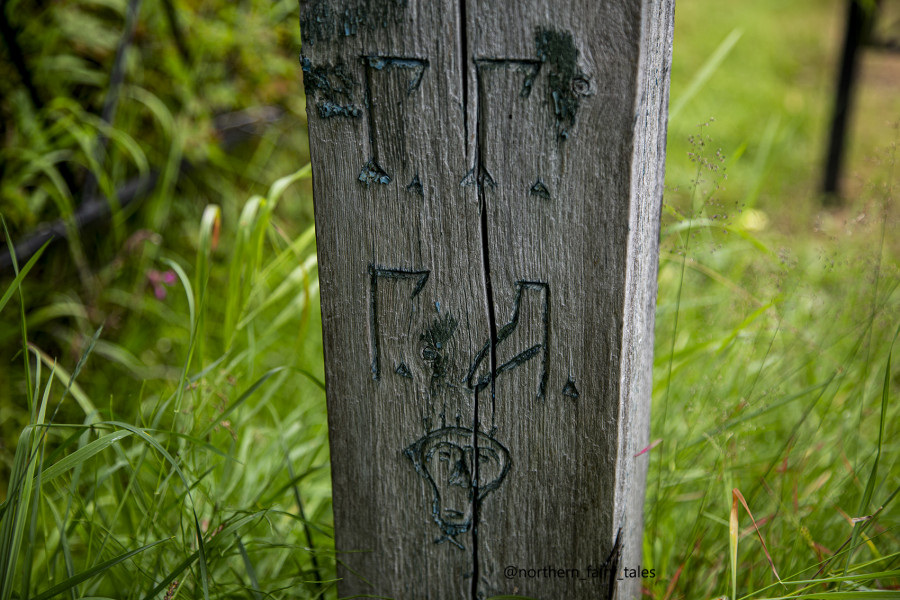
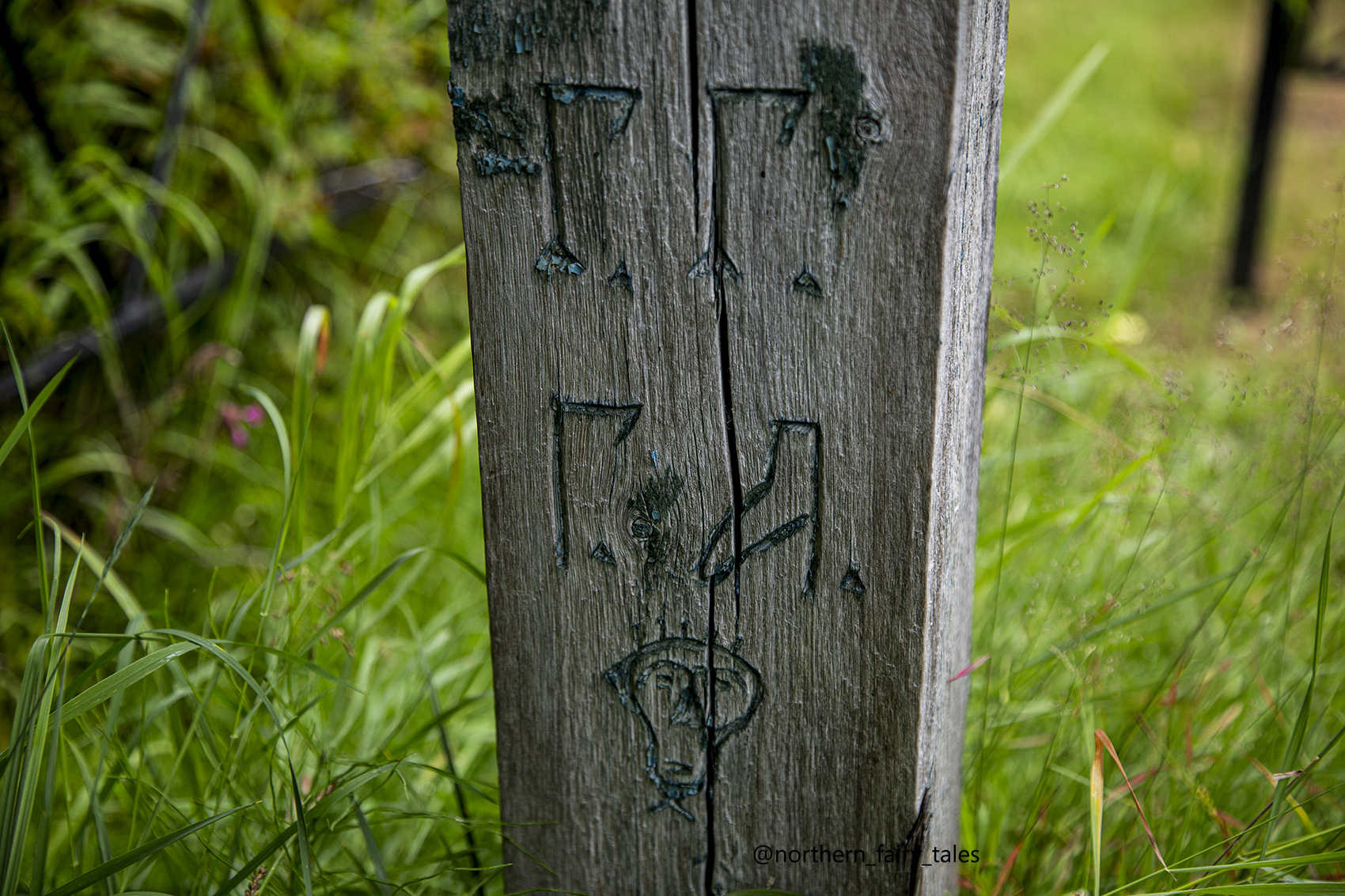
The Russian Pomors, who from ancient times lived on the shores of the enchanted Gandvik—the White Sea—interacted with the autochthonous population of this region, the Sámi. And while influencing them culturally, they themselves came under the influence of this enigmatic people, including in the religious and magical sphere. This is what A. Konkka became convinced of when he visited these places on an expedition back in 1987 and discovered around 30 anthropomorphic images in Russian Orthodox cemeteries. Some of the faces had ears, eyebrows, a “potato” nose, or bristling, standing hair.
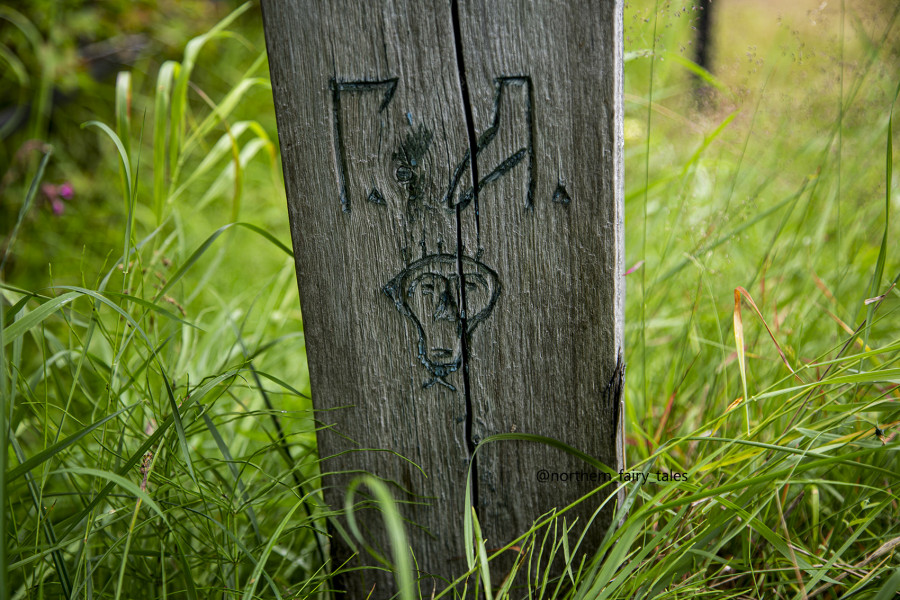
Most often these faces were placed in the lower part of the burial cross—where, in Orthodox tradition, usually beneath the slanted crossbar, a human skull was depicted together with the letters G.A., the famous “head of Adam,” an illustration of the transience and mortality of human existence. But the faces are not pessimistic Christian symbols, and not lifetime portraits like those on modern gravestones. As the Karelian scholar notes, they are “images of the dead, that is, beings of the otherworld,” while “images of living people in traditional culture were not used, or were used only in the case of so-called black magic.”
Even elements of these faces—such as hair radiating outward like rays—may carry meanings not obvious to a modern person:
“This detail may seem merely a technical device for schematically depicting (carving) hair on the hard surface of wood, depending on the performer’s ‘whim.’ However, if we look at drawings on old Lapp drums, we will find on them several images of deities with rays above the head, resembling the hair of the faces under discussion. These are gods of fertility, wind, and thunder on the drums of Scandinavian Lapps. Such rays—sometimes denoting branches, sometimes hair, sometimes certain details of mythological figures—are generally characteristic of drawings on Lapp drums and carry a definite semantic load, as it seems to us, connected with the emanation of vitality: they manifest the power of a deity or spirit contained in the very vegetal nature of the depicted symbol.”
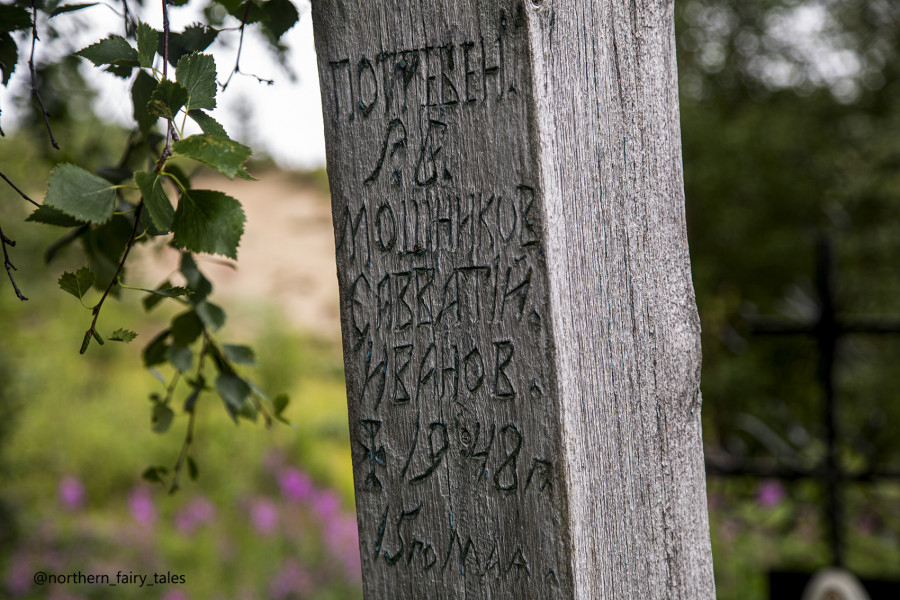
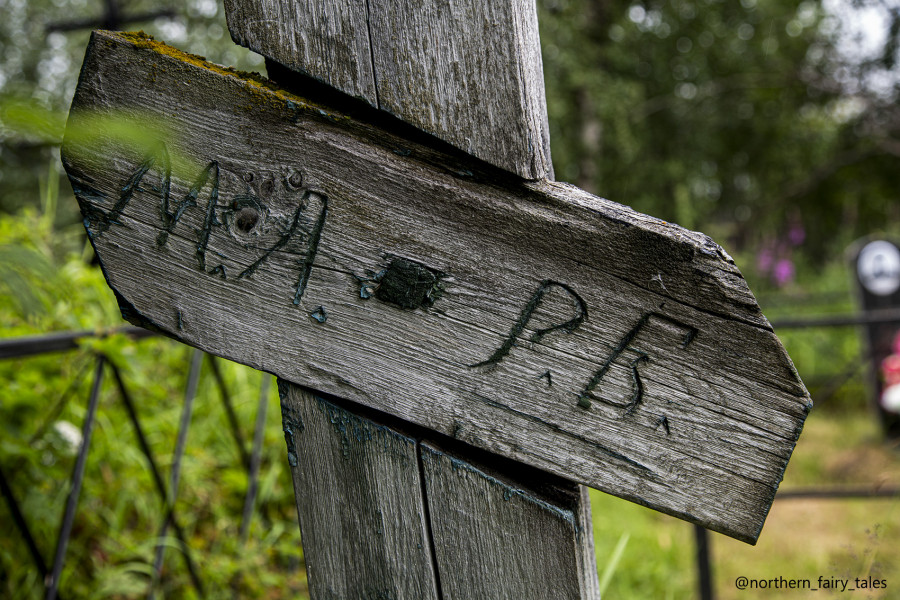
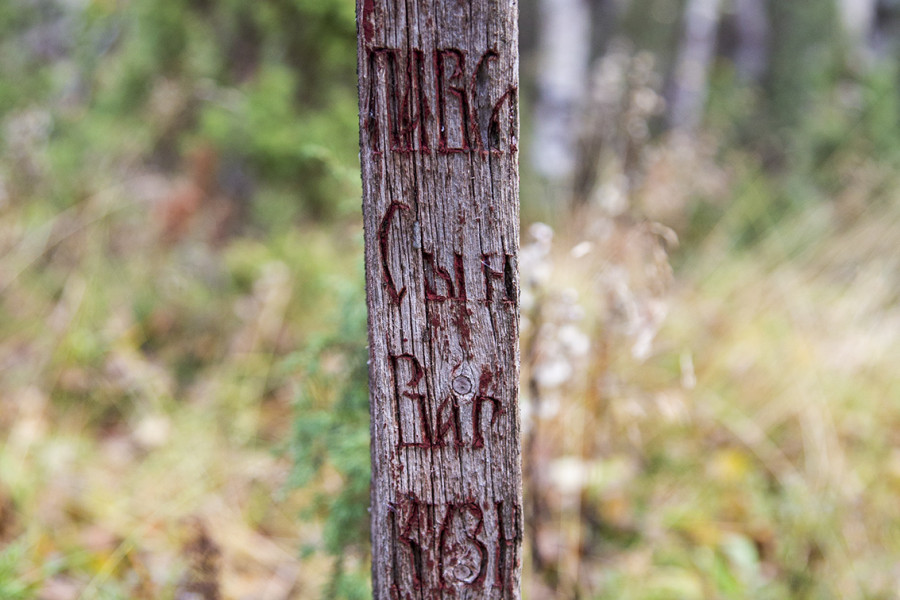
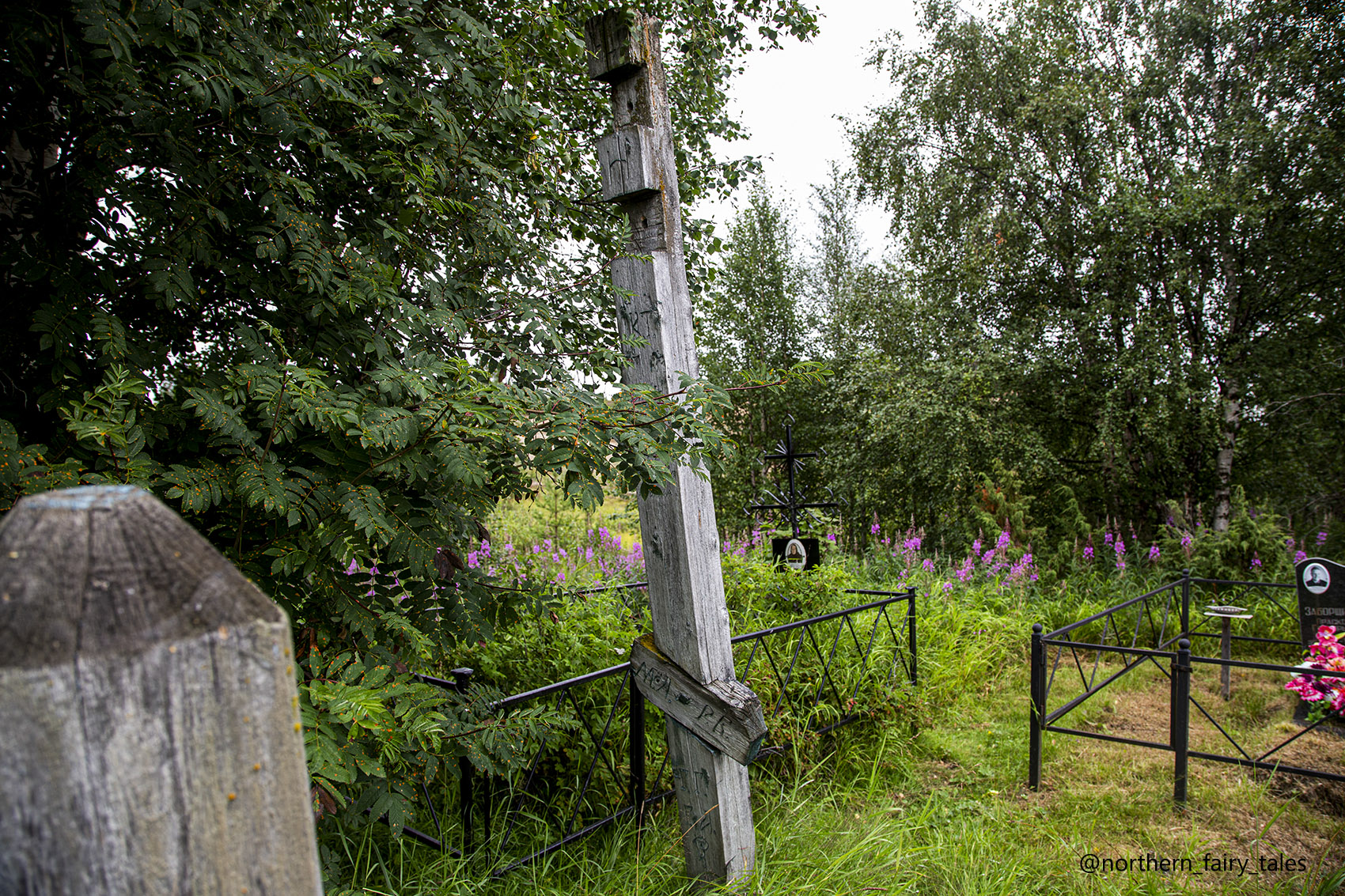
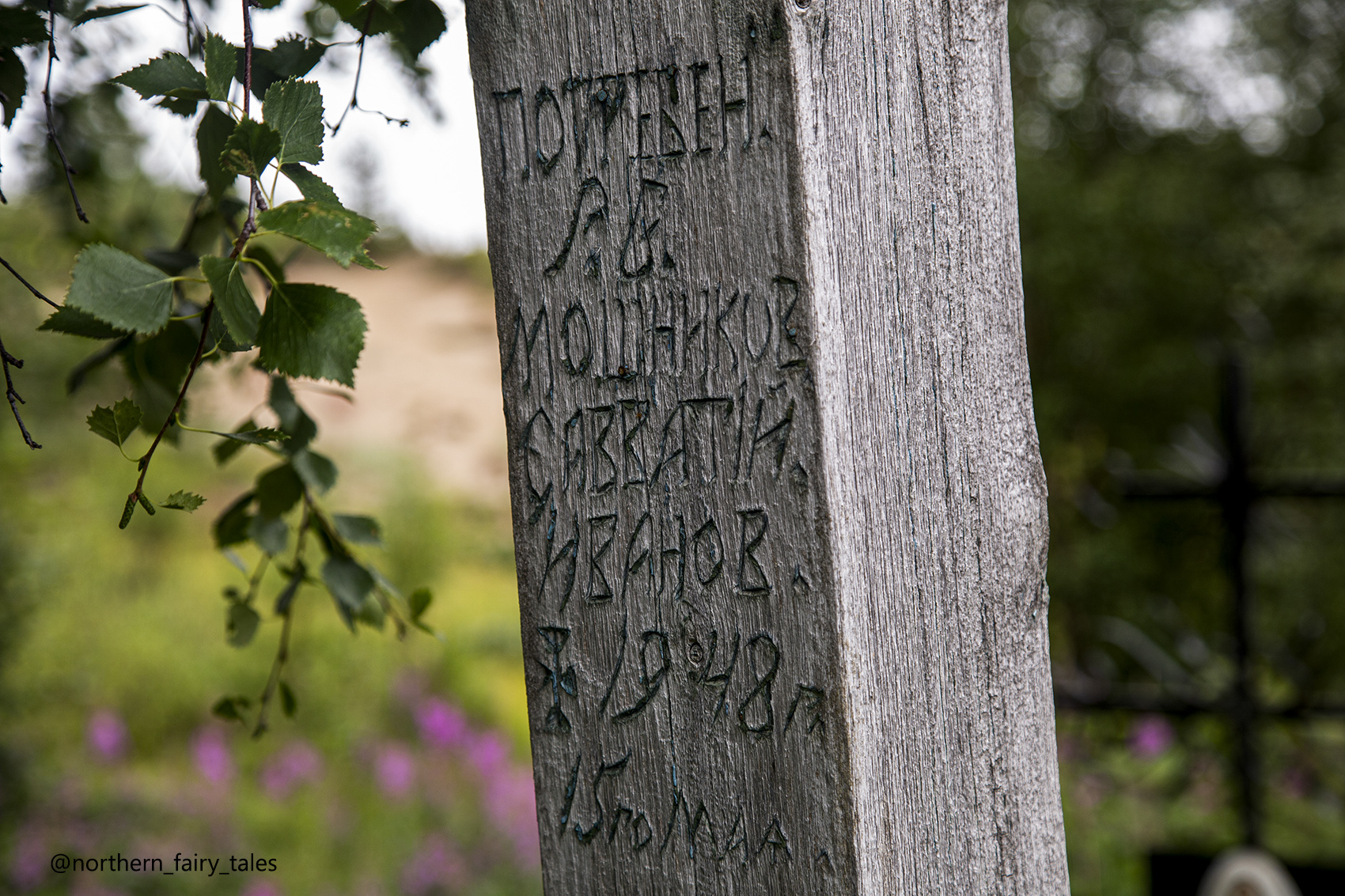
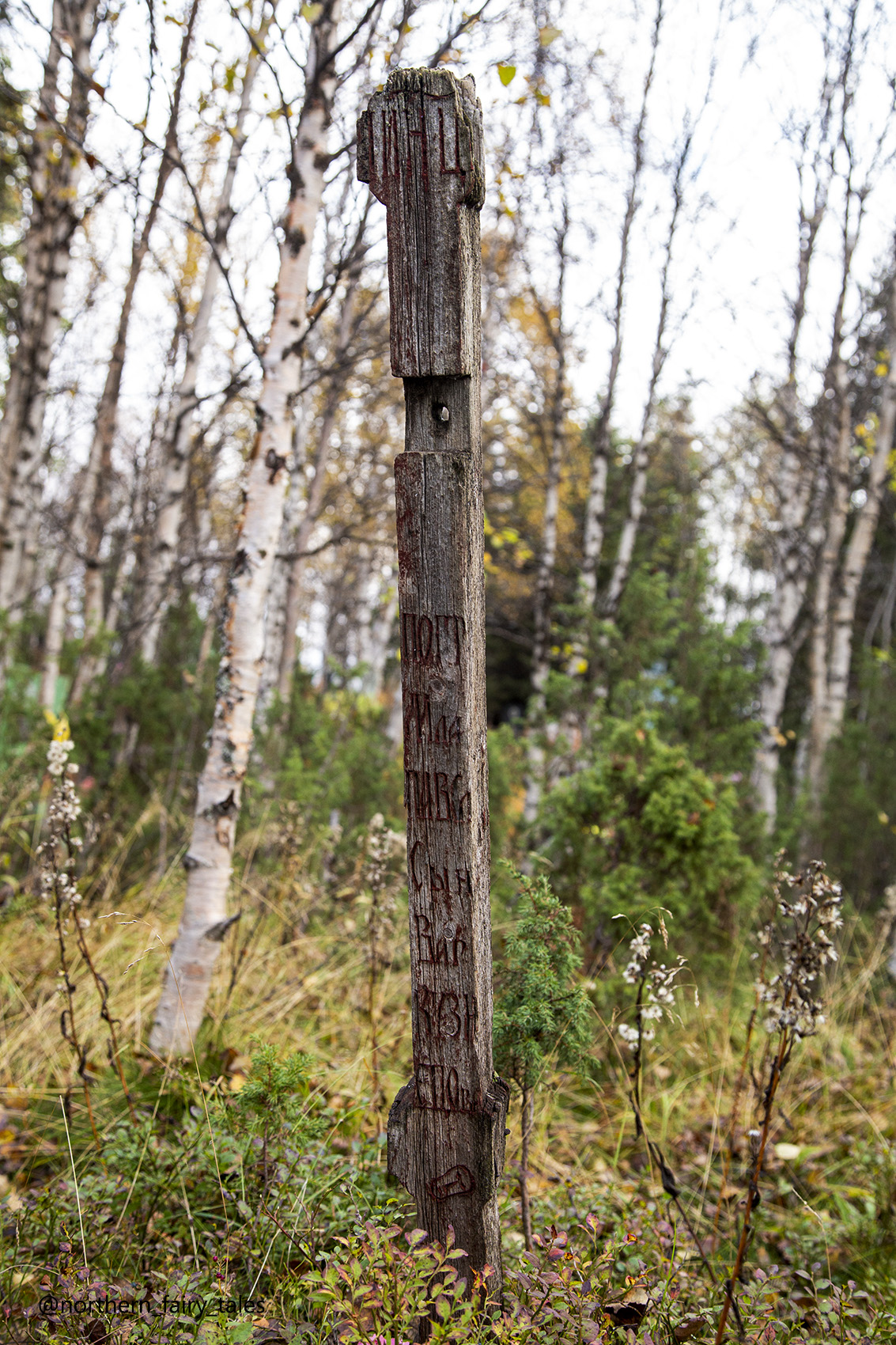
Inspired by what we had read, we once again set off on a journey to the Kola Peninsula, which we love so much. And after carefully combing through old Pomor cemeteries, we—miraculously—found them: a couple of crudely carved faces, as if made by the hand of some little child, witnesses of gray antiquity. One had that very bristling hair—the symbol of life force—and eyebrows; it hid right beneath the abbreviations G.G. and G.A., at the very bottom of a huge timber cross made in 1948, which had lost two of its crosspieces. The second face, carved on a more modest cross, also lacking its horizontal bar, was even more primitive—hairless and earless—yet nonetheless a mystical image of the deceased, turning an ordinary grave cross into a karsikko of the dead.
Comments
There are no comments for this article yet. Be the first to comment!