



Holy Week—also called Easter Week—is preceded by Great Lent. This time is the central event of church life and marks for believers the final span of Jesus Christ’s earthly life in human form: his suffering, crucifixion, and, at the culmination, Easter—symbolizing his Resurrection and accompanied by solemn services and processions.
But what interests us here is not the official religious side of this period, but the folk magical practices performed at this time—especially since there is a great deal of information on the subject.

The most unusual day of the so-called Bright Week is undoubtedly Thursday, known as Clean Thursday or Great Thursday. It is on this day that the majority of magical rites are performed. First of all, protective rituals were widespread. For example, among the Veps of the Lake Onega region, “on Great Thursday before sunrise, the master or mistress of the household walked around the house three times against the sun, to protect the livestock and chickens and to guard against fire. For this ritual circuit, they used magical objects: an axe, tucked into the belt or held in the hand with the blade forward; a sieve containing an icon; a lit candle; scissors; an egg; bread with wool baked into it. In the village of Yaroslavichi, at sunrise on this day, the master and mistress rode around the house on a broom.”
These rites employ the protective semantics of the magic circle, and ordinary household objects that, at this time, acquired the status of ritual artifacts. Many things gathered on this day also became a kind of talisman and magical object. For example, on Great Thursday “the mistress of the household, at sunrise, neither ate nor drank, spoke to no one, and went into the forest for juniper branches. She stuck them above the outer door, saying: ‘As the juniper bark is strong, so may the people of this house be strong in health.’”
A. N. Afanasyev, in his Poetic Views of the Slavs on Nature, gives another example of a magical object produced on the first day of Easter week: a piece of copper knocked off a bell, kept at the apiary so that the bees would multiply. In another rite, a shepherd walks around the herd with the candle that had stood through the bright dawn service. A portion of that candle is set into a birchbark horn, which should call the cattle better and drive off predators. The ethnographer S. Maksimov also testifies to this. Such examples could be continued almost endlessly.
No less important in this period are rites of initiating magic. “For this, people tried to get up early, so that before sunrise they could learn everything they didn’t know how to do, or did poorly; for that they imitated various actions: they threshed with flails, embroidered, sang, danced, read, and so on.” Such magic was found in many places of the Russian North, including among the Vodlozero people: “Someone who wanted to learn to play the accordion but had no teacher went to the bathhouse at Easter and asked the bathhouse spirit to teach him.”
A widely practiced action in Holy Week was ritual theft: “At Easter, thieves try to steal something from those praying during the dawn service so that no one notices. After that, they can steal for a whole year without problems. Gamblers go to church with a coin under the heel of their boot in order to win big,” and “on the morning of Great Thursday, before sunrise, Veps women of the Shimozero area secretly climbed into a neighbor’s byre and cut wool from sheep to ‘pull’ the lambing to themselves.”
This magical act refers to the ancient concept of dolia (a person’s “fate-share” — their allotted portion of fortune), which assumes that “in the world there is a fixed amount of happiness and unhappiness; there is no surplus of anything; if someone’s share increases, someone else’s diminishes. The amount of goods is constant, and small thefts are ritual and aimed at stealing luck.” Linked to the idea of material well-being is the custom of counting money on Thursday of Easter week—so that it will not run out.
The revival of nature after winter dormancy is also believed to reach the Other World: “on Great Thursday Russians invite their dead ancestors to the home hearth, heat the bathhouse for them, and offer treats. On this same day, according to belief, unclean dead also come out into our world, including rusalki, who are said to emerge and wander among the living.” According to the Stoglav as well, early on Thursday of the seventh week of Great Lent people burned straw and called the dead. At this time, the ruler of forest spaces—the Leshy—also appears on the earth, leaping straight out of Hell, into which he “falls” at Pokrov (the Feast of the Protection of the Mother of God, mid-October) for the winter.
Most interesting to us are the rituals performed at this time that appeal to unclean forces or even facilitate direct contact between a human and a demon. The first type includes offerings set for the house spirit and his family, which northern Veps placed in the red corner on Maundy Thursday. In the village of Ladva, on this day “girls went alone into the forest and called the spirit-master of the forest for help in fulfilling a wish. The master could grant three requests; the girl stood on a small rise and shouted them one after another. Before each request, she had to call out ‘au!’ The last request was always about marriage.”
If someone needed an “unspendable ruble,” it could be obtained from the house spirit by leaving a bowl of cabbage soup and porridge in the attic; and “in Kaluga Oblast, on the bright feast, the head of the family cut off a piece from each dish, poured out some milk, and after the meal carried it to a crossroads and asked evil spirits to guard his livestock.”
In addition, treasures opened on Easter between the dawn service and the liturgy. One must remember that in folk belief a treasure is not so much an object as a mystical, often dangerous demonological character.
Just as at Yuletide, at Easter the gates are opened to the dead, and this time is used for divinations—many of them quite dangerous. “On Tuesday and Thursday of Easter week, the Vodlozero people went to divine in an abandoned house. One had to go alone, but they also went in pairs. In that house they swept all the floors, swept the debris under the table. After that they said: ‘God-betrothed, God-dressed, come to us.’” Then they crawled under the table and sat until midnight, waiting for the appearance of unclean spirits,” says K. K. Loginov, adding that usually no one sat it out to the appointed time, but left such a place as quickly and safely as possible.
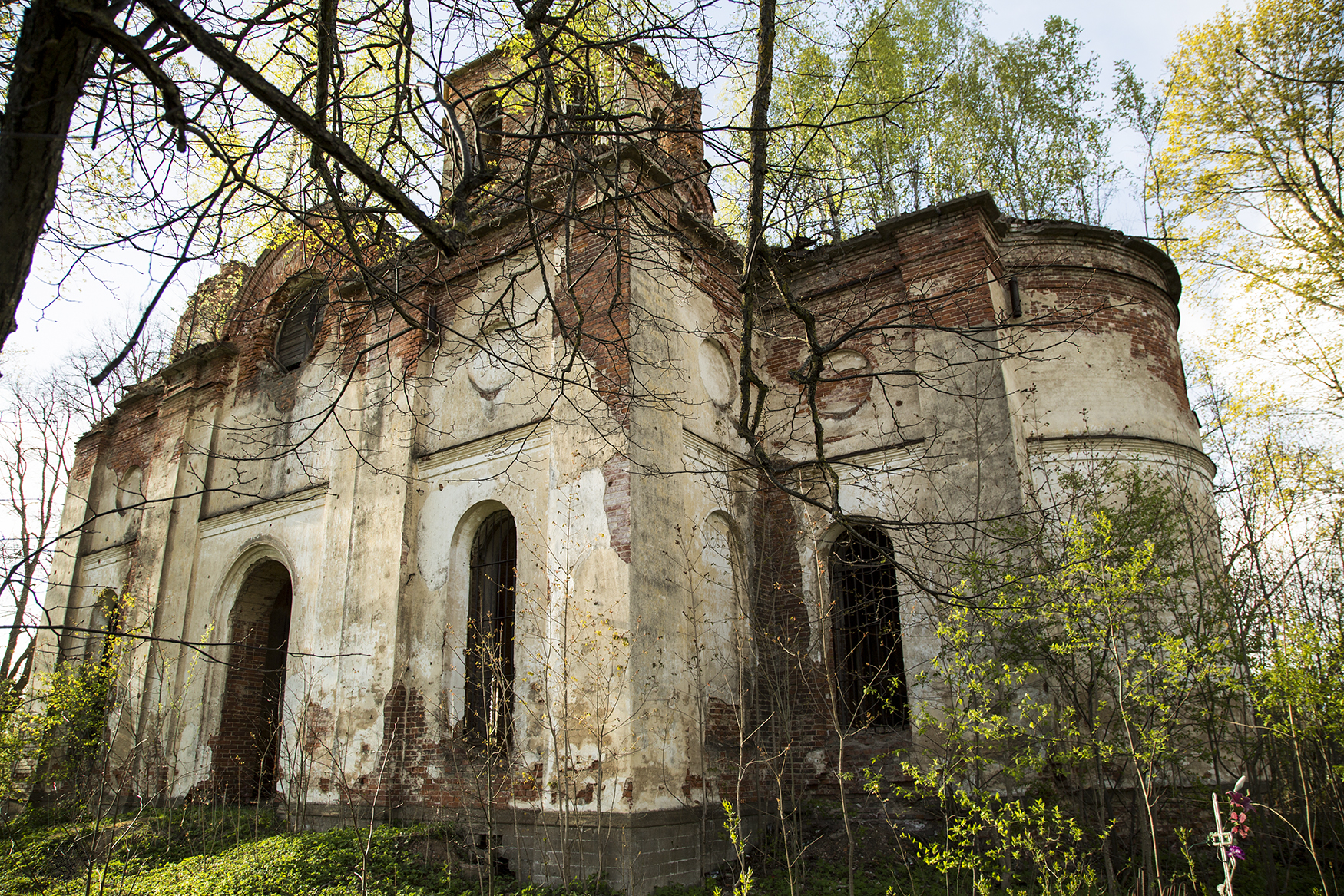
Another frightening divination performed on Easter night was divination at the church lock:
“My grandfather, Gavril, was a believer… He went to church at Easter to listen through the keyhole in the church door… He told no one what he heard until his death. Only before he died did he tell his sons their fate, predicting everything that awaited them. That was told to him when he listened at the church door.”

“He went at twelve o’clock to the church lock… And did someone come out to him, or did they speak through the lock?” — “Through the lock. And everything was told to him from there. And he learned about everyone—what life each would have and who would die when. He told his children to come to his grave at twelve o’clock (then he would come out of the grave and tell them), but they didn’t go. And he knew when his death hour would come, and it turned out exactly as he had said.”
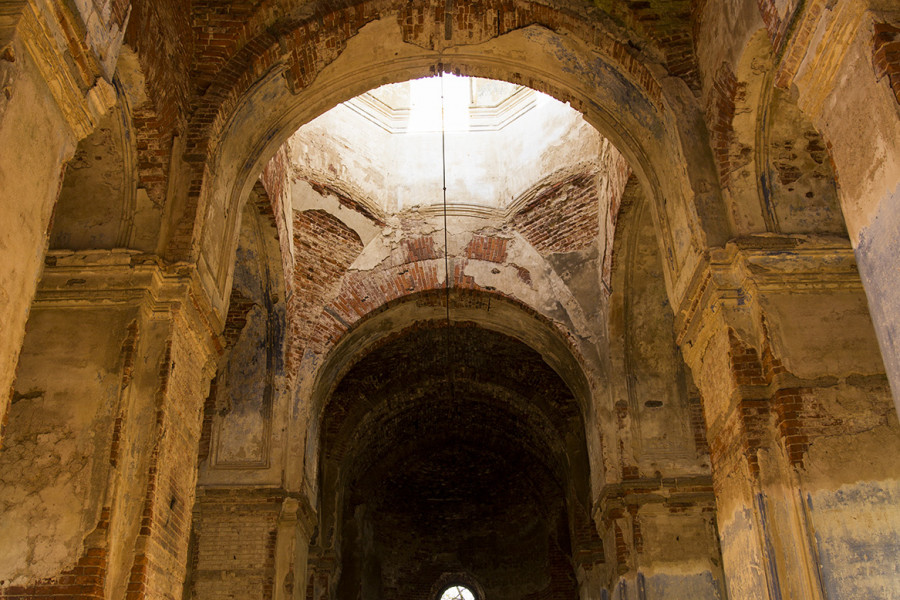
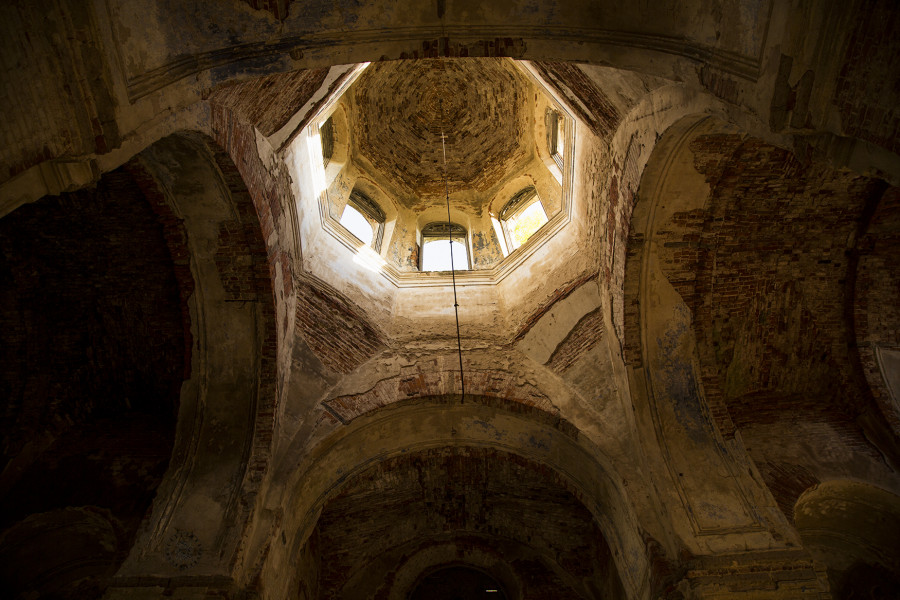
The researcher who cites this bylichka—a folk narrative about an encounter with unclean/supernatural forces—concludes: “In a contamination typical of folk tradition, where pagan and Christian elements mix, the church becomes as if an enchanted place, analogous to an empty house, a mill, a forest, and so on—that is, loci of meeting with supernatural beings, extremely dangerous; at the same time, it remains unknown from whom the prediction comes.” It is worth noting that in this story the church becomes an enchanted place precisely during Holy Week.
Another invocatory recipe given by a pre-revolutionary author says: “To see the house spirit, one must go to church on Holy Thursday when the Twelve Gospels are read. Standing there, one must not look back or speak with anyone. On the way back one must be silent, not look back, carrying the candle with which one stood through the service. With that candle, climb up onto the house; the house spirit will be lying on the roof.”
Among the many places where one can meet unclean forces at this time, the forest, of course, must be singled out. Usually people did not go into forest spaces on feast days, Sundays, or after sunset, because it is at such times that one might meet the master of the green expanses and touch the frightening Other World. Those who decided to call him went into the forest on Holy Thursday, removed the крест from their neck, buried it in the ground, and said: “Forest lord, I have a request for you”—and the Leshy would not delay in appearing. Belozersk peasants were sure he would appear only if, sitting on an old birch, one shouted loudly three times: “Forest tsar, father of all beasts, appear here.” And then one could boldly ask him what one needed—he would tell all secrets and explain all the future. Thus wrote the ethnographer S. Maksimov, adding that “there is no day in the year more convenient for those who wish to see unclean forces and learn their future from them.”
If for an “ordinary” person such trips were taboo, the sorcerer—an inverted being, not fully human—on the contrary, would go into the forest at such times, into the most ancient temple, while fellow villagers went to church. In a sense, the forest replaced church for the sorcerer, and nature was placed above the human. Maksimov, quoted many times in this article, notes that “sorcerers and witches have their most important meetings with unclean forces on this night,” meaning the night of Maundy Thursday.
Sometimes such experiences led to a tragic end: “Sorcerer Ivan Sukhin, according to his sister-in-law’s stories, did not go to church, but on feast days went into the forest. His wife constantly scolded him for it: ‘Just wait, you accursed one—you’ll be nursing your devils, you’ll die in the forest!’ Indeed, his corpse was once found in the forest on St Peter’s Day. His father Kornei, who lived in the 1870s (the memory of him is still alive), in the mornings on feast days, when people went to church, would go into the bathhouse or the threshing barn, and voices and an accordion could be heard from there. ‘He was entertaining his jesters (‘jesters’ being a local term for devils/demons.”),’ fellow villagers explained.”
