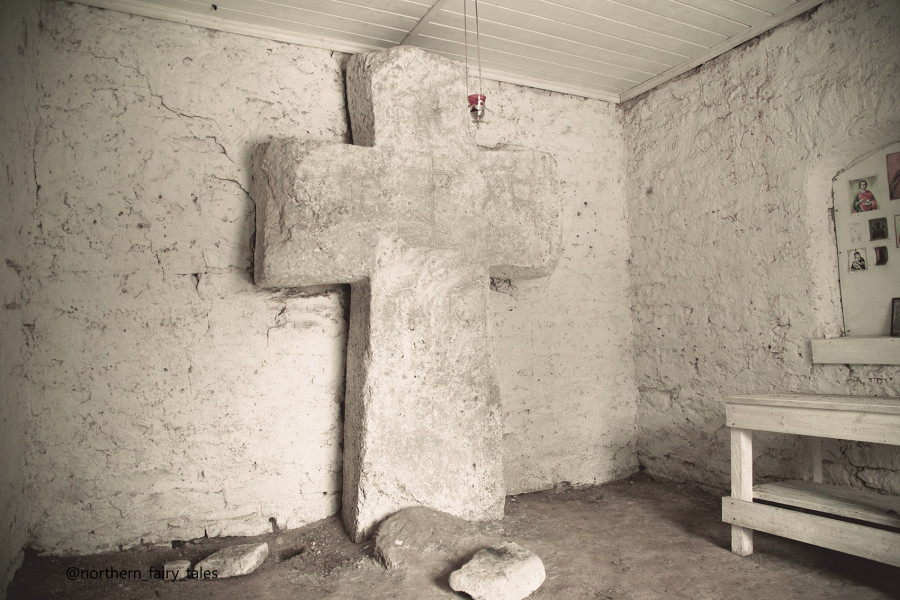
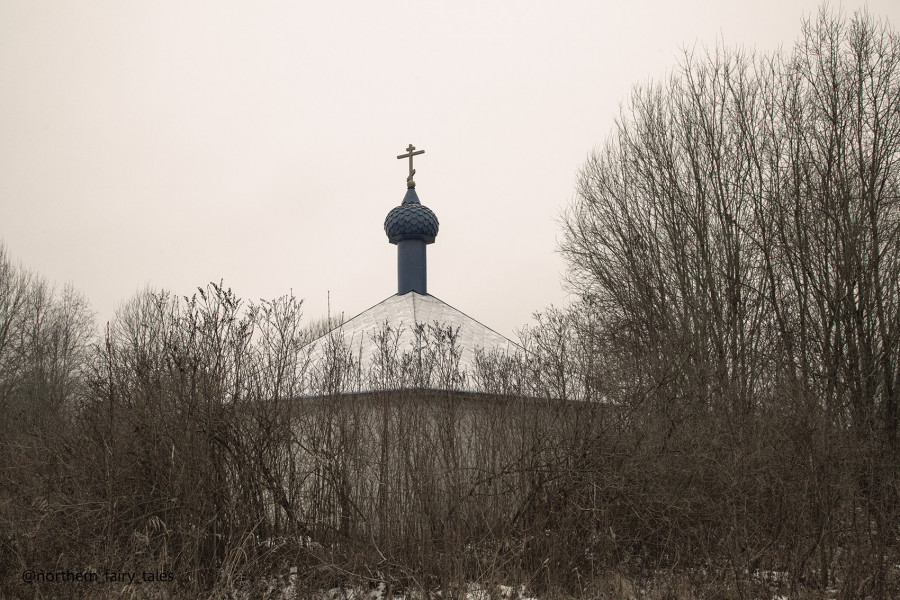
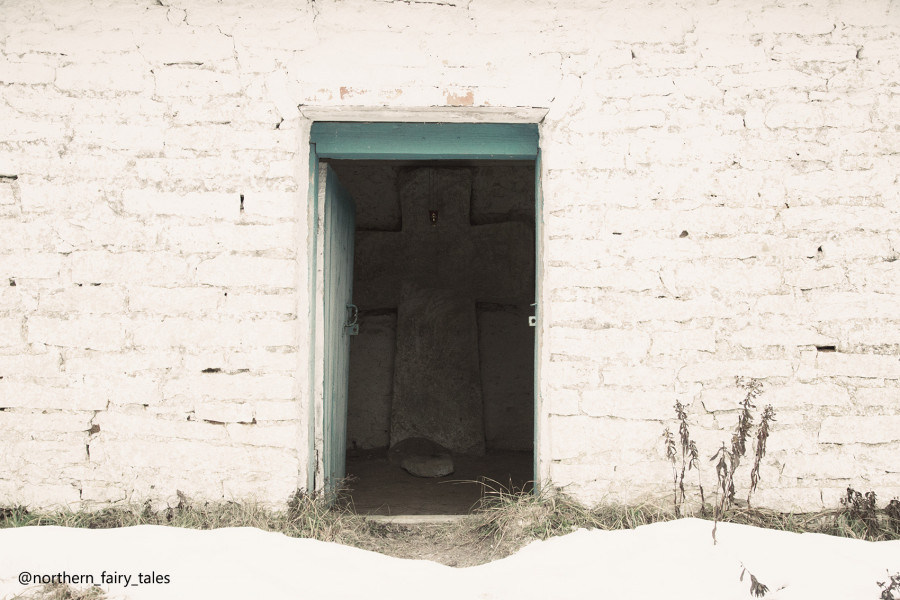
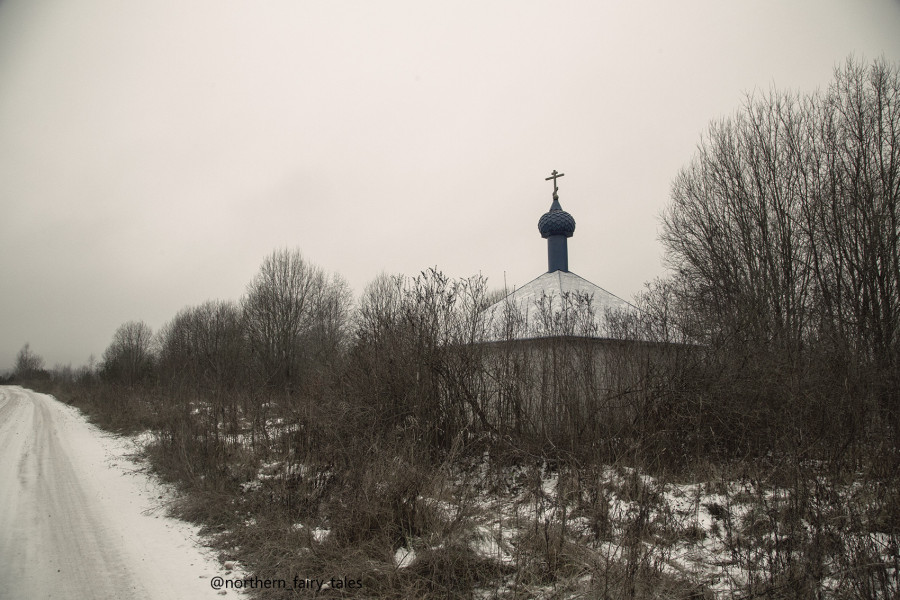
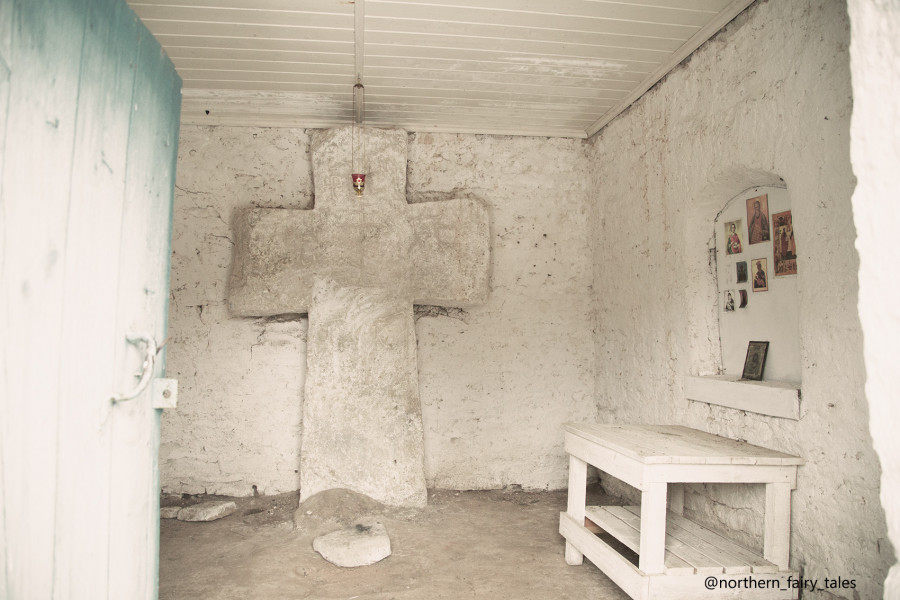
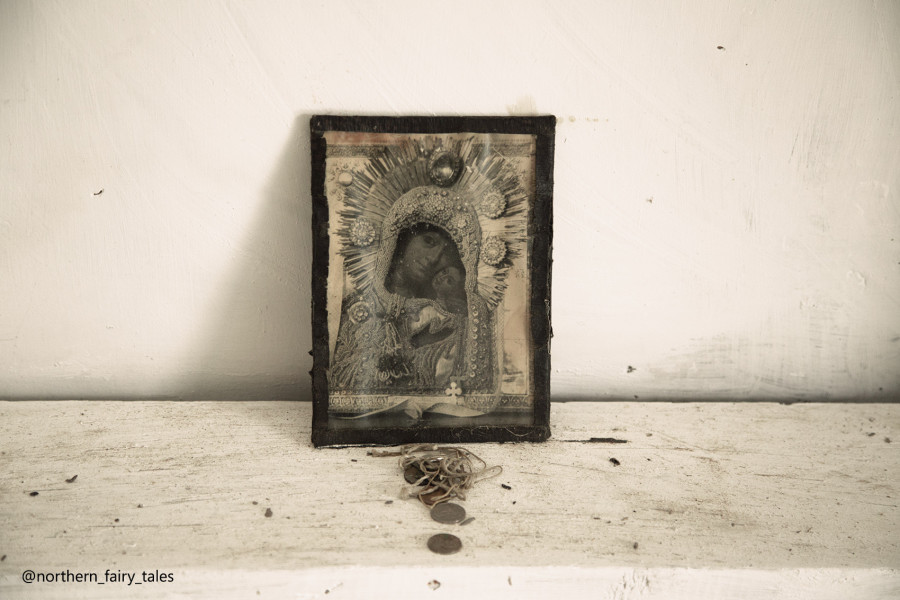
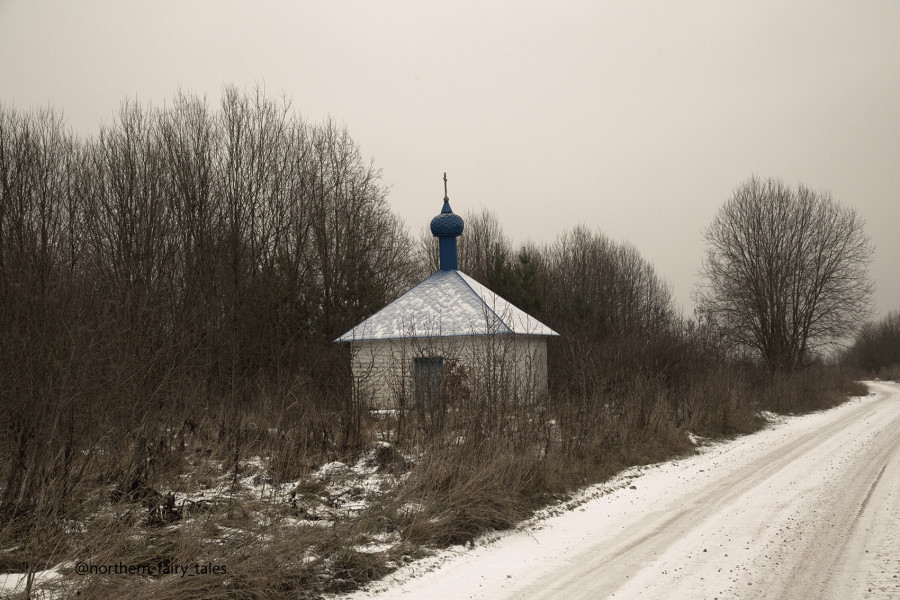
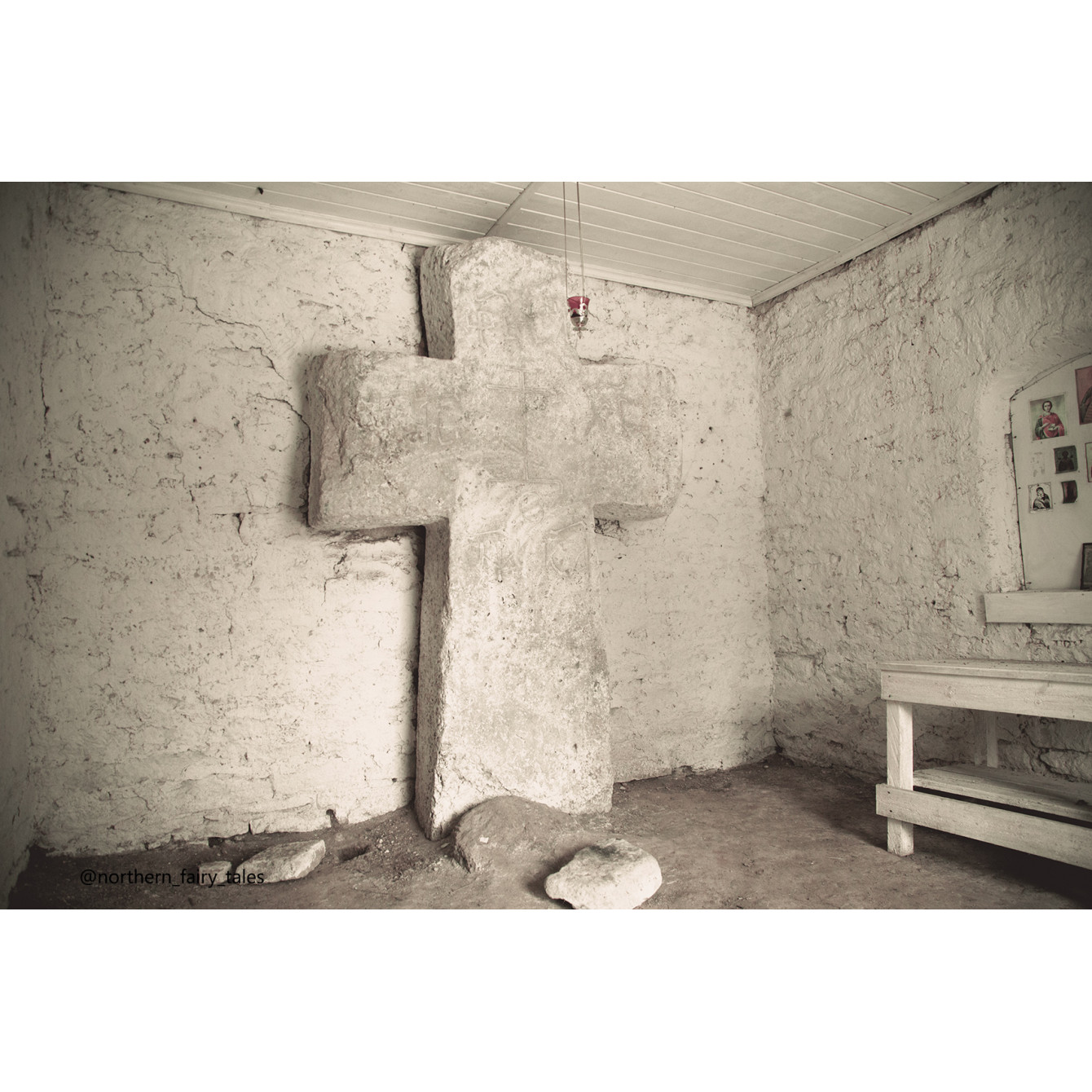



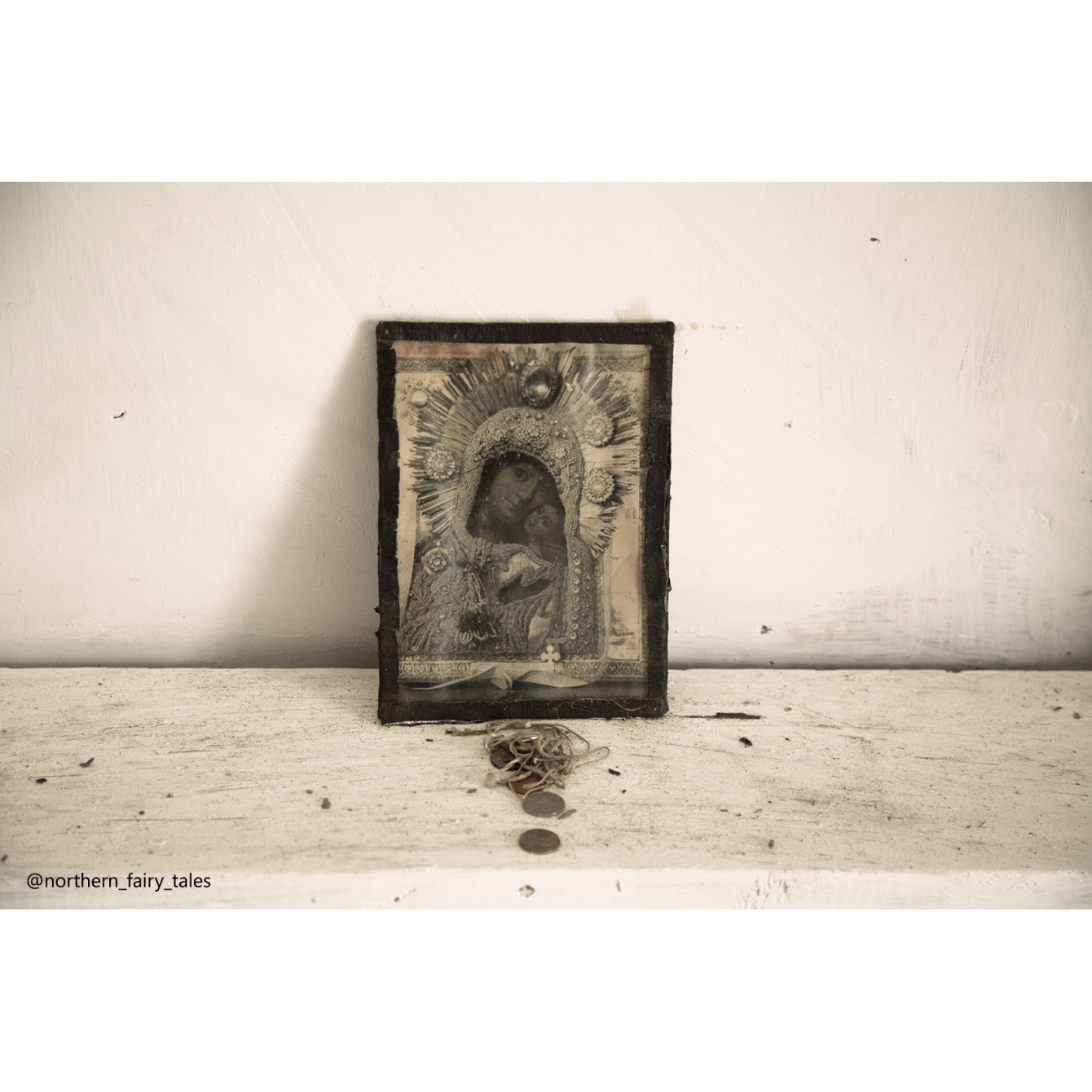

A beautiful, small roadside chapel with a stone cross dating from the 16th (or so) century stands near the village of Vasttsy. According to local legend, a treasure is buried near the chapel, and at times, a black figure is said to dart about the area, frightening passersby. Another folk tale claims that in pre-Christian times, this spot was a pagan sacred site (kapishche). Once every hundred years, it is said, an old man appears here, ready to reveal the exact location of the hidden treasure.
Such tales align perfectly with the mythological logic that led to the construction of chapels along remote country roads: places where supernatural manifestations occurred were often marked in this way — with chapels, crosses, or other syncretic Christian-pagan symbols.
Here, we offer a small, compiled article on the topic of treasures in Russian folk tradition. In our modern, materialistic age, a treasure is nothing more than gold, gems, coins, jewelry, or antiques buried by an unknown hand. But in Russian folklore, a treasure is not just valuables; it’s something far more fascinating.

Where do peasants believe hidden treasures can be found?
Most often in remote forested places where demons might live; in ravines — earthly fissures that oppose hills and summits; in swamps; in abandoned houses; on hills and knolls (often called "Robbers' Hills"); beneath churches and chapels. A treasure might also lie under a rock or within a large tree:
“A special white stone, huge — people have tried to haul it away with a tractor, but it keeps slipping farther away.”
“There was an ancient oak in that cemetery, over a hundred years old, with a hollow big enough for people to take shelter in during Trinity Saturday rains. In that hollow lies a small chest of gold.”
Treasures may also be hidden in boats, barrels, trunks, or cauldrons. They often consist of loose gold — “the treasure scattered and left a pile of gold,” or of a large nugget — “a nugget as big as a soldier’s head.” Less often, they contain coins.
Usually, a treasure has a guardian spirit or owner spirit — the so-called kladovoy (treasure spirit). Very often, this spirit is the soul of a murdered person or a sacrificed animal, offered up by those who hid the treasure. Through such a sacrifice, “the treasure acquires a soul (spirit) and the ability to assume a physical form.” Sometimes the owner of the treasure — or rather, his ghost — guards it himself.

Such treasures may appear to seekers intentionally or to random people in the form of a dog, rooster, ram, soldier, barrel, coffin, corpse, woman in white, haystack, and so on. But these are not ordinary things — they are marked by abnormal features that signify their otherworldly nature: the soldier emits rays of light, the barrel rolls by itself, the rooster is several times larger than normal, and the ram’s horns gleam with gold.
“A hen with chicks appears at midnight; a rooster suddenly perches on a man’s shoulder; a ram seems to run — legs flailing but not moving — and so on.”
A characteristic sign of a treasure is its sudden disappearance:
“He went toward it — and it vanished.”
Widely believed is that a candle or some small flame may burn at the treasure’s location.
Besides its guardian spirit, a treasure may also be protected by a spell or curse. “Cursed treasures are buried with a condition, a vow, that must be fulfilled to obtain them.” Such conditions might be:
The treasure is laid down for a specific time, or for a specific person or someone with a certain name — “Three Ivans, three Matveys, and three Yakovs must come,” or an orphan and a widow;
A demand for sacrifice — “for a hundred souls,” “you must kill a black cat”;
An unusual requirement — “whoever can carry the chest away on a gray mare will own the treasure,” and so forth.
Sometimes the treasure’s owner issues conditions like:
“Let no one have my treasure except the one who slaughters a hundred roosters.”

But even knowing the curse’s terms does not free one from observing the magical etiquette: one must approach without a cross, show no fear, remain silent, never look back, cross oneself “with the left hand in reverse,” and strike or cover the treasure with something — otherwise, it will disappear, sink into the earth, or turn into coals — “it vanishes.”
Certain verbal formulas also help:
“Amen, amen, scatter,” or “Chur, it’s mine!”
Sometimes, information about a treasure comes to people in dreams:
“My mother had a dream — a gray old man appeared and said: ‘Go there, there’s an oak and a stone, and the treasure is buried there…’”;
“One night, someone came to him in a dream: ‘Take this man and go to the chapel.’”
Not all treasures are laid down by human hands: in some cases, they exist in a parallel world that sometimes intersects with ours:
“In olden times, they said treasures walk the earth,” or “when a treasure has lain too long, it starts to appear, and then it disappears again.”

A treasure can only be found at the proper time: at midnight, at noon, at night, on Trinity Day, but the luckiest time is Ivan Kupala’s Day.
In many folk legends, treasures that were laid down for a specific time reveal themselves spontaneously to people — to old men, children, adults, both men and women. To claim it, one must strike it with a hand or belt, but people often do not recognize it and miss their chance:
“Old folks used to bury gold on hills so it wouldn’t fall into strangers’ hands. One day, some young men were walking home from a neighboring village. Suddenly, on a hill, they saw a ram. It looked as if it were running after them, its legs flailing but not moving. The boys got scared and ran home. One told his grandmother, and she said he should have taken a silk belt, gone back alone, and slipped the belt over the ram’s neck — it would have turned into gold. But the boy was too afraid to go alone and took a friend. They found the ram and threw the belt over its neck — and it crumbled to dust. So the treasure escaped them both.”
Sometimes, to claim a treasure, one must meet nearly impossible conditions:
“On this lake, a chest of treasure sometimes floated to the surface. On the chest was written that only the one who harnessed twelve roosters could claim it. One man managed to gather twelve roosters, tied them up with a rope, and tried to drag the chest ashore. But just as he was about to reach the shore, a fox appeared and killed all the roosters. The chest sank back into the water, never to be seen again.”

If a person deliberately seeks a treasure, besides knowing the magical etiquette, they must possess great courage, as they will face challenges from evil forces:
“A young couple got married. One night, the wife had a dream. An old man came to her and said, ‘Rise on Ivan’s Day before midnight, and go. There lies the treasure, and take it straight home. Don’t look back. They will curse at you, spit at you — those are devils. They will beat you, they will hit you, they will spit — but don’t look back! Don’t speak a single harsh word, just go, go straight home with it.’ Her husband slept soundly, so she went alone. She found a small bag of gold. She slung it over her shoulder, but they started to tug at it, to curse her, to beat her, to spit at her — but she kept walking, silent, all the way home.”
Besides direct attacks by evil forces, treasure hunters may also experience delusions that cause them to fail:
“Local lads decided to seek a treasure on Ivan’s Day, hidden in an old oak’s hollow. They dug up the chest of gold and began to lift it out, but then they heard wolves attacking the horses they’d left in the field. ‘Let’s go save the horses — the wolves are killing them!’ they cried. They ran off, but there were no horses harmed. When they returned, the treasure was gone.”

Failing to observe magical rules can be deadly:
“A peasant saw a corpse beneath a tree and realized this was a sign. He uttered ‘Amen,’ and the corpse turned to gold. He gathered some of it and brought it home — but within three years, he died. People said he died because he had told others about the treasure, a breach of taboo.”
Thus, in the traditional beliefs of Russians and other northern peoples, a treasure is not merely material wealth — it is a supernatural being. Possessing it meant not simply enrichment in the modern sense, but acquiring magical luck, forging a connection to the sacred world, and transforming one’s destiny. In a sense, successfully claiming such a magical being could be akin to a witch’s initiation, a grant of secret knowledge. But when a tale emphasizes the treasure’s material value — building a house, buying a car, getting dental work — it reflects the collapse of ancient beliefs, where the spiritual has been replaced by mere utility.
