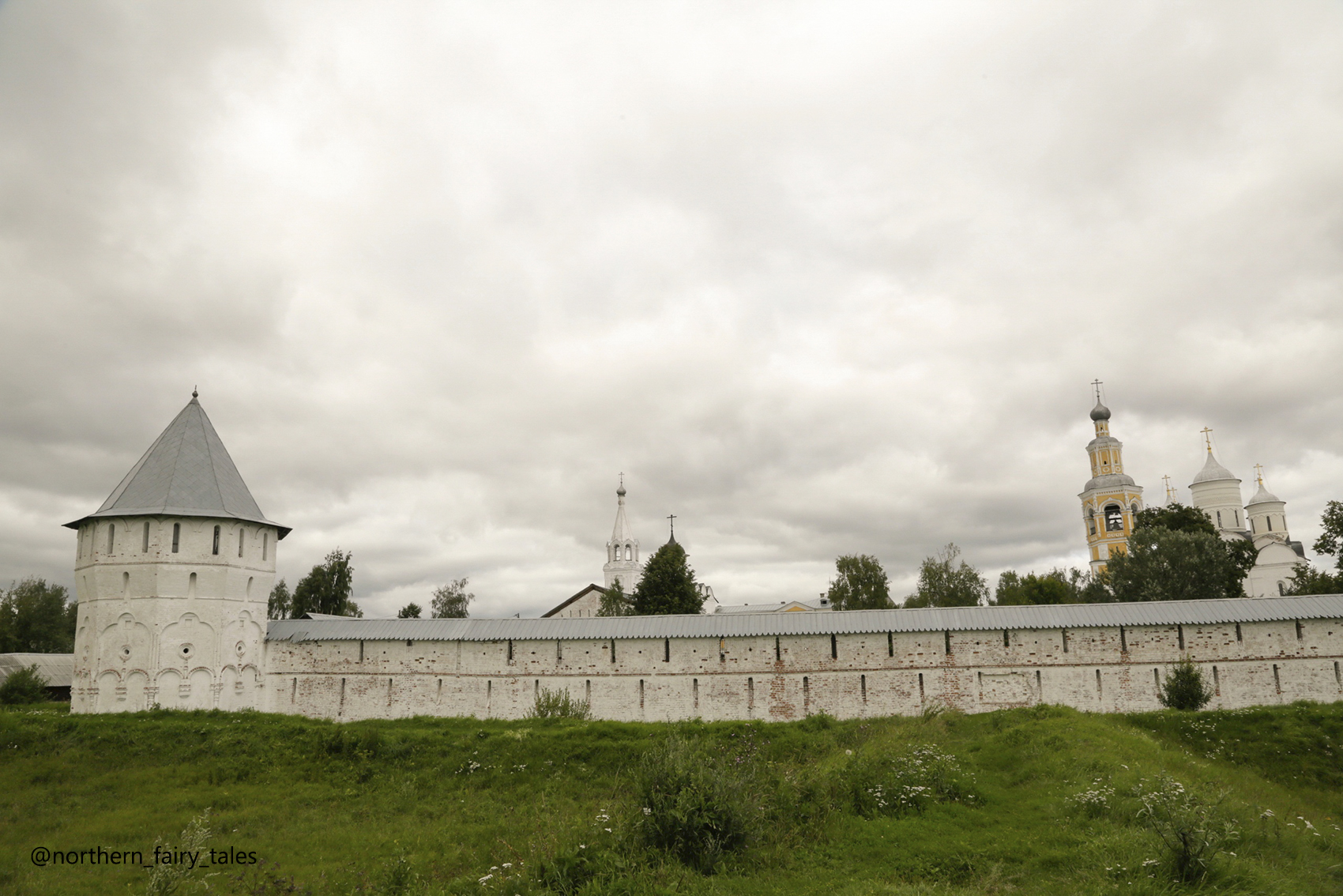
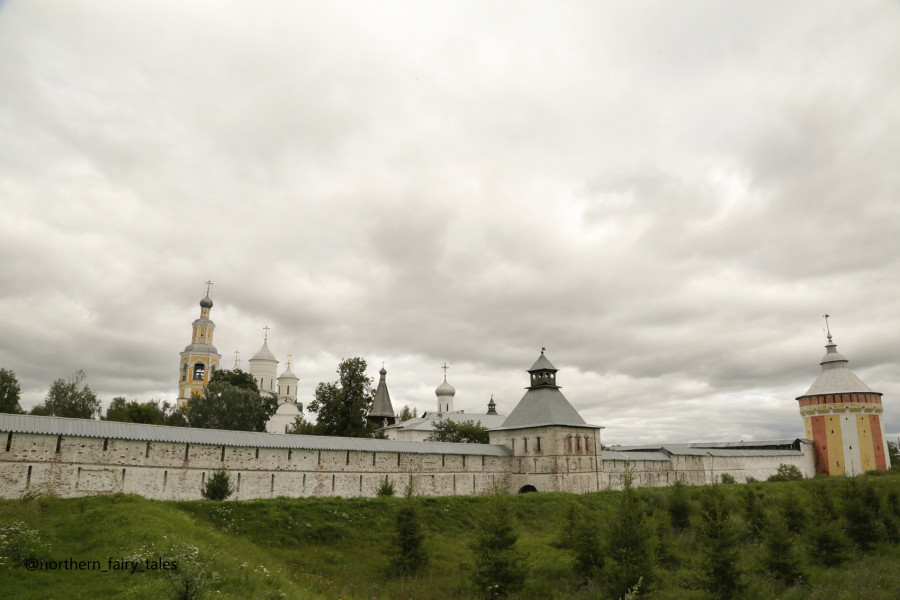
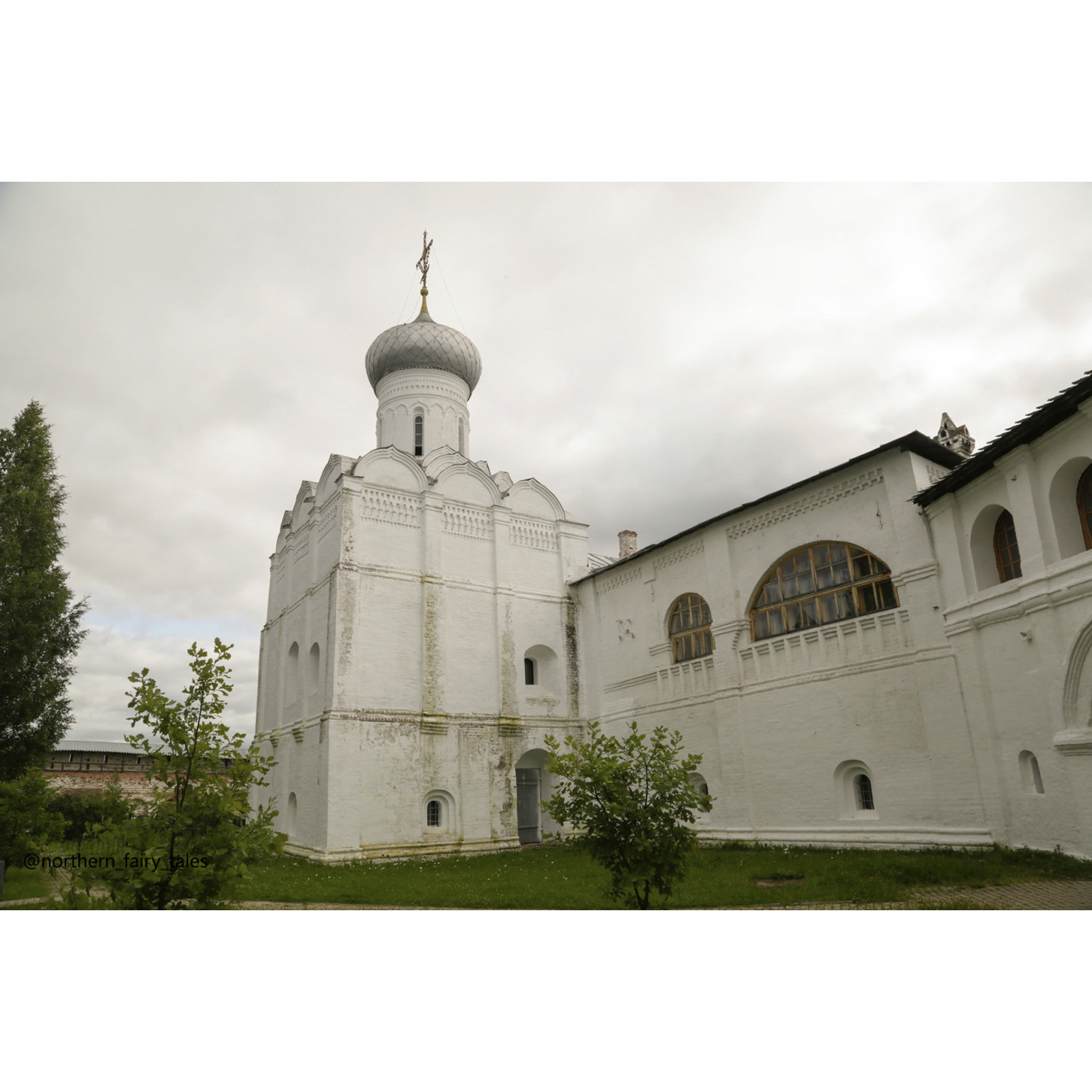
A few years ago, on a cold July day, we traveled to ancient Belozersk and, on our way back, visited the old Spaso-Prilutsky Monastery near Vologda. This is one of the many medieval monasteries scattered across the Russian North, founded in 1371 by the ascetic Dmitry of Priluki, who became its first abbot. Out of humility, Dmitry asked that his body not be buried within the monastery walls but thrown into a swamp. The monks, however, did not fulfill his wish and buried him within the monastery’s cathedral. In 1409, according to church legend, when a deadly epidemic struck Rus’, miraculous healings began at Dmitry's tomb, and he was canonized.
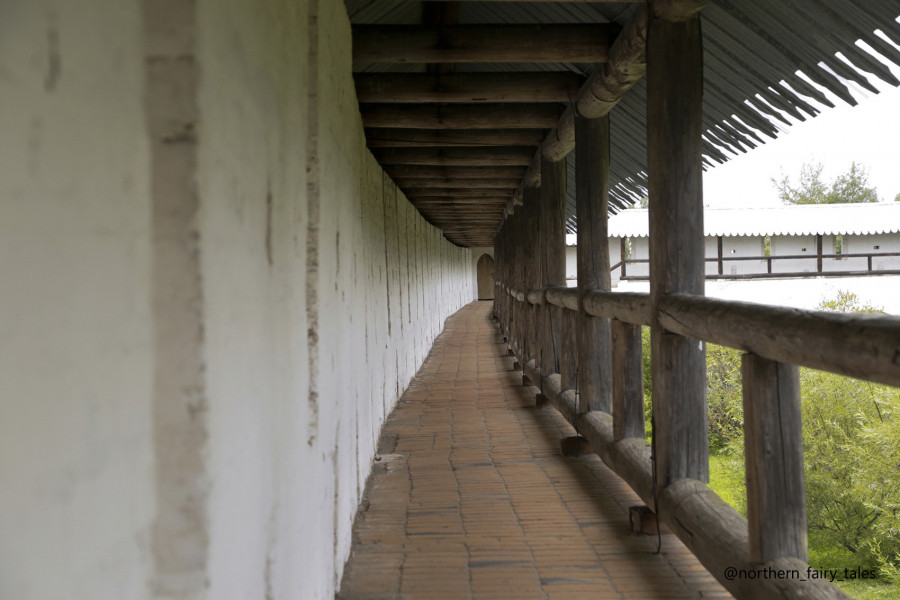
Most Russian monasteries in the Middle Ages and early modern times served dual functions: spiritual and military. The Spaso-Prilutsky Monastery was no exception. In fact, it is a powerful fortification, built to withstand sieges: two-meter-thick walls up to seven meters high, with battlements, galleries, and five monumental towers—Mill, Water, Belozersk, Southern, and Vologda Towers. The latter two reach nearly 20 meters in height. The towers also housed grim prison cells—the first political prisons in Rus’—where monks acted as jailers for those who were doomed to disappear forever.
We had seen many such monasteries before. After walking through the sacred space, we stepped outside to look at the fortress walls and stroll along the Vologda River, which runs just a few dozen meters from the ancient buildings. It was a cloudy Sunday, around noon, with a few scattered people enjoying the area. Nothing unusual—just another day near Vologda.
Suddenly, just a few meters away, we saw a small whirlwind forming—a dust devil about a meter and a half high with a clear funnel. It seemed alive, full of mischievous energy. It startled a group of drunken picnickers, scattering their makeshift table of newspapers, drinks, and snacks, then darted toward the river, ran along the water’s surface, and vanished as suddenly as it had appeared—leaving its astonished witnesses in silence.
In East Slavic folklore, there is a mythological figure known as the Whirlwind (Vikhr)—a spinning wind, both evil and playful, considered a demonic being. According to popular belief, it appears either at midday—when dark forces are most active—or at midnight. The Whirlwind can be small or enormous, tearing up trees, ripping roofs off houses, and seizing careless people, smashing them against the ground or carrying them away for miles. Victims could be struck mute, deaf, or mad—or sometimes gifted with second sight. The Whirlwind could carry curses, deadly illnesses, or paralysis, and there was no folk cure for its effects.
Old Russian lore said that whirlwinds might contain the souls of suicides, witches, and other damned spirits. The whirlwind could accompany the soul of a dead sorcerer or carry the soul of a deceased relative back home. To see demons within the whirlwind, people were advised to bend down and look between their legs—a well-known Slavic method for glimpsing the invisible. The Whirlwind could be repelled with prayer or the sign of the cross, but if that failed, swearing—an ancient apotropaic practice—was used. Southern Slavs would sew garlic and wormwood into their clothing for extra protection, just as they did against vampires.
Cursing someone with the words “May the whirlwind take you” was strictly forbidden: the demon might indeed snatch the person away. Objects caught in the whirlwind were believed to gain dangerous magical properties. Clothing worn during such an encounter needed to be fumigated with smoke, and sand from the whirlwind could not be thrown at someone—it would “spin them for a week.”
And yet, people could also harm the demon: folklore held that if you threw a knife into the whirlwind and struck it, the knife would fall to the ground bloodied, and a terrible scream would be heard as the whirlwind vanished.
Comments
There are no comments for this article yet. Be the first to comment!